Cheaper AI Goods Can Matter Less to Growth
When automation cuts prices, spending moves to whatever is still scarce, slow, or hard to automate.
 The a16z Show · Alex Imas & Tyler Cowen | AI Is Moving Fast. Why Isn’t the Economy?
Picture a million robots making something so cheaply that almost anyone can afford it. Economist Alex Imas says that kind of triumph can look surprisingly small in economic statistics, because as the price falls, the product can account for less total spending.
In Imas's account, once a need is met cheaply, households do not keep spending proportionally more on it. The result is that the automated good adds less to measured growth even as it becomes more abundant.
Economists describe spending patterns that shift this way as non-homothetic preferences, meaning people change where their money goes as prices and incomes change. Imas pointed to a paper that estimated those patterns across two centuries of data.
When automation spreads broadly, Imas said, in his words, "the value in the economy of what contributes to growth moves to the bottlenecks."
Imas called that "an inconvenient part of how growth is measured." The slowest growing part can carry the most weight in the total, because it commands the spending.
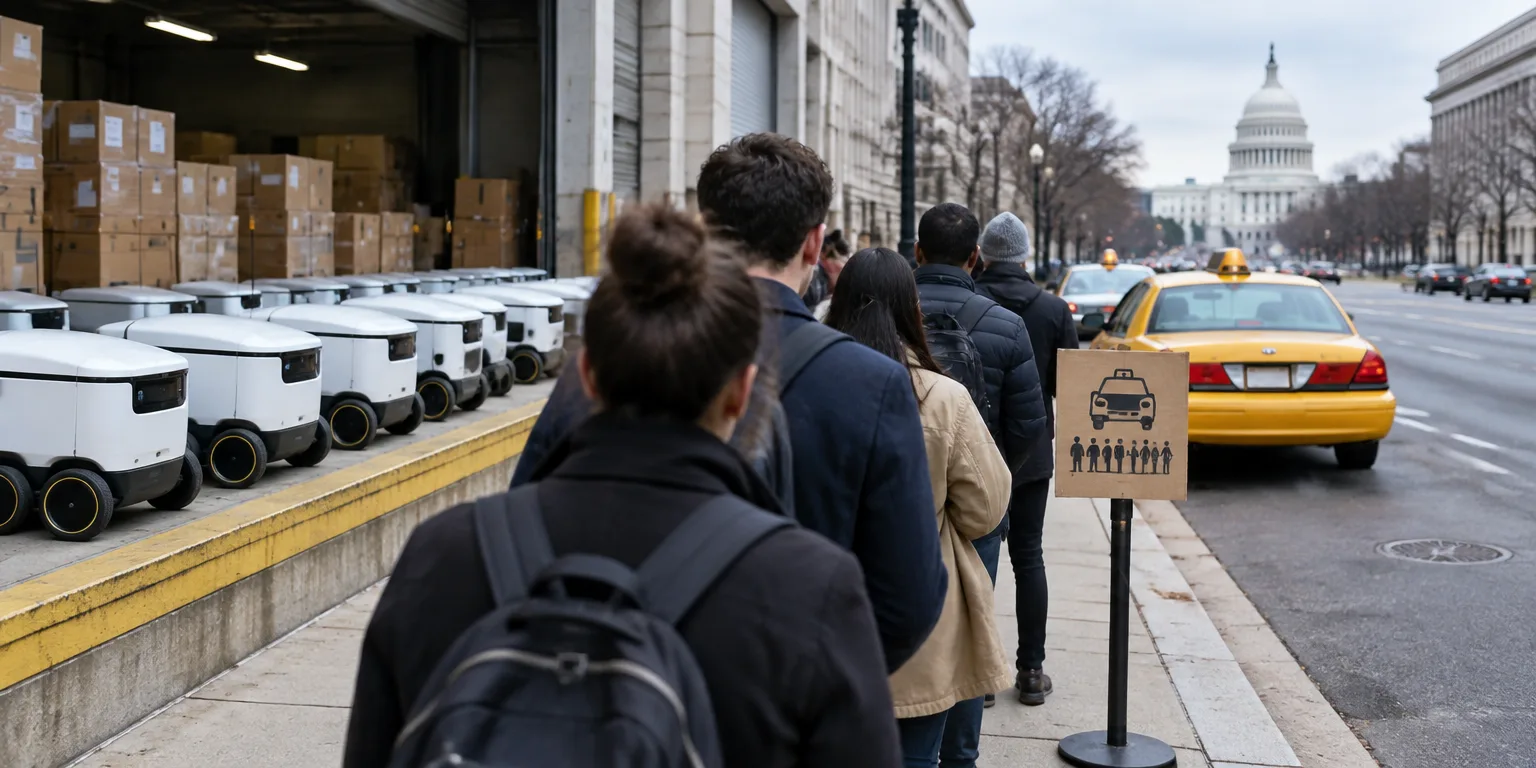
Economist Tyler Cowen said, "I agree with all that, but I would add a more sociological element." He argued that long-run history should guide forecasts more than vivid tech conversations, and he said robotics would likely come relatively slowly, pointing to the wait for self-driving service in Washington, D.C. That progress, Cowen said, was "not going to give us 20% growth like three or four years from now, no."
So fast progress in AI does not automatically mean fast measured growth. If AI makes one corner of life nearly free, the center of the economy shifts to the bottlenecks.
Questions people ask
If AI goods get cheaper but count for less, are we still better off?
Often yes. Living standards can rise even when measured output does not, because people get more for less money. Economists distinguish welfare, how well people live, from gross domestic product, the market value of what is produced.
What counts as an economic bottleneck?
It is whatever stays scarce while other things get cheap, such as housing in a desirable city, hands-on care, or services slowed by rules and limited labor. When those prices stay high, they take a larger share of household budgets. That larger share gives them more weight in growth statistics.
Does Cowen expect AI to produce very fast growth soon?
Cowen is skeptical on timing. He says robotics is making good progress but will likely arrive relatively slowly. He also says that progress will not produce 20 percent growth in the next few years.