Computers With Spinning Fans Are Already Working in Orbit
Ordinary hardware is surviving launch and running in space, though lasting longer takes extra shielding.
 This Week in Startups · Running Google’s Gemma on Satlyt’s orbital AI (w/ CEO Rama Afullo)
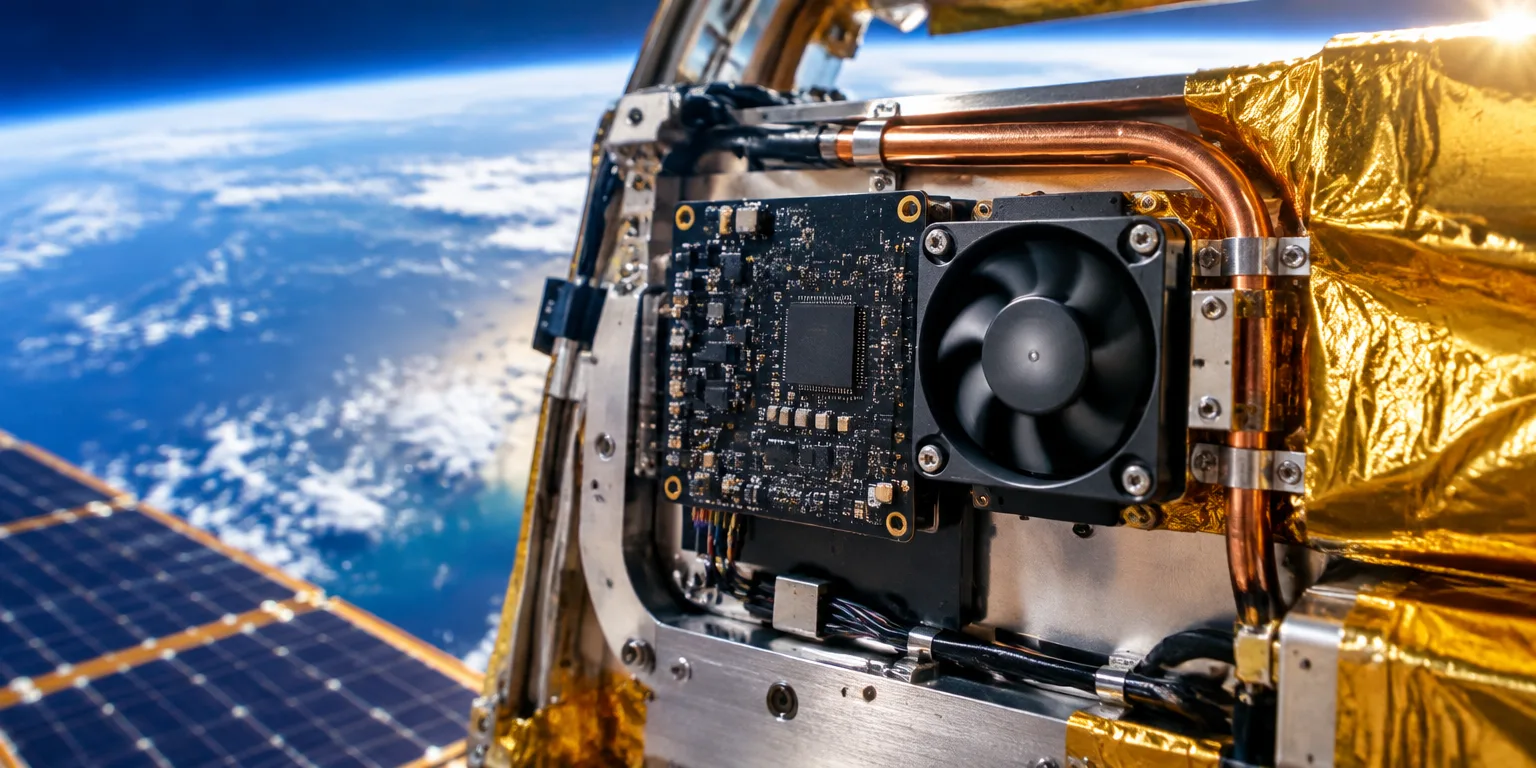
Satlyt chief executive Rama Afullo says computers with spinning fans are already working in orbit.
Many of them are NVIDIA Jetson Nanos, he says, small artificial intelligence computers with moving parts that survived launch and kept running in space.
Afullo says Planet, the Earth imaging company he credits with testing assumptions about what can fly, ignored advice about what could be sent to space and tried things like smartphones fitted with solar panels to see if they worked.
Ordinary hardware can survive up there, Afullo says, but making it last longer requires shielding against radiation and expensive testing.
Questions people ask
How can a fan work in the vacuum of space?
A fan cools by moving air, and there is almost no air in the vacuum outside a spacecraft to carry heat away. Fans can still spin in orbit, but they cool poorly unless the electronics sit in an enclosed box with air or shed heat by conduction and radiators.
What does radiation hardening mean?
In orbit, charged particles from the sun and deep space can flip a computer bit, degrade chips, and shorten a mission. Hardening means using radiation tolerant chips, adding shielding, backing up critical circuits, and testing parts under simulated radiation before flight.
What is an NVIDIA Jetson Nano?
It is a small, low power computer board from NVIDIA for running artificial intelligence tasks such as image processing. It is widely used on Earth in robots, cameras, and student projects, which is why finding it in orbit is surprising.