Move Earth Five Light-Years Away and the Sky Would Wait Five Years to Change
The trapped starlight would keep the old sky alive for years, then run out all at once.
 StarTalk with Neil deGrasse Tyson · Cosmic Queries – Curiosity, Conspiracies & the God Particle with Jordan Klepper
Move the whole solar system five light-years away and nothing in the night sky would look wrong the next morning.
That is the answer astrophysicist Neil deGrasse Tyson gave to a thought experiment about a bubble, about five light-years wide, that carries the Sun, the planets, and all the starlight already traveling between them to another part of the galaxy.
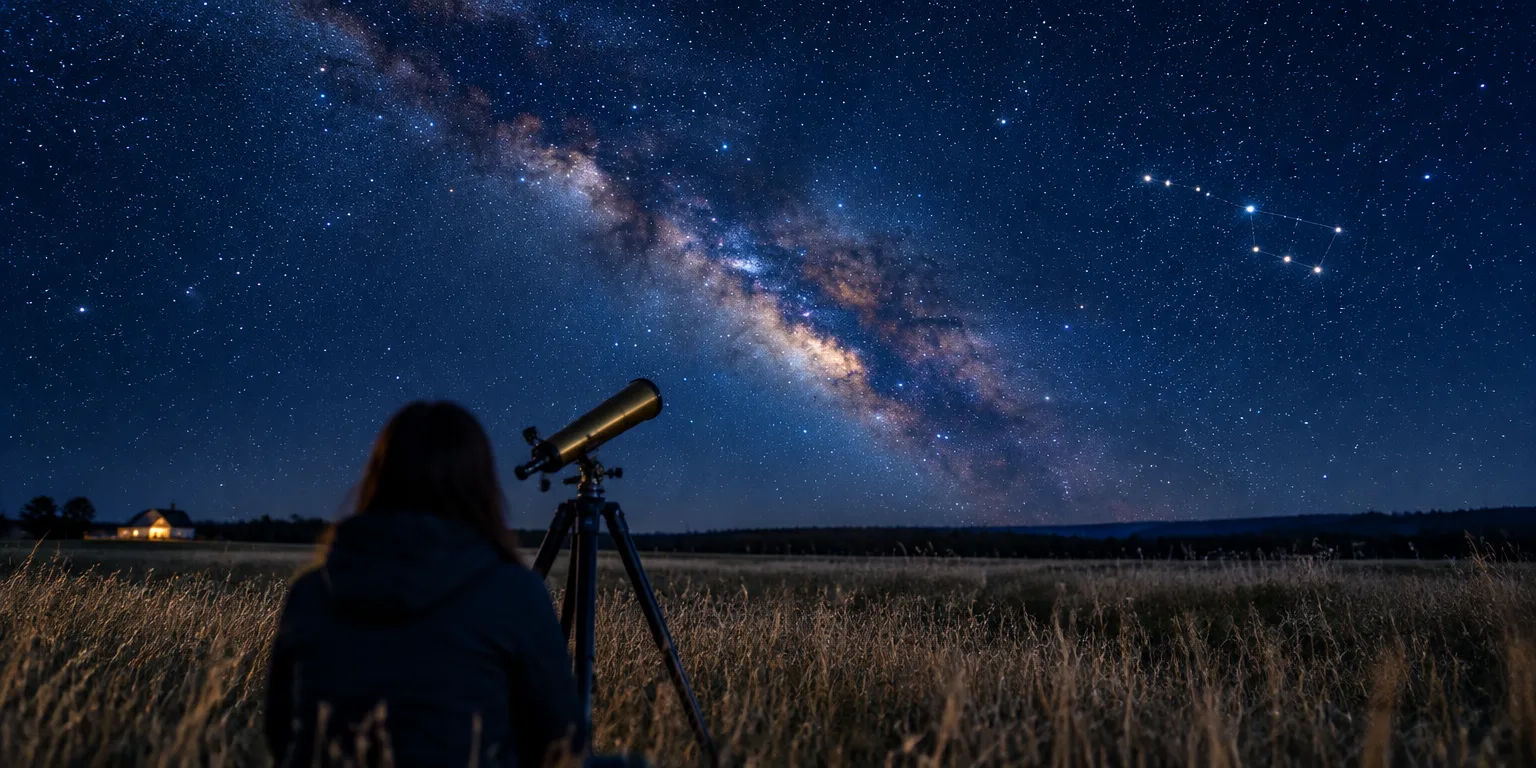
We see stars by their old light, not as they are right now. That trapped light would keep arriving at Earth for about five years, so familiar patterns like the Big Dipper would linger even though we had left home.
When that supply ran out, the change would be sudden. In an instant, Tyson said, the entire sky would switch, with no Big Dipper, no Cancer, and no Leo.
Those shapes belong to our current neighborhood. As Tyson put it, we would be in "a different part of the galaxy," looking out at a different set of nearby stars.
Normally, the sky changes much more slowly. Because the galaxy rotates, the stars overhead drift out of place over roughly 100,000 years, so constellations 100,000 years from now would look very different.
A five light-year jump would compress that long drift into one night. Astrology, Tyson joked, would have to reinvent itself.
Questions people ask
What exactly is a light-year?
A light-year is the distance light travels in one year, about 5.9 trillion miles. It is a measure of distance, not time, and astronomers use it because space is too large for miles or kilometers to be convenient.
Do the stars move at all during those five years?
Yes, but only slightly. Nearby stars shift against more distant ones as Earth orbits the Sun, an effect called parallax. It is tiny to the eye and is mainly detected with precise telescopes, which is why the constellations look fixed night to night.
Why would familiar patterns like the Big Dipper disappear?
The Big Dipper is not a constellation itself but a prominent pattern within the constellation Ursa Major. The other familiar groups would also change because constellations are a matter of viewpoint, and a new location means new neighbors.