Denver Airport Tunnels Are Real, Left Behind by a Failed Baggage System
The airport was late, over budget, and oversized, and its empty baggage tunnels gave rumors room to grow.
 The Why Files · America Is Hiding Something Underground
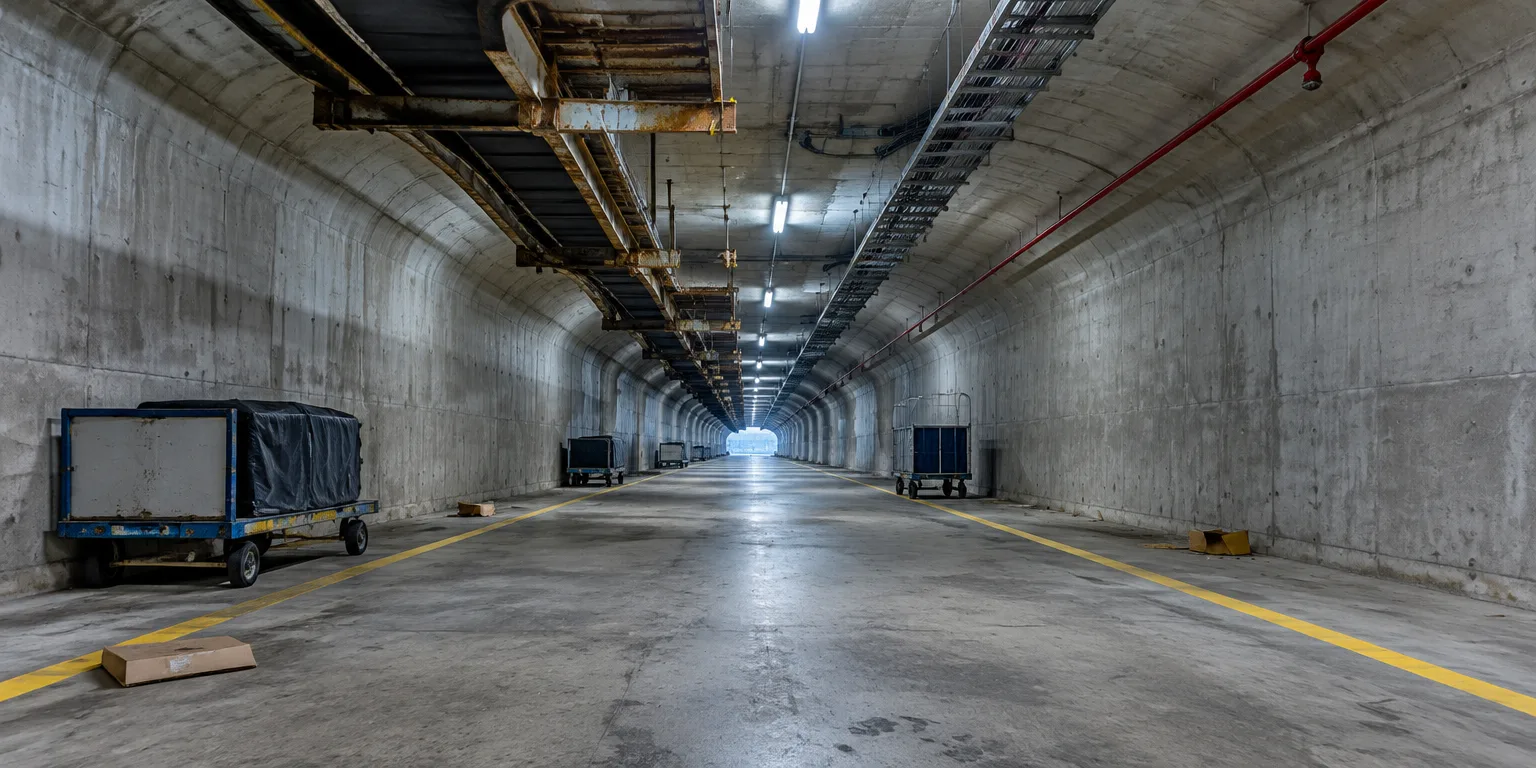
Yes, Denver International Airport has big tunnels underneath it, and they were built to move suitcases.
Denver replaced Stapleton Airport, which was congested, inefficient, and noisy for downtown neighbors. The city built the new airport 25 miles outside town, where open ground was inexpensive and flights would disturb fewer homes.
The result was enormous. When the airport opened on Feb. 28, 1995, construction finished 16 months behind plan and billions above its estimate. It ultimately cost $4.8 billion, on a 53-square-mile site twice the size of Manhattan.
Planners put the tunnels underground to shuttle luggage automatically through that sprawling complex.
The system cost about $100 million and did not work very well, so it was abandoned. The empty concrete space remained, and its sheer size helped make other stories plausible.
No evidence has turned up for five buried buildings. The sprinklers are fire protection because plenty of material besides concrete can burn, and deeper-level and base claims by contractor Phil Schneider and others remain unverified.
The simpler explanation is an expensive public-works failure. An ambitious baggage plan collapsed, and the leftover tunnels became the foundation for a legend.
Questions people ask
Why did Denver build the new airport so far from town?
Stapleton was close to downtown but congested and inefficient, and airports are noisy neighbors. Denver chose a remote site with open ground where runways could be arranged to handle winds and flights could grow without pressing against homes.
What happened to the controversial Denver airport murals?
Artist Leo Tanguma painted large murals meant to show peace, which many travelers found disturbing. The airport later removed them, and they are now in storage.
Who was Phil Schneider and what did he claim?
Phil Schneider was a government contractor who worked on underground projects and claimed Denver had more and deeper levels than acknowledged, plus military and other secret uses. He died in mysterious circumstances, was reportedly distraught, and made up some of his stories, so his claims have to be questioned.