Farmers Shut Out by Bell Built a Phone Network on Barbed Wire
The Bell telephone companies were based in cities and overlooked farmers, so farm families wired their neighbors together with what they had.
 The a16z Show · From the Telephone to Modern Computing | James Gleick
Picture a farm wife in the late 1800s, alone in a farmhouse a mile from the nearest neighbor.
Her husband spends the day plowing. When he finishes, he can ride into town and spend the evening at the tavern. She cannot, and she has no one to talk to from morning till night.
Then telephones start to spread, but not to her. The Bell telephone companies were centered in cities and overlooked farmers as a strong market, says author James Gleick.
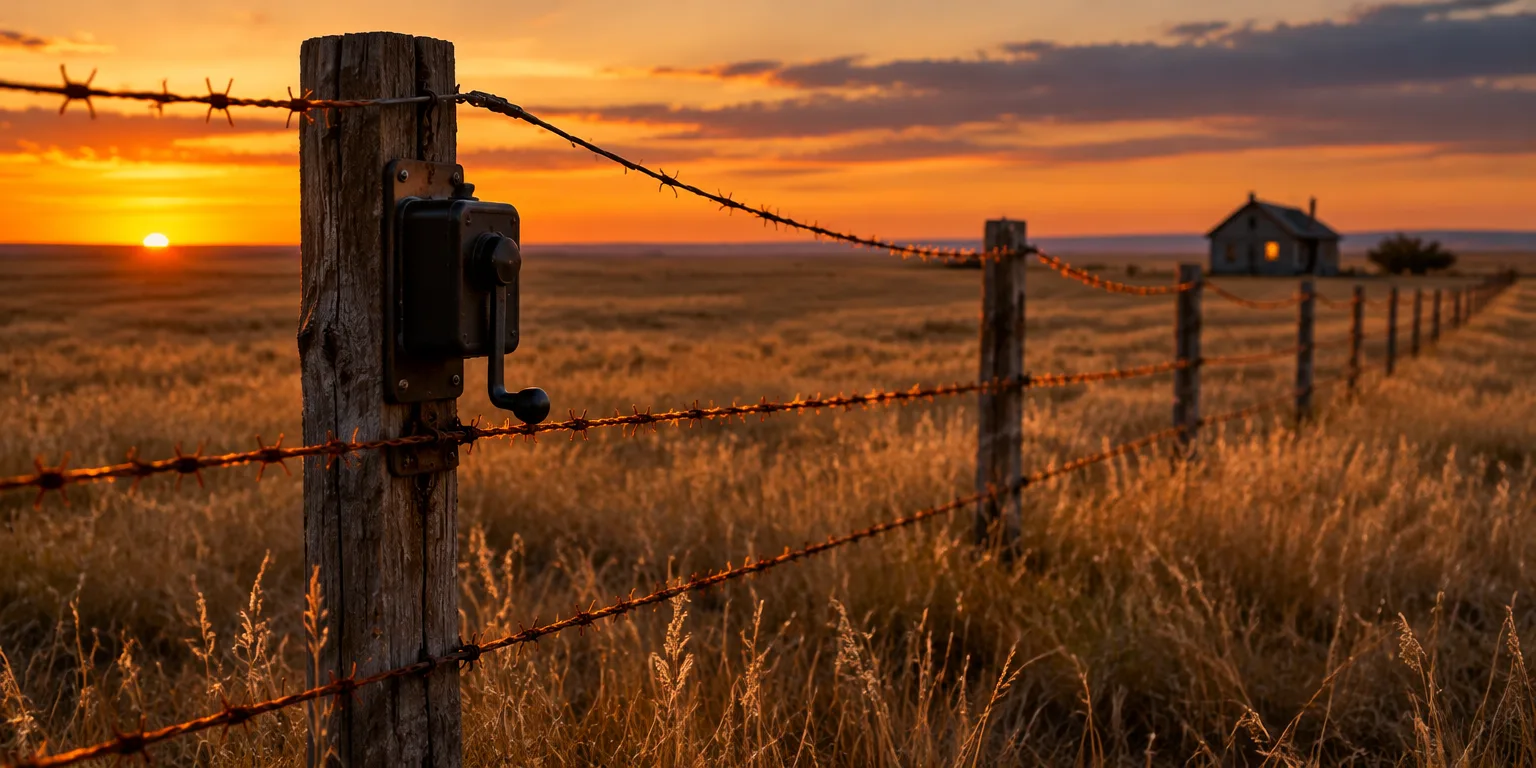
So farm families build their own phone system. By then phones were easy to make from spare parts, Gleick says. For wire, farmers use what is already strung across the plains.
That wire is barbed wire. It had fenced in the open land, closing off what had been shared ground. It is also ready to carry electricity.
A family hooks up a homemade telephone, runs a little more wire into the house, and a neighbor down the line does the same. The lines run along the existing fence wire between neighboring farms, linking small clusters of households.
There is no dial and no switchboard. But someone can pick up, make it ring a few houses down, and start a conversation. What they talk about, and what information they exchange, is entirely up to them.
The irony is hard to miss. Barbed wire, sometimes called the devil's rope, was designed to divide land and keep things out. On the prairie, it became the thing that connected isolated people to each other.
Questions people ask
Could barbed wire actually carry a phone call?
Yes, after a fashion. Steel wire conducts electricity, though not as well as copper, and connections were noisy and fragile. For short calls between neighboring farms, often with many people listening on the same line, it worked well enough to be useful.
How did farmers ring each other without a switchboard?
Early rural phones often used hand cranked magnetos that sent a strong electrical pulse down the line to ring bells. Families agreed on codes, such as two longs and a short, so each household knew which rings were meant for it.
Did phone companies ever serve these farms?
Yes, though it took years. Independent local companies and cooperatives moved into small towns and rural areas, and Bell eventually expanded outward. By the 1910s and 1920s, many farm communities had service, often through shared party lines.