Fertilizer Runoff Is Starving Florida's Manatees
Algae blooms cloud coastal lagoons, kill the seagrass the animals depend on, and have left more than a thousand dead in one die-off.
 Stuff You Should Know · The World Needs More Manatees
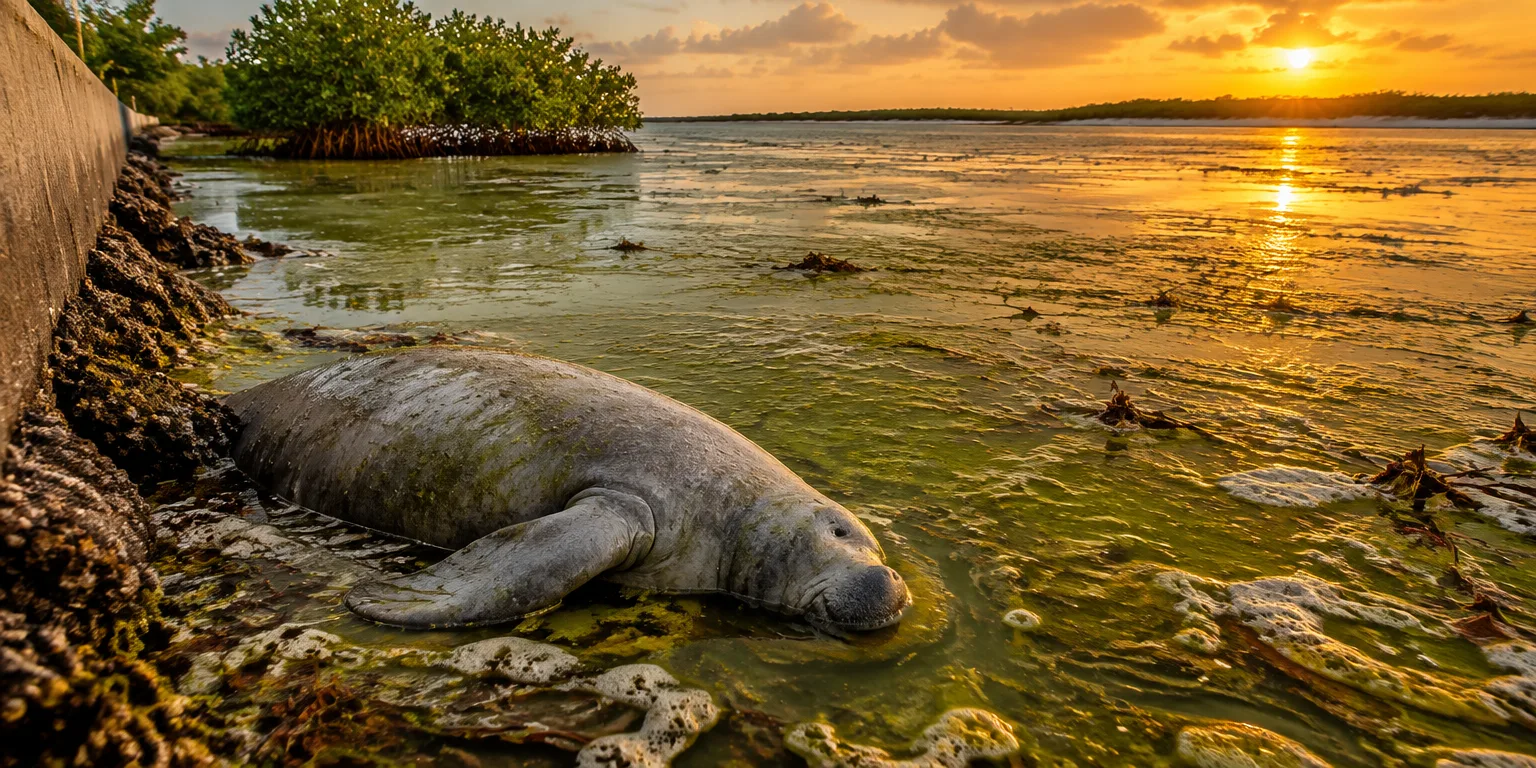
An unusual mortality event along Florida’s Atlantic coast recorded 1,255 manatee deaths from December 2020 through April 2022. The crisis was driven by starvation after the loss of seagrass in the Indian River Lagoon.
The chain starts inland. Florida is essentially a very flat ridge, and rainfall drains outward from the state's center toward the coasts, carrying fertilizer runoff and nitrogen from agriculture and lawn care into the shallow waters where manatees feed.
Excess nutrients feed algae blooms, which cloud the water and block the sunlight seagrass needs to grow.
Murky water blocks sunlight from reaching the bottom. Without light, the remaining seagrass dies too, compounding the loss.
The collapse is starkest in the Indian River Lagoon, a long, brackish coastal waterway separated from the Atlantic by a narrow spit of land, and a major manatee habitat. Treated sewage, frequent leaks of untreated sewage, and pollution associated with Cape Canaveral flow into it, and it now reliably turns into a brown, foul-smelling mess during algae season.
By one rough estimate, about 90 percent of its seagrass disappeared in just 15 to 20 years. According to one account, as recently as the 1960s, people could see clearly through 10 feet of water to the bottom.
The die-off pushed the state to take the problem more seriously. Seagrass has reportedly rebounded by as much as 75 percent in some places within about five years.
Questions people ask
Why can't manatees just eat something else?
Manatees eat seagrass and other aquatic vegetation. The disappearance of enough nutritious forage in the Indian River Lagoon left many unable to find enough food.
Do the same algae blooms affect people?
Yes. Large blooms can deplete oxygen, kill fish and seagrass, foul the smell and color of water, and some algae produce toxins that irritate skin and lungs. Closed beaches, fishing losses, and cleanup costs are common side effects.
What helps seagrass come back?
Reducing nitrogen entering waterways helps the most. That includes using less fertilizer, maintaining septic systems so they do not leak, and supporting upgrades to sewage treatment and stormwater controls in coastal towns.