Few Cameras And Archives Shape What History We Can See
Advocate Adam Rose says one owner controls 40 percent of the White House television pool outlets, while shrinking archives limit which old clips stay available.
 Behind the Bastards · It Could Happen Here Weekly 258
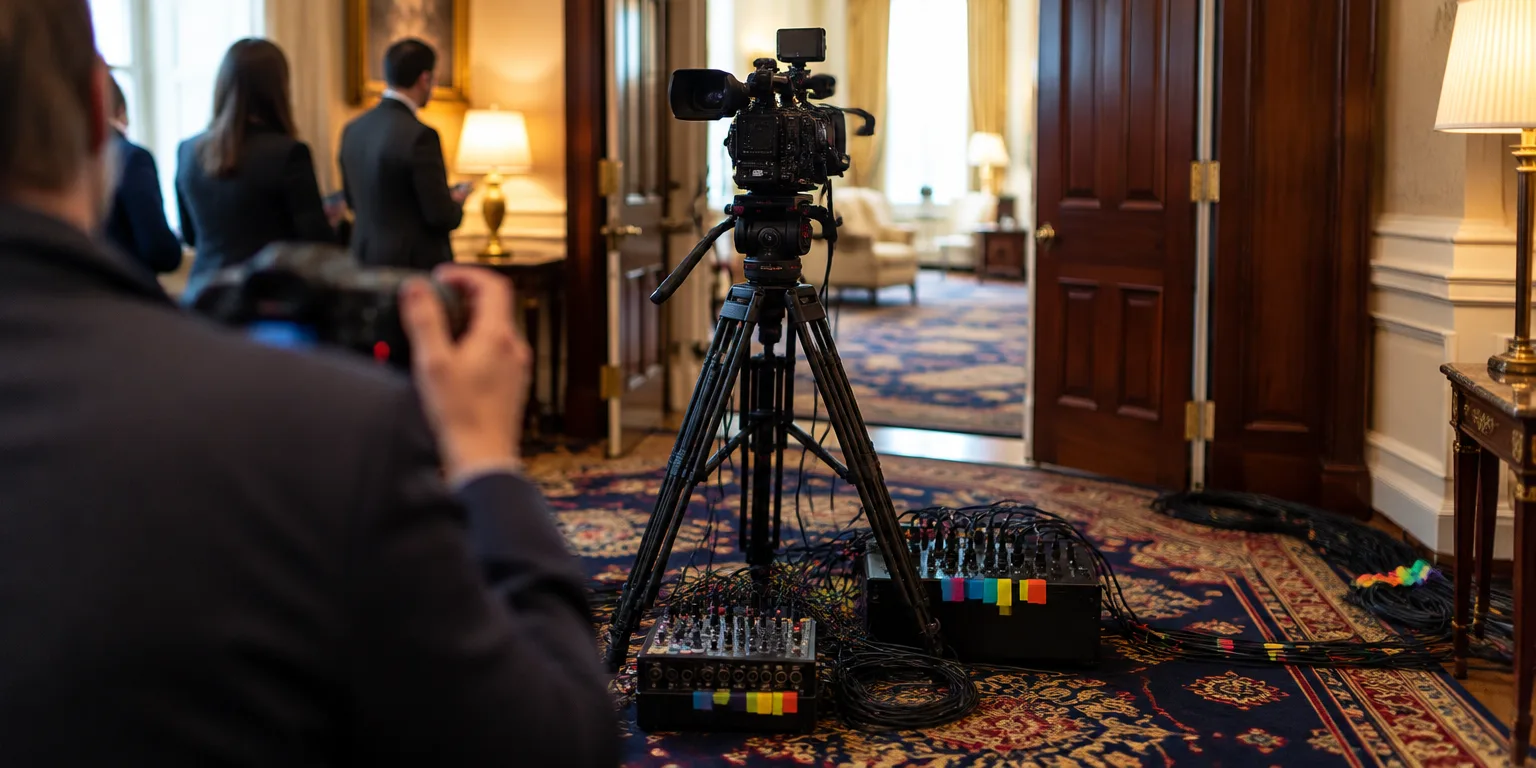
Much of the footage of a presidency comes from just a few cameras sharing the same small space.
There is room for only one or two lead television cameras in places like the Oval Office or Air Force One. So the major networks rotate the job, and every outlet uses the same pooled pictures to show whether a president is alert, tired, or caught off guard.
That sharing is why access fights matter beyond one network. Press freedom advocate Adam Rose notes that CNN remains excluded from that rotation on some days despite winning a court case over White House passes. Rose puts that loss at about 20 percent of the pool, because the other cameras will not backfill its slot.
Ownership makes the share even more concentrated. Rose says David Ellison, a media owner with close ties to President Donald Trump, now controls both CNN and CBS, putting 40 percent of the pool outlets under one owner. With fewer independent participants, Rose says, it becomes easier to withhold pictures or tilt the story.
The same narrow control applies backward in time. There are only a few major news archives, plus photo collections such as Getty, now controlled by the Getty and Koch families after being taken private.
Rose cites the Archival Producers Alliance, a group focused on archive access, which flagged an archive that laid off its whole licensing department, leaving no one to answer requests. Rose separately describes another network archive that once tried to license material only to itself.
Filmmakers, journalists, and teachers depend on those desks to license clips that cannot be found elsewhere. Rose asks what collective memory would look like without such footage, and raises as examples the film of President John F. Kennedy's assassination, the classroom images of President George W. Bush learning of the Sept. 11 attacks, and testimony from Holocaust survivors.
The result, Rose argues, is that consolidation does not just change tonight's news. Whoever controls the present pictures and the past footage has greater power to decide what later generations can watch, check, and believe.
Questions people ask
What is the White House TV pool?
It is a rotation system. Because only a few reporters and cameras can fit into tight spaces around the president, one crew shoots and shares the pictures and sound with all the other news organizations. That shared feed is what every channel broadcasts.
Why does an archive licensing department matter?
A licensing department handles requests to reuse old footage for a fee. Documentary makers, news producers, educators, and even other networks need permission and a copy of the clip. If the staff is gone or the owner refuses outsiders, that footage effectively becomes unusable.