Sacks Says U.S. Plan Was to Sell Weaker Chips to Take Share From Huawei
In Sacks's account, Washington banned the fastest chips but licensed slower ones, a nuance he says may be too hard to keep.
 All-In with Chamath, Jason, Sacks & Friedberg · Jensen Ousted as Nvidia CEO: "Spy" Scandal, Export Restrictions, Market Impact
The discussion centered on reports that Jensen Huang was out as Nvidia's chief executive after 33 years, with the chief financial officer serving on an interim basis and the stock down sharply. It was in that context that investor David Sacks laid out what he said was Washington's earlier logic for chip sales to China.
According to Sacks, Washington once settled on a counterintuitive approach: ban the fastest AI chips, but let slower ones keep flowing. The split began in 2022 under President Biden, Sacks said, when Washington first put export controls on advanced semiconductors.
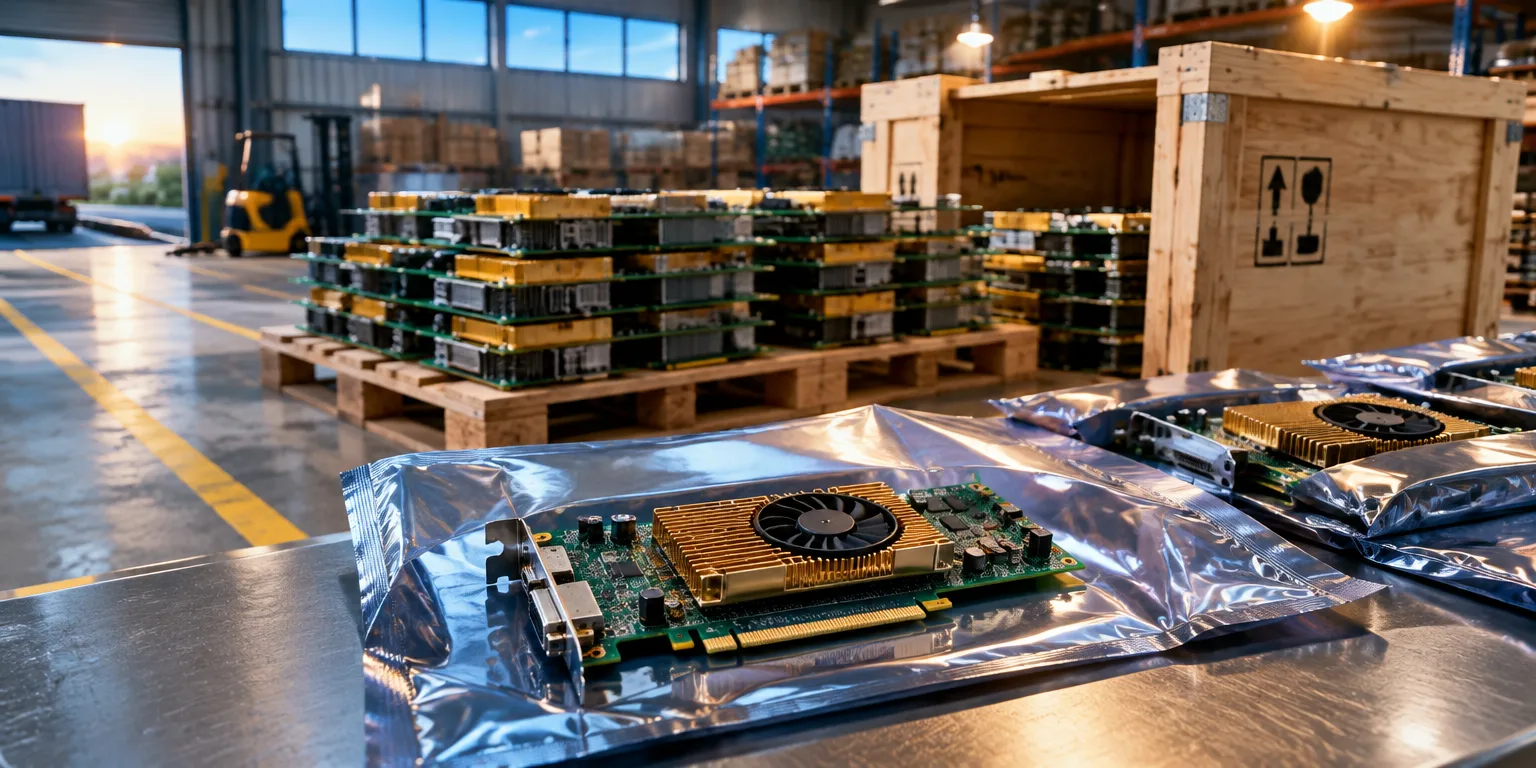
Leading edge chips, the most advanced processors for training AI, were prohibited for China, Sacks said. Lagging chips such as Nvidia's H20, an older or less powerful design, "could be sold in unlimited quantities" and without licenses.
Sacks said the Trump administration kept that framework but tightened it. Leading edge chips stayed banned, while lagging chips could be sold only in limited quantities and on a licensed basis.
The logic, in his account, was commercial. Chips are a business where higher volume helps pay for research and factory expansion, so selling a weaker American chip could take market share from Huawei.
Those research dollars would then flow to an American company rather than to a Chinese rival, Sacks said, and slow Huawei's ability to scale up. He said that reasoning was bipartisan, but added that it may be too difficult to sustain in the current political climate.
He also offered his view that the debate may no longer matter because, as he put it, China does not even want the chips. He said Beijing banned the H20 and basically prevented the newer H200 from entering the country, as part of an effort to build up Huawei as a national champion.
In Sacks's view, that leaves Washington hawks and Beijing wanting the same outcome for different reasons, with neither wanting American chips in China. He said if Huang was, in his words, "taken out because he wanted to sell chips to China," that was a "moot hill to die on because China is not taking those chips anyway."
Questions people ask
What is the difference between a leading edge chip and a lagging chip?
Leading edge means the fastest, most advanced processors, the kind used to train large AI systems. Lagging, or deprecated, chips are older or deliberately slowed designs, such as the H20, that can still run many tasks but are much less powerful for frontier AI work.
Who is Huawei and why does it matter in this fight?
Huawei is China's largest domestic maker of telecom equipment and AI chips, including its Ascend line. Beijing treats it as a national champion it wants to build into a global rival to Nvidia, including by steering Chinese buyers toward its products.
Why are chips described as a scale business?
Chipmaking has very high upfront costs for design, software, and factories, so unit costs fall as volume rises. More sales mean more revenue for research and cheaper production, which helps a company improve faster and lock in customers.