Lock Up Your Phone and Go Outside to Feel Awe Again
After a stroke confined him for years, Robert Greene learned to find wonder close at hand.
 My First Million · Robert Greene almost died. Here’s what it taught him about living
Robert Greene, the author of a new book on the sublime, says a stroke eight years ago changed how the world looked and felt to him. He wants readers to get some of that renewed awe without having to nearly die.
His warning came from the hills above Los Angeles. Greene rides there on a recumbent bicycle, built light so he can climb where there are no cars, and calls the beauty therapeutic.
What troubles him is who he passes. Walkers move through spectacular parkland staring at messages and social feeds, disconnected from what is around them.
For Greene, health requires observation, connection to the environment, and awareness of what is nearby. The loss of that attention, he says, leaves people narrow, restless, and cut off from themselves.
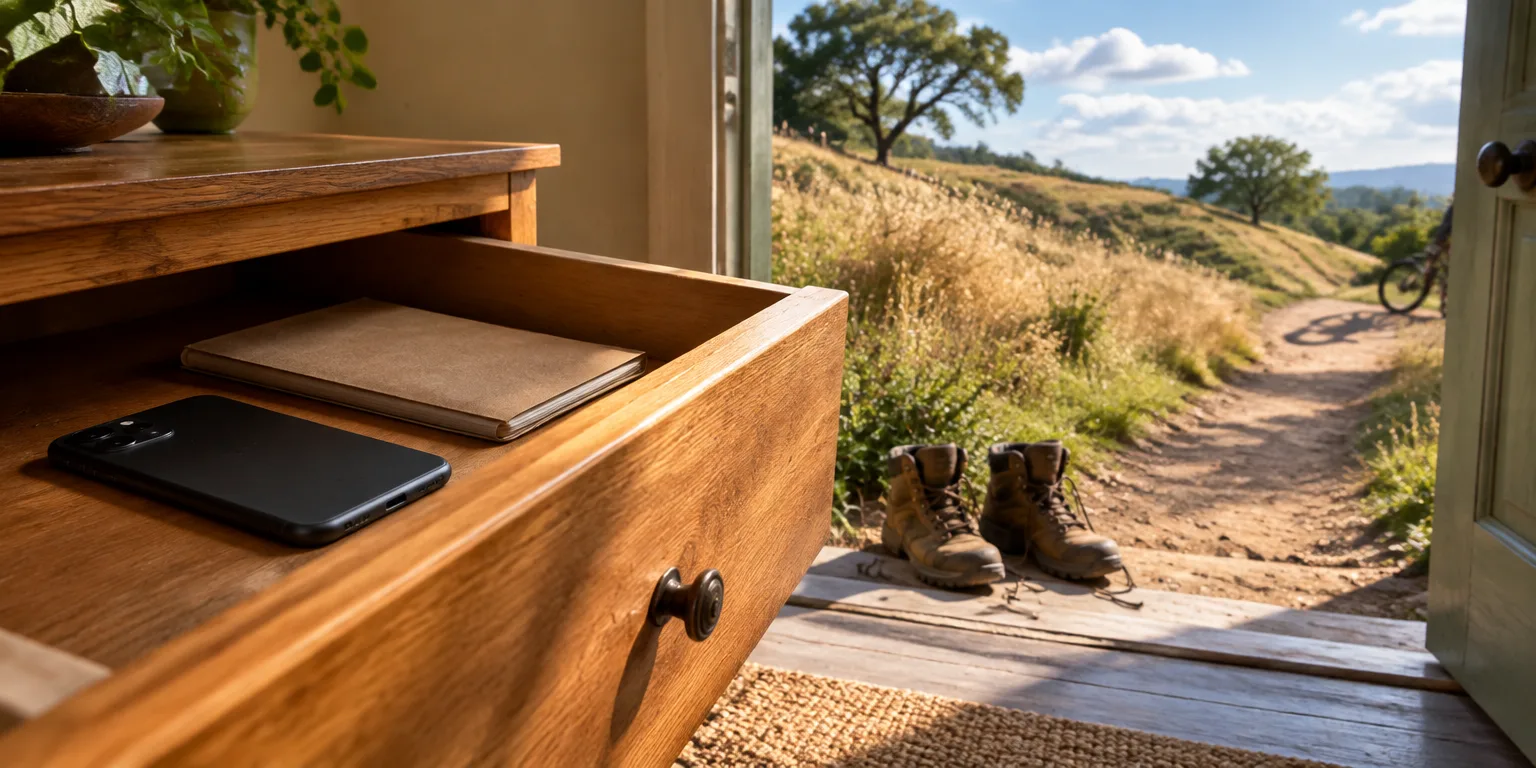
His fix is blunt and practical. Lock the phone in a drawer so you cannot reach it, go outside into nature, and bring a friend who has done the same.
Expect withdrawal: you will want to check sports, politics, and updates, and you cannot. Then attention has nowhere to go but outward, to sounds, to the feeling of the body moving, and to the landscape rising around you.
Greene learned that outward attention can also be found at home when travel is impossible. Confined largely to one room for seven years while writing, and unable to hike, he practiced finding wonder close at hand in the sky, his pets, his wife, and simply watching people.
You can copy that at home by slowing down. Take a walk, spend time alone, put technology aside, and reconnect with the body. As a child of three or four, everything looked strange and wondrous, and Greene offers exercises to feel time again as flow rather than schedules and deadlines.
He does not promise it will make you more successful at work. He says an hour of slowing down and feeling alive in the body can return something more human, and with it a touch of awe.
Questions people ask
How long should I leave the phone behind?
Greene does not give a set time. His example is one outing with no access at all, plus short daily practices like a walk, time alone, or an hour spent slowing down and noticing the body and surroundings.
Do I need wilderness for this to work?
No. Greene mentions Central Park, Connecticut woods, and Los Angeles hills, but his own practice was in one room. The point is outward attention to sky, animals, people, sounds, and movement, wherever you can find them.
Why do children feel awe so easily?
Child psychologists describe it as heightened novelty and curiosity, when young children notice colors, textures, and sounds because everything is new. Adults can approach it by slowing input, moving the body, and looking closely rather than naming and rushing past things.