Screens Copy Connection, but the Brain Wants the Real Thing
The brain treats swipes and likes as copies, which is why more scrolling can leave people lonelier.
 This Past Weekend w/ Theo Von · #695 - Happiness Expert Dr. Arthur Brooks
Swiping, scrolling, and gaming can feel a lot like real life, but your brain treats them as copies.
That is the argument from Arthur C. Brooks, a researcher who studies happiness. He says dating apps simulate courtship, social media simulates friendship, and gaming simulates real life accomplishment.
The reason comes down to how he divides the work of the brain. Looking at a screen uses the more analytical side, he says, to imitate what the other side wants most, which is love, mystery, and meaning.
He makes the point with his own setting. He says there is a reason he and comedian Theo Von are talking in person rather than on Zoom. An online talk, he says, would be a simulated conversation, and it would not be as good.
The deeper problem, he argues, is confusing two kinds of problems. A jet engine is complicated, hard to figure out but finished once it is solved.
Marriage, friendship, and love are complex instead. They are easy to understand but never finished, and they have to be lived with over and over.
Technology built for the first kind keeps offering what Brooks calls mechanical cats. A robot cat never needs food or a litter box, but, as Brooks puts it, "you don't love your mechanical cat," because it is only an approximation of something warm, alive, and surprising.
Brooks calls social media "the junk food of our social lives," saying it is "high in calories and low in nutrients."
You get a quick hit of contact and then feel hungry again. In his telling, every extra hour spent scrolling can leave people lonelier because the brain knows the difference.
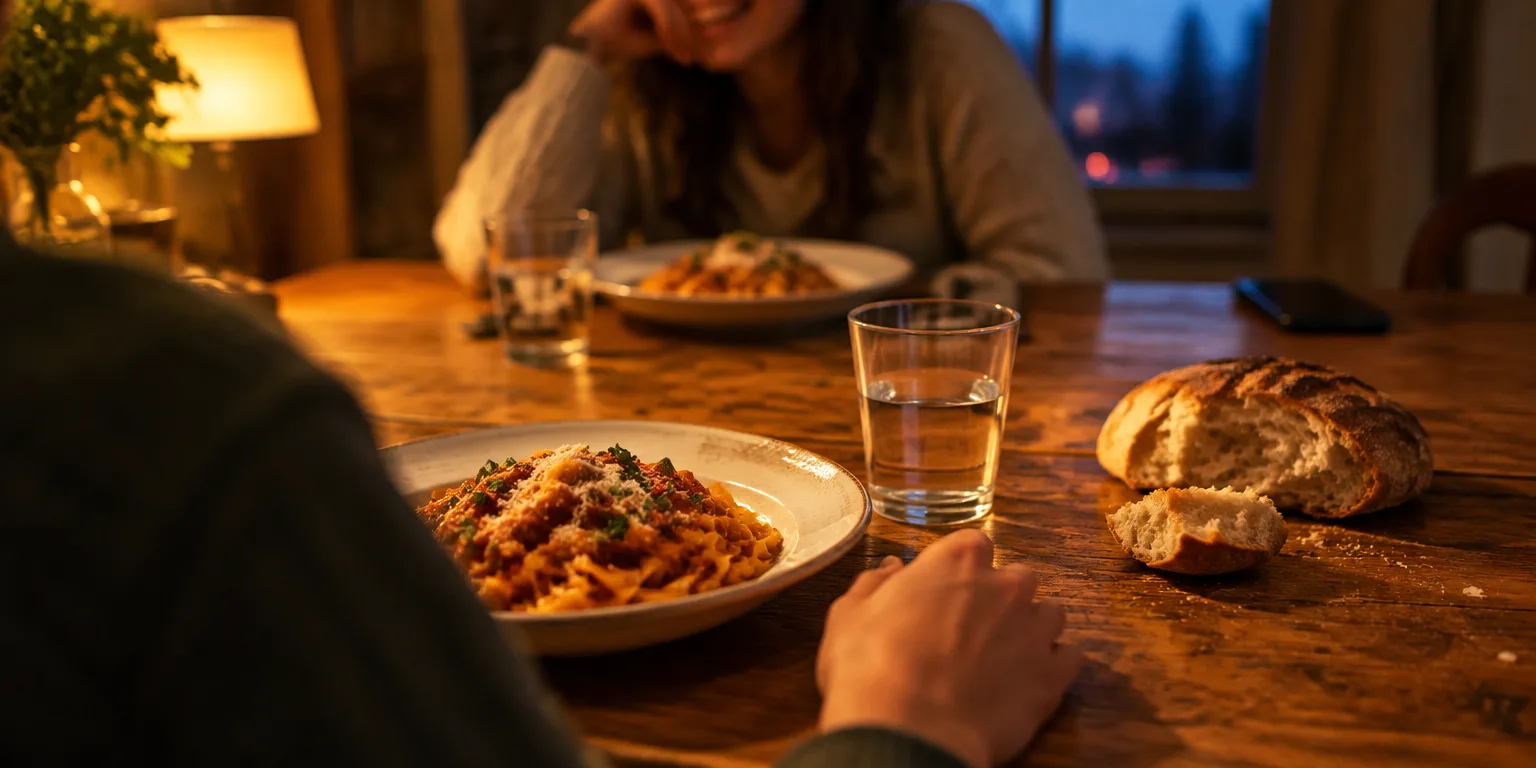
His practical answer is to protect the in-person parts. Keep the phone away during the first hour after waking, at meals with others, and for the last hour of the day.
Questions people ask
How much social media is too much?
Brooks does not give a minute limit in this discussion. What he does recommend is keeping phones away during the first hour of the day, at meals, and during the last hour of the day. Those boundaries leave more room for attention and face to face time.
Why would the brain care whether connection is in person?
Think of it as the gap between a copy and the thing itself. Brooks argues the brain knows the difference between the simulation and real connection. That gap is why the copy can feel empty even when it looks similar.