More Memory Does Not Make the iPad Faster, Just Roomier
The new iPad Air has 50 percent more memory, and the benefit is smoother work with big batches and background apps.
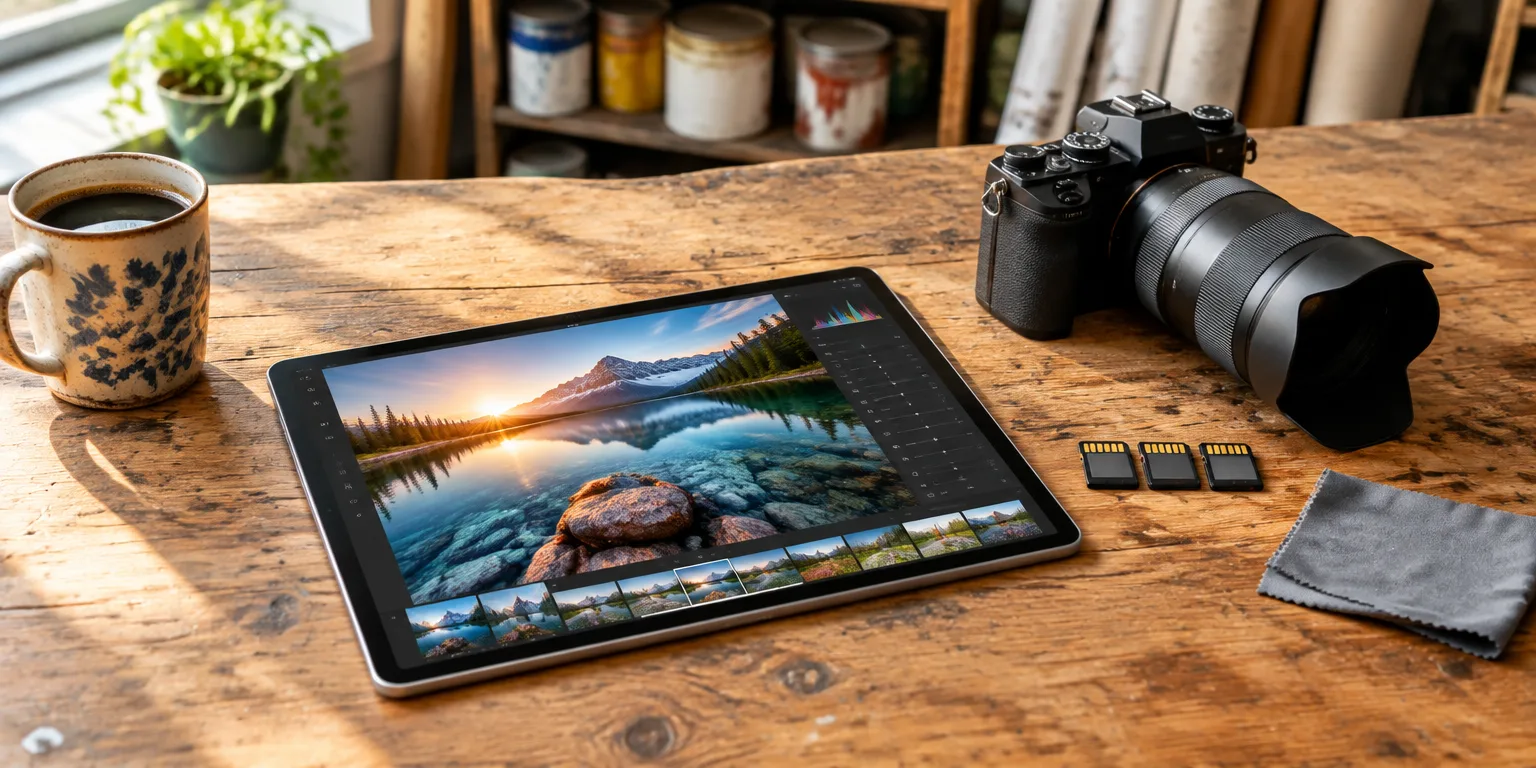
 digitalcameraworld.com · Apple iPad Air M4 (2026) review: Do we even need an iPad Pro when the Air is this powerful? | Digital Camera World
Photographer and lecturer Glen Southern tested a new 13-inch iPad Air with 12 gigabytes of unified memory, the shared working space the chip uses to hold what it is actively doing. The last two Air generations had 8 gigabytes, so the increase looks like 50 percent on paper.
It does not work like that in practice. As Southern put it, "That extra memory doesn't magically make every button in Lightroom work 50% faster – that's not how RAM works."
In general, how quickly each edit finishes depends more on the processor and the software than on memory capacity. Memory provides breathing room, like a larger desk for work already in progress.
That room matters when each file is enormous. A 61-megapixel RAW photo from Southern's Sony camera packs a large amount of image data the iPad must work through again with each tweak, and zooming deep into fine detail stayed fluid.
Moving between images, adjusting exposure and color, and recovering highlights and shadows all felt responsive, he said. Southern wrote, "Once a computer becomes fast enough, you stop thinking about the computer and start thinking about the photograph."
The difference also shows across many files and apps at once. Large batches, complex edits, and other programs left running in the background are where the headroom becomes useful, and Southern deliberately edited with other apps open without a significant slowdown.
"That makes the Air particularly interesting as a location machine," Southern says. After a shoot, a photographer could load pictures onto the tablet, pick favorites, polish the best ones, and send them off without opening a laptop.
Questions people ask
What is unified memory?
It is one pool of memory built into the chip package that the processor, graphics, and other parts all share, instead of each having a separate supply. That lets the iPad move large images and video between tasks without copying them back and forth, which helps with photo and video apps.
If memory does not make everything faster, what does?
Mostly the chip, fast storage, and how well the app is written for the iPad. A newer processor finishes decoding, rendering, and exporting sooner, while clean software avoids wasted work. Memory matters most when you run out of room and the device has to shuffle data around.
Will I notice 12GB in everyday use?
For ordinary browsing, email, and streaming, you will likely notice little difference. The extra capacity matters more for high resolution photos, long video timelines, large batches, and heavy multitasking. If you rarely push the device that hard, other features may matter more.