Your Like Helps Decide What Strangers See
Facebook carries posts to friends with similar tastes, while TikTok spreads videos through completion rates and replays.
 emerald.com · Algorithmic cognitive programmes: observing ambient architectures of attention with social systems theory | Kybernetes | Emerald Publishing
When you like a post or replay a video, you are not just training your own feed.
You are casting a small vote on what strangers will see next. At the personal level, ranking systems use your past behavior to guess what will keep you around. At the population level, they add up millions of those signals and push high engagement content into more feeds.
Every click, like, or share can raise the odds that an item appears for someone else. Repeated across a large user base, users end up shaping one another's feeds.
On Facebook, that influence travels through friendship. A like or share can elevate a post for friends with similar tastes, whose own reactions carry it into groups of people who have no connection to the original poster.
It looks like you chose freely, but the options were already narrowed. One small like can reach far beyond the friend who saw it.
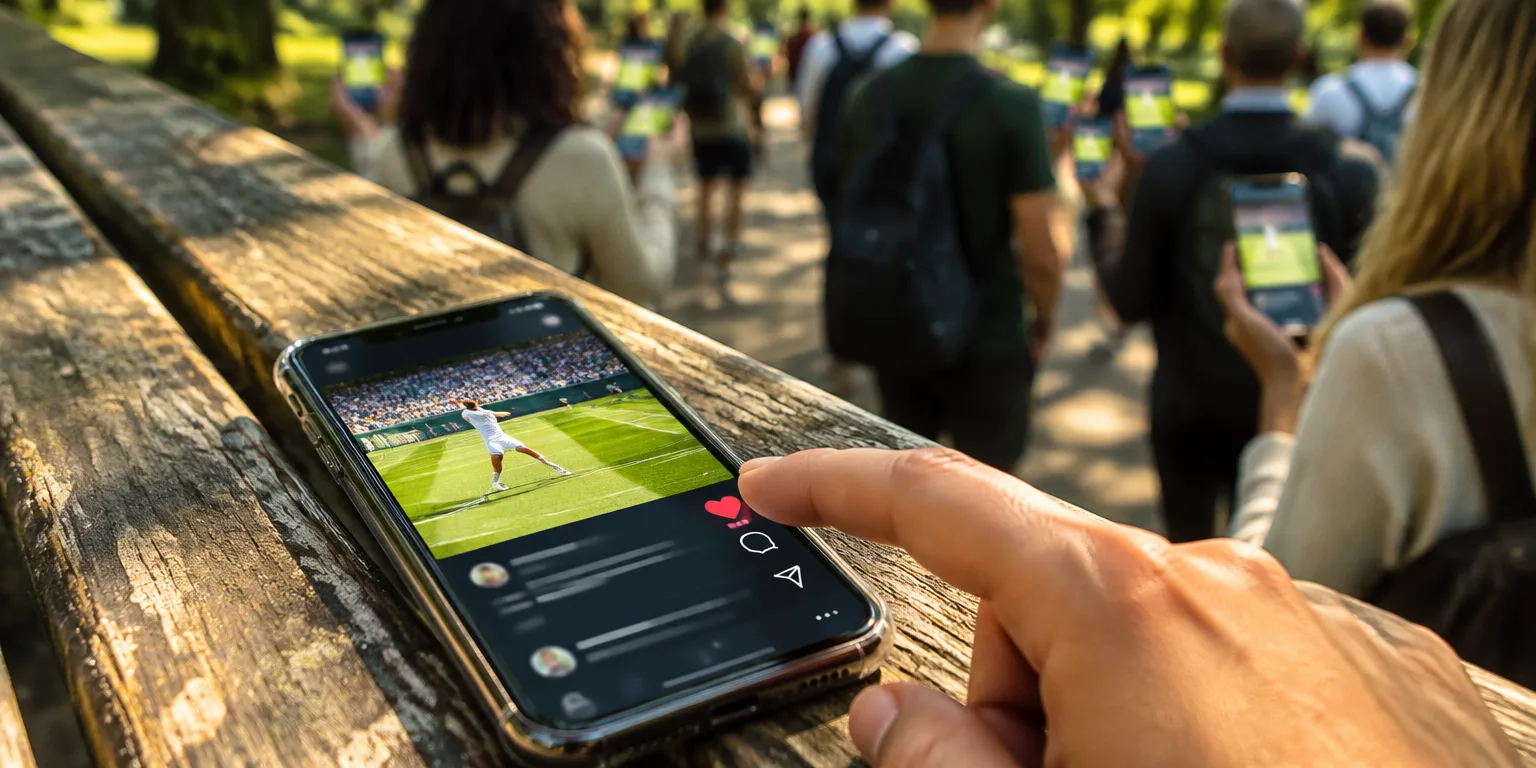
TikTok works differently. Its For You Page depends less on who you know and more on what people like you do. A slow motion tennis rally might start with sports fans, then spread to unrelated viewers if completion and replay rates stay high.
Facebook leans on the web of people you have declared as friends, plus the topics and people you tend to engage with. TikTok rewrites relevance with each replay, completion, and swipe away, continually rebuilding its picture of who you are.
Both systems amplify what earns engagement, regardless of whether it is true or civically useful. And the paths are nonlinear and hard to trace, so your engagement with one post can eventually lead another person to something quite different.
Questions people ask
If I unlike something, does that undo its wider spread?
No. Ranking responds to patterns, not just single taps. Your history, the behavior of similar users, and the accumulated weight of many other engagements still shape what is shown.
Does TikTok ignore my friends entirely?
Largely through behavior rather than friendship. TikTok does consider social signals, but its central ranking relies on completion rates, replays, and quick swipes away from short videos.
Why would engaging posts not also be the most accurate ones?
Engagement predicts attention, not accuracy. Systems built to maximize time on the platform favor what gets reactions, and sensational or polarizing material often gets reactions whether or not it is reliable.