Protein’s Famous 1.6 Gram Rule Is a Fuzzy Average, Not a Prescription
Pooled trials found benefits leveled off near 1.6 grams per kilo, but the 95 percent confidence range ran from 1.03 to 2.20 grams per kilo.
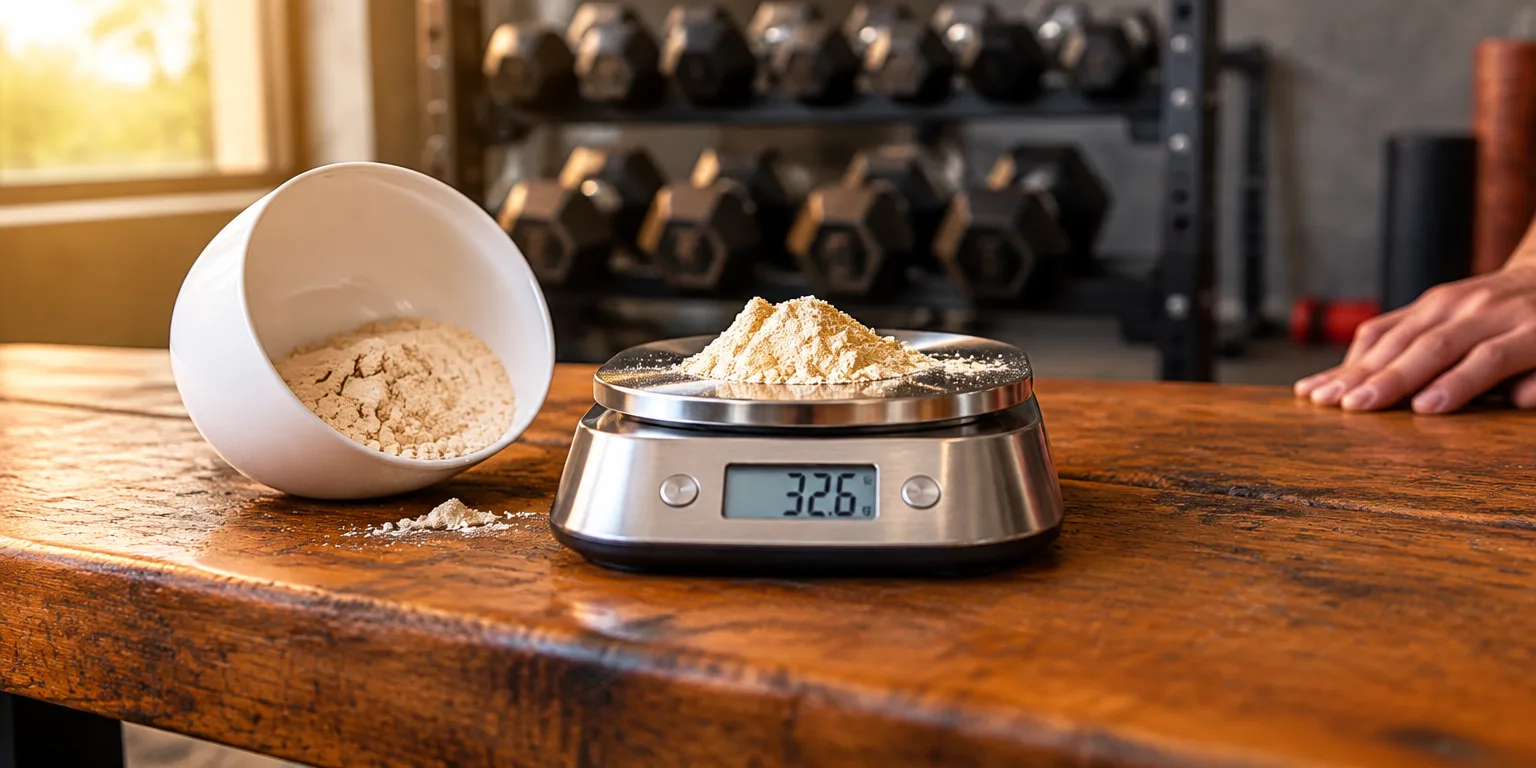
 allostasisproject.org · Protein Intake vs Timing: Daily Amount, Meals and Exercise | The Allostasis Project
Gym lore says you need 1.6 grams of protein per kilo of body weight. That number is real, but it is not a prescription.
It comes from researchers Morton and colleagues, who pooled 49 trials with 1,863 healthy adults doing resistance training. On average, protein supplements added 0.30 kilos of fat-free mass, the weight of muscle, bone, and water, on top of what training itself produced with a placebo or no extra protein.
Their model then looked for a breakpoint, the intake where extra protein stopped adding extra muscle on average. That point landed near 1.62 grams per kilo per day, counting food plus supplements.
The uncertainty around it was large. The 95 percent confidence interval, the range where the true average likely sits, ran from 1.03 to 2.20 grams per kilo. The test favoring that breakpoint had a p-value of .079, a statistical score that falls short of the usual bar for confidence.
The evidence was also thinner for women and older adults, and people cutting calories were excluded. It should not be treated as a rule for everyone, a safety limit, or a cue to keep piling on extra shakes.
That is why 70 times 1.6 equals 112 grams is only math. It does not mean 112 grams of powder, and it does not mean every person who weighs 70 kilos needs 112 grams.
So 1.6 is an average point where benefits leveled off for the healthy trainees studied, not a personal target.
Questions people ask
What is fat-free mass?
Fat-free mass is everything that is not fat, including muscle, bone, water, and organs. In training studies it is used as a rough stand-in for muscle, because direct muscle gain is harder to measure.
If I weigh 70 kilos, should I eat 112 grams of protein a day?
No. The article presents it only as arithmetic to show how the formula works. How much you need depends on your training, diet, age, health, and goals, which is why general fitness numbers are a starting point for a clinician or dietitian, not a prescription.
Will more than 1.6 grams per kilo build more muscle?
The data suggest little added benefit on average beyond that point, but the breakpoint is uncertain, with a confidence range of 1.03 to 2.20 and p=.079. Evidence was thinner for women and older adults, so the average is less certain for them. The analysis also does not say whether very high intakes are safe or useful in other situations.