Hard Dieting Can Push Protein Needs to 3.1 Grams Per Kilogram
That is well above the usual target for lifters, aimed at keeping muscle while losing weight.
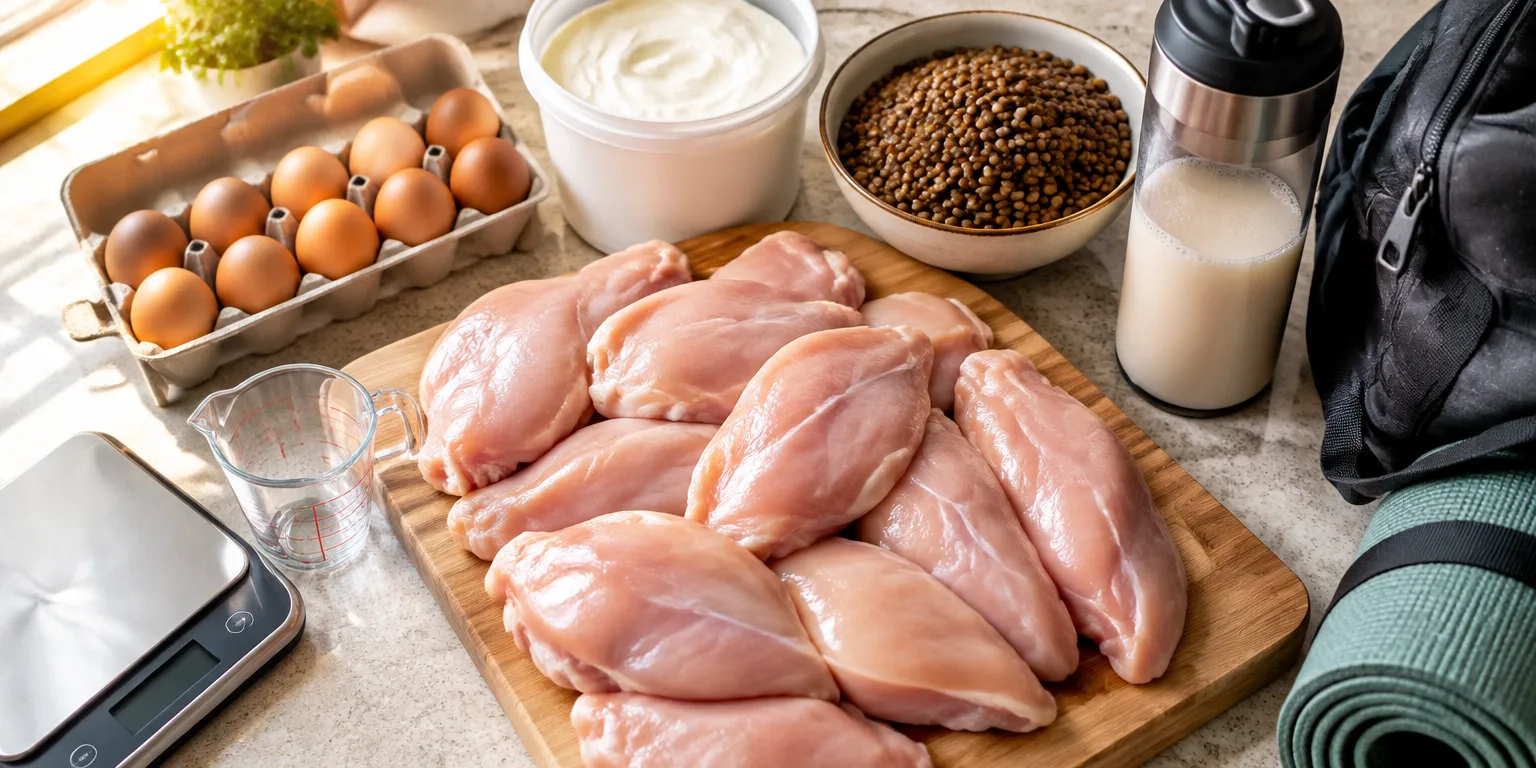
When lifters cut calories hard while still training hard, daily protein needs may rise to 2.3 to 3.1 grams per kilogram of body weight to help preserve muscle.
That guidance comes from a position stand in the Journal of the International Society of Sports Nutrition. Lean mass means muscle plus other nonfat tissue, the part dieters most want to keep.
Most lifters who are eating normally need 1.4 to 2.0 grams per kilogram. One review put the leveling point around 1.6 grams, but said that figure was shaky and could reasonably sit anywhere from about 1.0 to 2.2. Take someone weighing 80 kilograms: at 1.6 grams, the daily total comes to about 130 grams, compared with about 184 to 248 grams when cutting hard.
That amount is difficult to cover through food alone. The article describes cutting as the situation where a shake is most clearly useful for closing the gap between meals and the target.
Questions people ask
What does 2.3 to 3.1 grams per kilogram look like in food?
A lot. A cooked chicken breast has roughly 30 grams of protein per 100 grams, so 200 grams would require more than 600 grams of chicken alone. In practice, people spread it across meat, dairy, eggs, beans, and shakes across three to four meals.
Will eating that much build extra muscle if I am not dieting?
Probably not. A review of resistance-training trials pointed to a plateau around 1.6 grams per kilogram for gaining lean mass when calories are adequate. Above that, extra protein added convenience more than muscle.
Is that much protein safe for kidneys?
For healthy adults, the evidence is reassuring but limited. A meta-analysis of 28 trials in 1,358 healthy adults found no difference in kidney filtration between higher- and lower-protein diets. It excluded people with kidney disease, who should talk with a clinician first.