Rain Falls When Cloud Droplets Get Too Heavy to Float
Towering thunderclouds hold water longer, so they produce the biggest drops.
 Stuff You Should Know · Short Stuff: How Much Does A Cloud Weigh
A puffy cumulus cloud looks like one solid object, but it stays up because it is not solid at all. For one rough estimate, an example cloud with a volume of one cubic kilometer can hold about 1.1 million pounds of water, at roughly half a gram per cubic meter, but clouds vary widely in size and shape.
That weight is not gathered in one holding tank. It is spread over billions of tiny droplets, each so light that gravity pulls it downward only very slowly, while rising and expanding warm air helps hold the cloud aloft.
The droplets do not stay small forever. Water vapor keeps condensing, often around specks like dust, and the droplets grow fatter as they join together with other droplets.
Eventually enough droplets combine that the cluster becomes heavy enough for gravity to overcome the lift from the surrounding air. When it can no longer stay aloft, it falls as rain, or as frozen precipitation when it is cold enough.
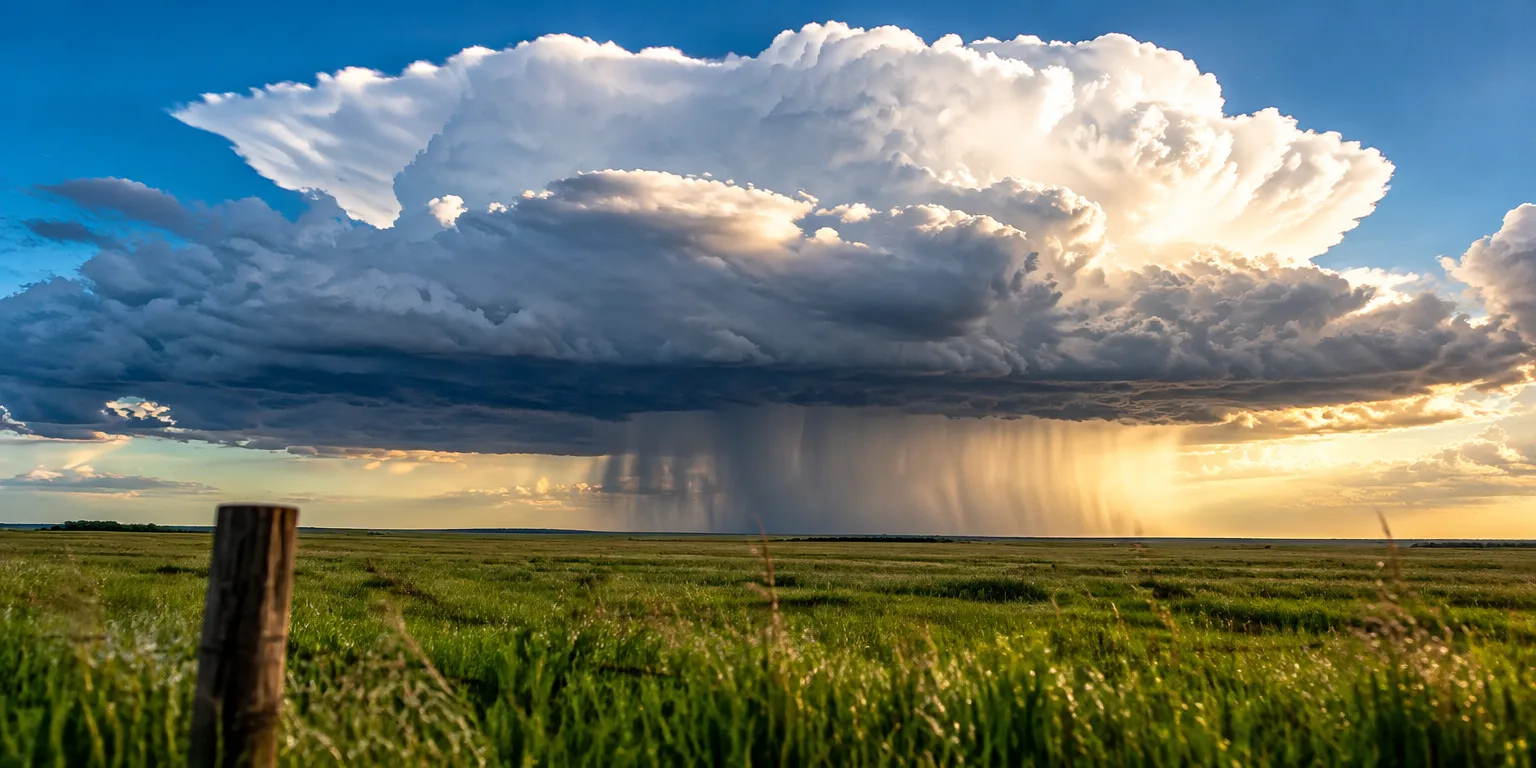
A bigger cloud tends to produce bigger drops, since it holds more water for longer. A towering thunderhead, called a cumulonimbus, can hold water longer, so its drops have more time to merge and grow before they finally fall.
Questions people ask
Why does rain fall drop by drop instead of all at once?
Droplets reach falling weight at different times, so rain leaves the cloud gradually. Droplets vary in size and position, and they merge at different rates as they move through the cloud.
How large can a raindrop get?
Most raindrops are less than a quarter inch wide. As they fall they flatten, wobble, and can break apart, and strong air resistance tends to split very large drops before they reach the ground.
Why do storm clouds look dark?
Thick clouds contain more droplets and block more sunlight. Less light passes through to your eyes, so the cloud looks gray or dark, especially near the bottom.