Selling China Older Chips Could Keep America Ahead Longer
Investor Gavin Baker argues weaker chips would keep Beijing behind, and that a ban would push it to build its own supply.
 The AI Daily Brief: Artificial Intelligence News and Analysis · Washington Is Taking Control of AI
An exchange between investor Gavin Baker, a managing partner at Atreides Management, and geopolitics commentator Dmitri Alperovitch was described as a fairly good summary of the two positions on selling AI chips to China.
Baker wrote that well-meaning China hawks were putting American security at risk, adding, “America had machine guns and we were giving China muskets to prevent them from developing their own machine gun variants.”
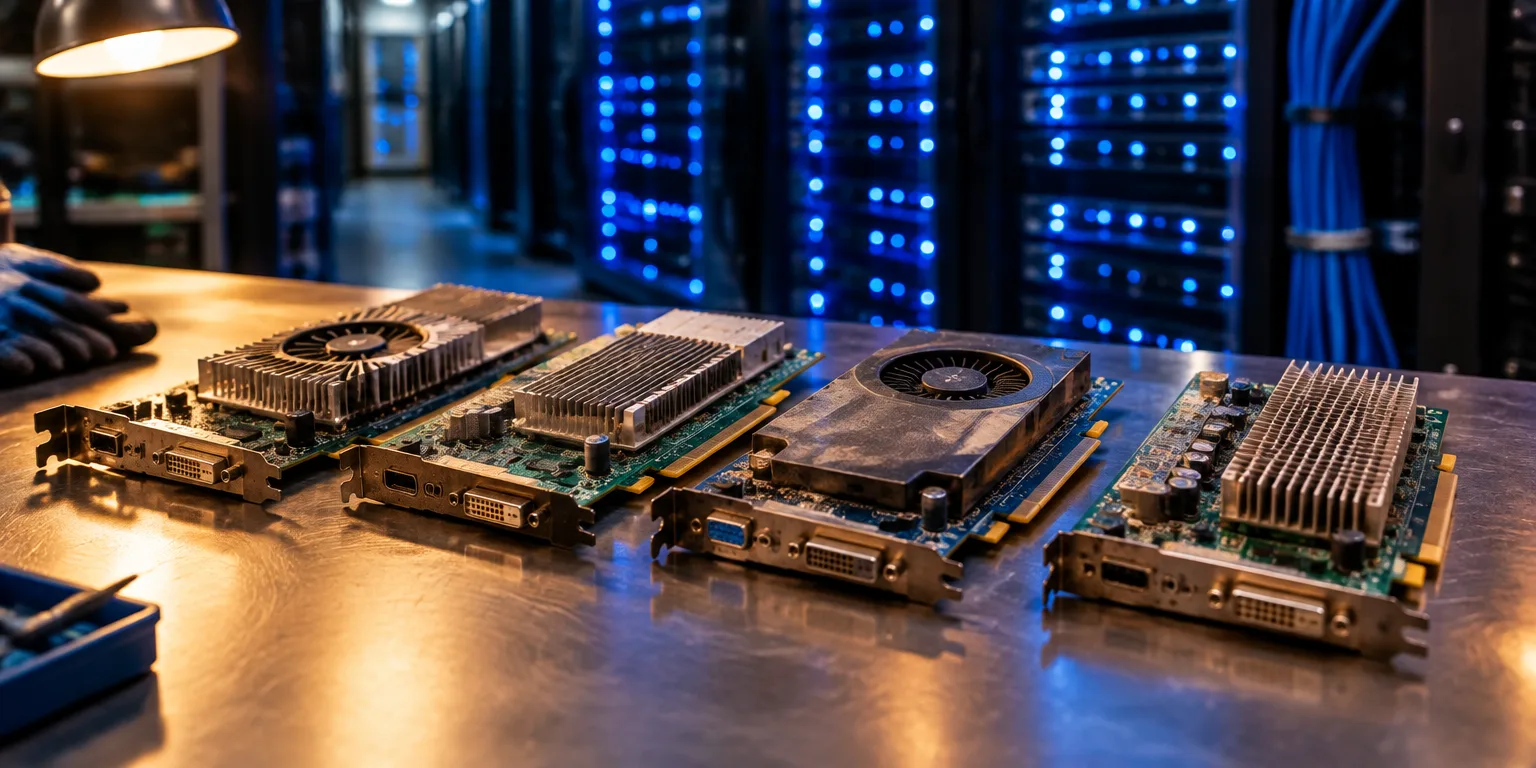
What Baker meant was selling China older, less powerful American graphics processors, the chips used to train AI, while American labs used far stronger systems. His argument was that scaling laws, the pattern in which more computing power generally yields more capable models, would keep American labs ahead, barring a huge technological breakthrough that let weaker chips train better models.
He also pointed to cloud data centers in Southeast Asia. Baker wrote that “in the event of a conflict, we could have simply turned off all the Southeast Asian clouds.”
Advocates of selling older chips, chief among them Jensen Huang of Nvidia, rarely pitched the policy as keeping China dependent on inferior supply. Instead, they argued more vaguely about whether the United States should compete with China, which proved less successful than the blunt ban case: if winning AI is about having the best and most chips, give China none.
Alperovitch answered that the claim is falsifiable. Alperovitch wrote that Chinese models “are less than nine months behind the U.S. frontier ones,” and proposed trying the other approach, giving China no computing power, as a test. He acknowledged it would not be a perfect test because China has already smuggled in so much Nvidia computing power that it can use going forward.
Baker argued that if the hawks get their preferred ban, “China will likely soon have a chance of catching America in AI by going down an alternative, less power-efficient AI hardware path” it almost certainly would not have pursued if weaker chips stayed available. Baker warned that “it will be a much less stable world if China pulls even or ahead of America in AI,” in part because, he argued, China would pass the technology on to Russia, Iran, and North Korea.
Questions people ask
What are scaling laws in AI?
Scaling laws describe the observed pattern that increasing computing power, data, and model size tends to produce more capable AI models. They do not guarantee progress forever, but labs have relied on them to plan training runs and predict performance.
Why do older AI chips leave a buyer at a disadvantage?
Graphics processors were first built for video games but became essential for AI because they can do many calculations at once. The most advanced versions train leading models, while older versions are slower and cost more power for the same result.
How could cloud computing give the U.S. leverage in a conflict?
Many AI models are trained and run in large data centers that rent computing over the internet. If those centers use American chips and software and sit in allied countries, Washington could in principle restrict access during a crisis.