Selling in Five Places Left a Food Maker Running Blind
Tait Farm Foods says one shared plan brought clarity on ingredients, costs, and prices.
 foodmanufacturing.com · Small Food Manufacturers Tie Production to Wholesale, Retail and Online Orders | Food Manufacturing
Tait Farm Foods makes over 65 specialty foods, sold in five places: two wholesale routes, Amazon, its website, and its own store.
That reach created a blind spot. Production Manager Nikki Mattern-Klinger could not get a dependable view of new orders, sales, and stock on hand across the five channels.
“I was running blind,” she says.
The problem was the tool. Its early stock program had been built mainly for online sales, so it tracked internet transactions but missed shop and wholesale purchases and factory needs.
Employees adjusted stock by hand, and it was hard to tell what was actually available to sell or to cook with.
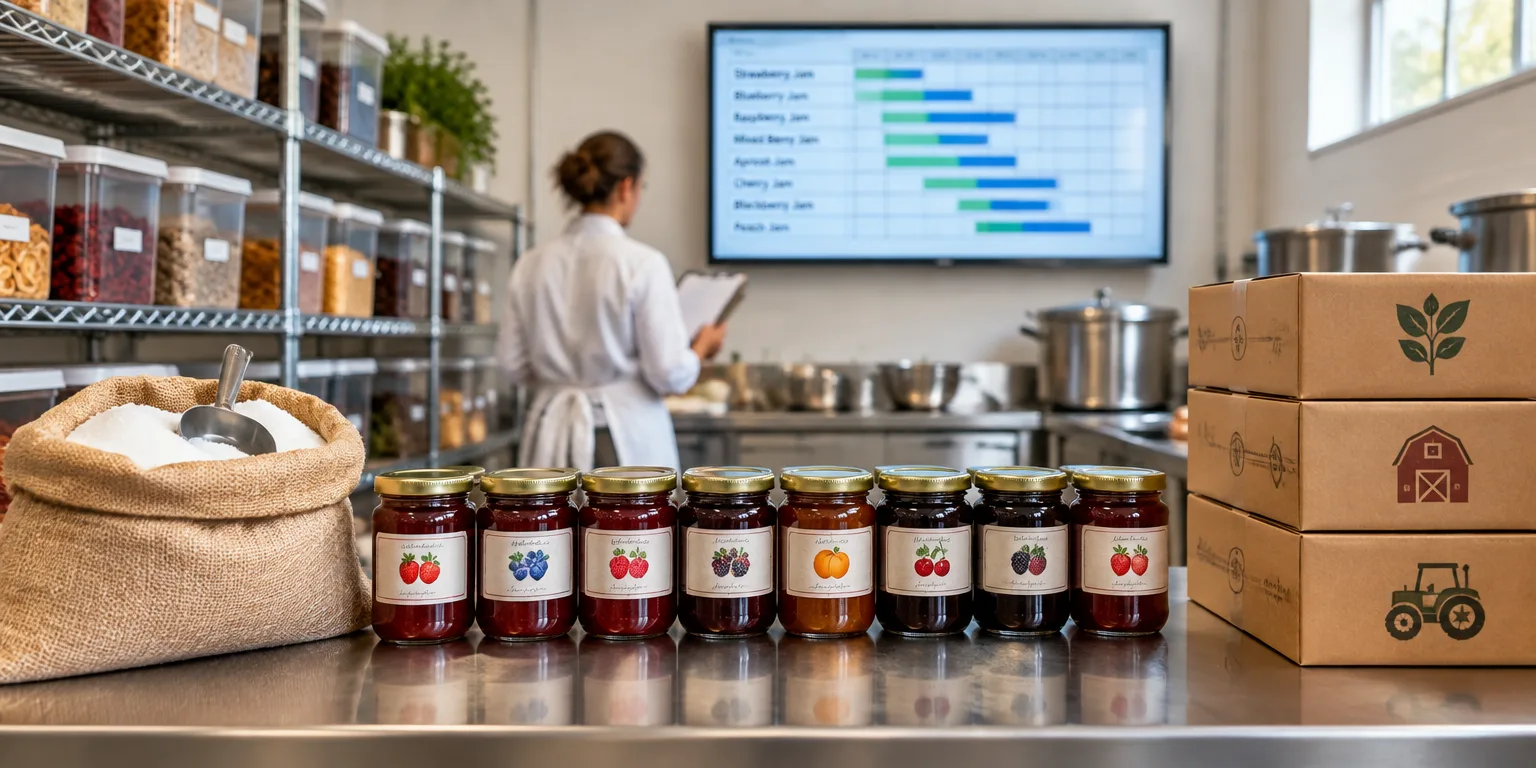
The fix was adopting MRPeasy, the software vendor's product, to link selling, stock, and production, so orders from every channel feed one production plan.
That plan compares total demand with finished goods on hand, ingredients available, and production capacity.
Forecasting got simpler. The company can now forecast ingredient needs more easily, and see when buying a larger quantity makes financial sense instead of ordering from incomplete information.
“We now have much more clarity around how much we need to buy and when we should buy it,” says Sales Manager Karen Addenbrook.
The company reports paying less for ingredients, doing less math by hand, and earning more, without sharing numbers. Sharper cost figures also let it reset prices when supply and wage costs move.
Questions people ask
How does one production plan actually work?
A single plan adds up every order, then subtracts what is already made and checks what ingredients and factory time are available. The gap becomes the shopping and cooking list, rather than five separate guesses.
Why didn’t the e-commerce software see everything?
Online tools count a sale when a website order arrives. They often miss a cash register sale, a wholesale invoice, and the fact that jam on the shelf is no longer fruit and sugar available for the next batch.
When does buying ingredients in bulk make sense?
Buying in bulk usually lowers the price per pound, but only if the ingredients will be used before they spoil and there is cash and storage to hold them. A clearer demand forecast makes that tradeoff easier to judge.