In One Reported Study, Red Light Cut a Blood Sugar Spike by More Than 25%
The light was said to reach deep into tissue, where it was proposed to help energy-making cell parts work more efficiently.
 The Diary Of A CEO with Steven Bartlett · Andrew Huberman: The Real Reason You Can't Get Deep Sleep & Wake Up Exhausted
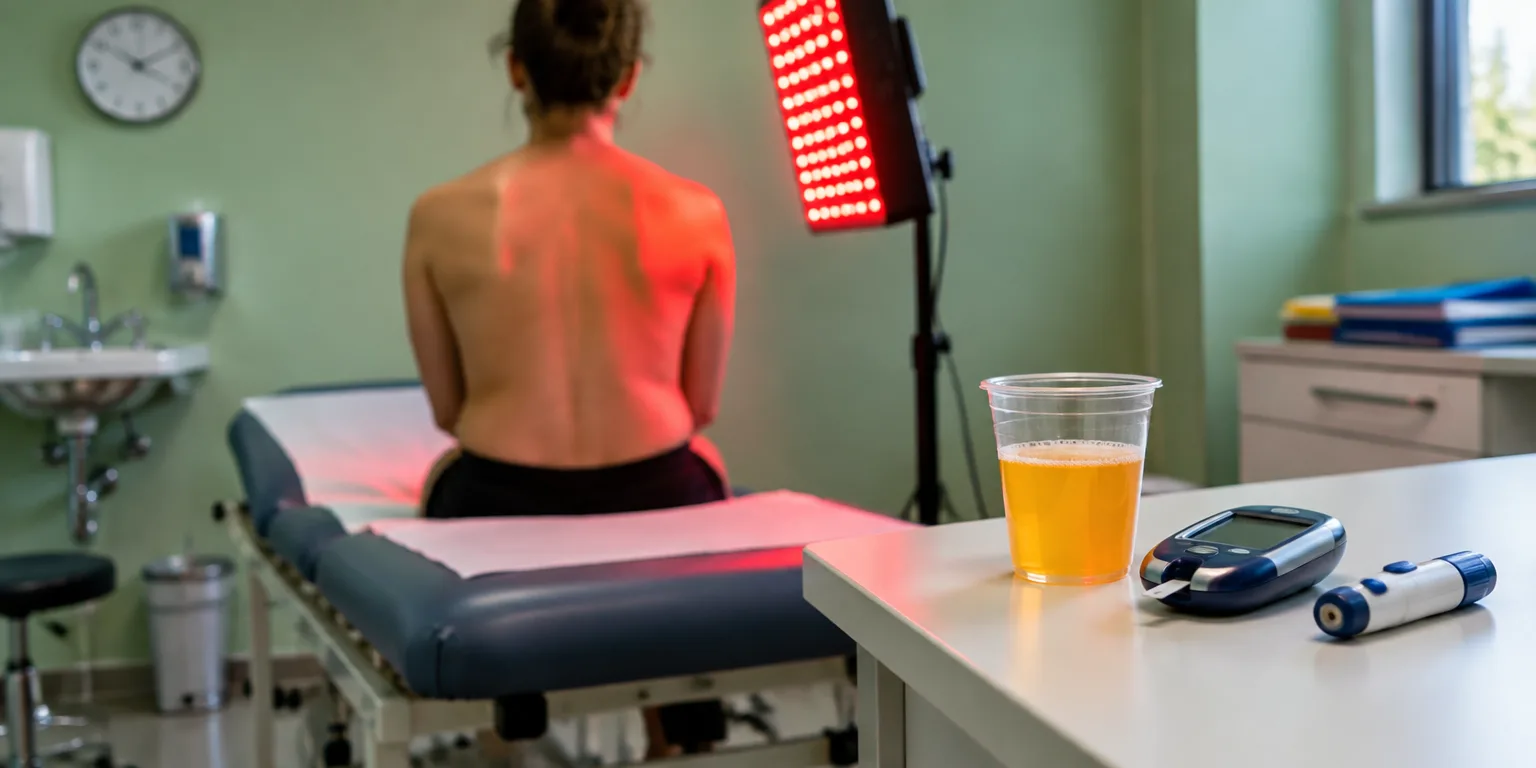
In one study, described by Andrew Huberman, who wrote the book Protocols: An Operating Manual for the Human Body, shining red light on people's backs during a sugary drink test was said to cut the peak rise in blood sugar by more than 25%.
The finding comes from vision scientist Glenn Jeffrey's lab at University College London. People fasted, drank glucose, and had the peak and rate of the blood sugar rise measured while long wavelength light shone on their backs.
Huberman said the light can be shone on bare skin or through a T-shirt. He said red light can travel roughly eight centimetres beneath the skin surface, with infrared traveling farther, clear through the body.
He offered this as the proposed explanation: the light changes how mitochondria, the tiny structures that make energy inside cells, handle electrons, letting them work more efficiently.
The broader context was that balanced light across the spectrum is the goal. Ultraviolet is needed on skin to make vitamin D, and short wavelength blues and greens were not described as bad.
Questions people ask
What is a glucose tolerance test?
It is a test of how the body handles sugar. A person fasts, drinks a glucose drink, and has blood sugar measured over time to see how high it peaks and how fast it rises.
Why would light on the back affect blood sugar?
The reported idea is about penetration and energy use. Long wavelength red light was said to reach centimetres into tissue, with infrared going farther, where it was proposed to change how mitochondria handle electrons so they function more efficiently.
Does this finding mean other wavelengths do not matter?
No. In the same discussion, ultraviolet light was described as necessary on skin to make vitamin D, and blue and green light were not described as bad. The broader context was balanced light across the spectrum.