Sow Small Batches of Salad Every Week or Two
Small, repeated sowings keep the harvest coming, and the seeds go shallower than you think.
 biogardens.org · Four Season Harvest Planning
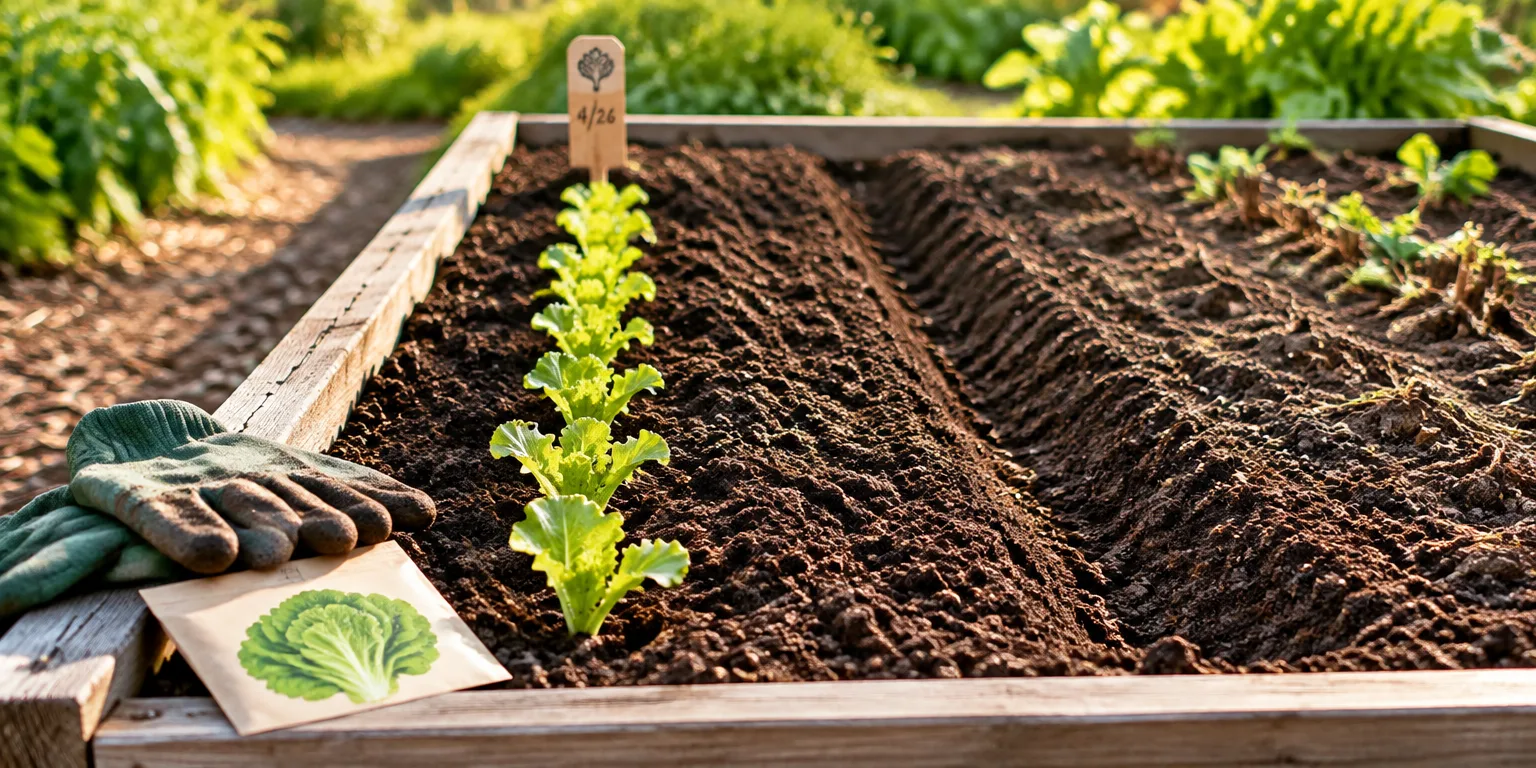
Rather than sowing a whole bed of salad at once, sow a little at a time so the next batch is coming ready as the last one is picked.
The method is succession planting, sowing a little of one vegetable at a time at one- to three-week gaps for a continuous harvest from the same bed.
For lettuce, sow a small row every 10 to 14 days. For radishes, sow every 7 to 10 days. For carrots, sow every 2 to 3 weeks so more are always maturing.
Keep each sowing small. Think a short row, not a whole bed, so you can tuck the next planting into the same space and harvest in rotation.
Plant shallow, because small seeds struggle if buried deep. Sow lettuce 0.3 to 0.6 cm, or one-eighth to one-quarter inch, deep.
Sow radishes 1 to 2 cm, or about one-half inch, deep. Sow carrots 0.6 to 1.25 cm, or one-quarter to one-half inch, deep.
Timing depends on climate, so start when conditions are right for these crops where you garden. Sow a first short row, write down the date, and use that date to time the next sowing.
Questions people ask
Why not just plant everything at once?
Lettuce and radishes decline soon after they mature, so one sowing gives a short window. Staggered sowings mean you pick each batch young and tender, and you lose less if heat, pests, or a cold snap hits one planting.
Do carrots really suit succession planting?
Carrots are slower and need steady moisture to germinate, which can take 14 to 21 days. Sowing every two to three weeks still works for a continuous supply, but keep the seedbed evenly moist and do not sow more than you can keep watered and weeded.
How much should I sow each time?
A row one to three feet long is plenty for most households, especially for radishes and lettuce. It is better to sow too little and repeat than to sow too much and watch it go to seed while you wait for the next batch.