Your Planting Calendar Starts With Frost Dates, Not Spring
Count your frost-free days, match them to days to maturity, and check the soil before you sow.
 biogardens.org · Four Season Harvest Planning
For planting, the calendar date matters less than your count of frost-free days.
What counts is the stretch between your average last freeze in spring and your average first freeze in fall. Those two averages set how many growing days you have to work with.
You can find them through a local extension office, a nearby weather station, or neighbors who keep garden records. Since the dates are averages, treat them as planning guides rather than promises.
Count the days in that span, then match them to a seed packet's days to maturity. In a 120-day season, for example, a tomato that takes 70 days from transplant to harvest leaves room to spare.
Then sort crops by temperature. Cool-season crops such as lettuce, spinach, kale, peas, radishes, and carrots grow in cooler weather and can handle light frost. Warm-season types demand continuous warmth and cannot take any frost.
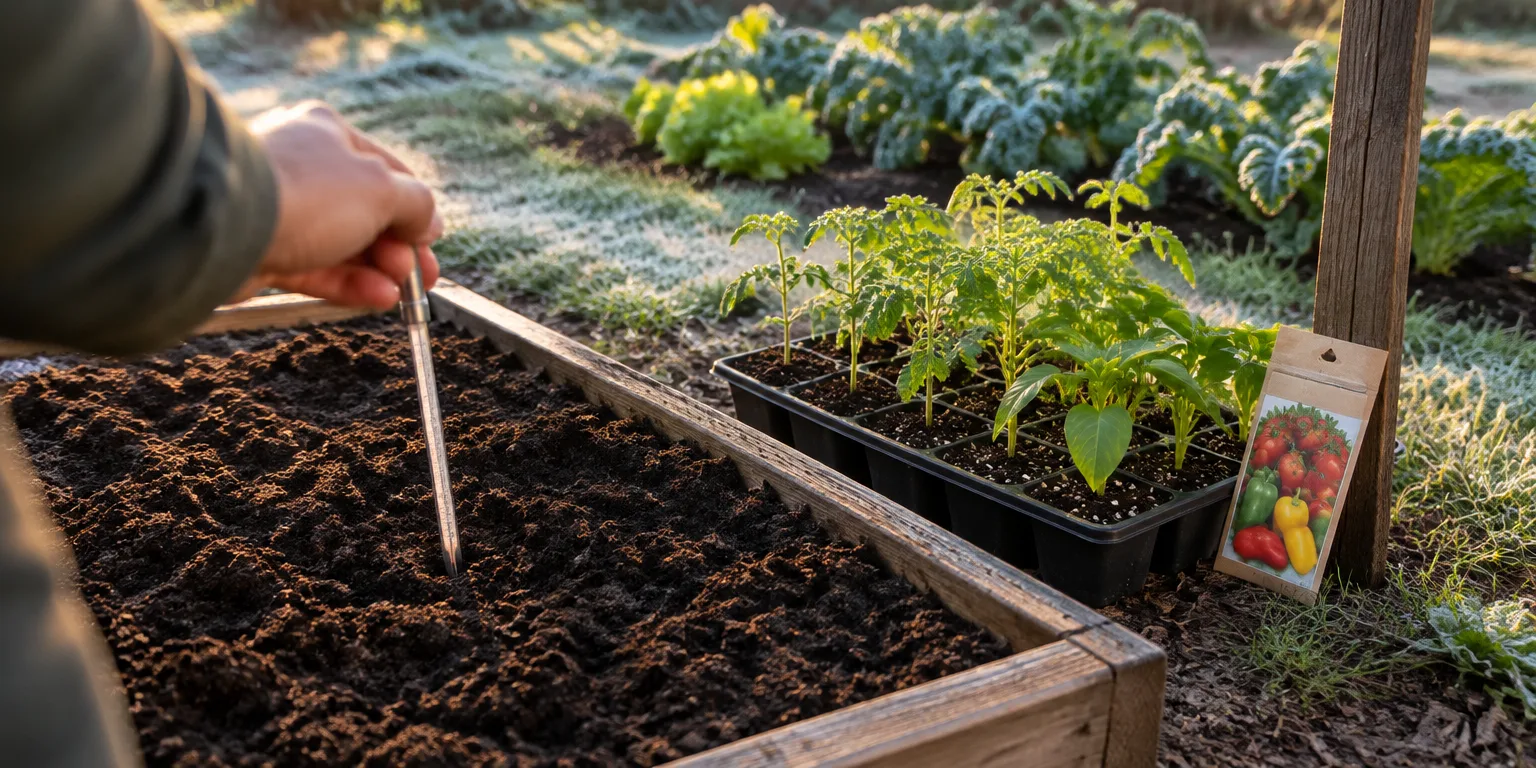
That split sets the timetable. Start tomatoes indoors six to eight weeks before the last spring frost, and peppers eight to ten weeks before. Outdoors, check with a soil thermometer and wait to sow warm-season crops until the soil is above about 65 degrees.
Done this way, planning keeps small beds productive, saves money, and avoids the two classic mistakes: bare beds in spring and seed sown too late to pay off in autumn.
Questions people ask
Where do I find my frost dates if I just moved?
Find your dates through a local extension office, a nearby weather station, or neighbors who keep garden records. Since low spots and sheltered yards can differ, compare a couple of nearby sources before you plan.
What does days to maturity on a seed packet actually mean?
It is the average number of days from planting or transplanting to harvest under good conditions. Cool weather, poor soil, or transplant shock can add days, so gardeners in short seasons often choose varieties listed as early or short season.
How do I take a soil temperature reading?
Push a soil thermometer about two inches deep in the morning, in the bed where you will plant, and repeat for several days. Measure in a few spots, because sunny and shaded soil can differ, and wait until readings hold steadily above the crop's minimum.