Start With the Protein Foods You Already Eat
Food weight is not protein weight, and two very different meal patterns can add to the same daily total.
 allostasisproject.org · Protein Intake vs Timing: Daily Amount, Meals and Exercise | The Allostasis Project
To get a handle on protein, start with what you already eat. List the protein containing foods in your routine, such as beans or tofu, eggs, dairy, and whatever fish or meat you normally choose.
Then look up what each one actually provides. Use the nutrition panel or a trusted nutrient database, because the number on the scale is not the grams of protein inside.
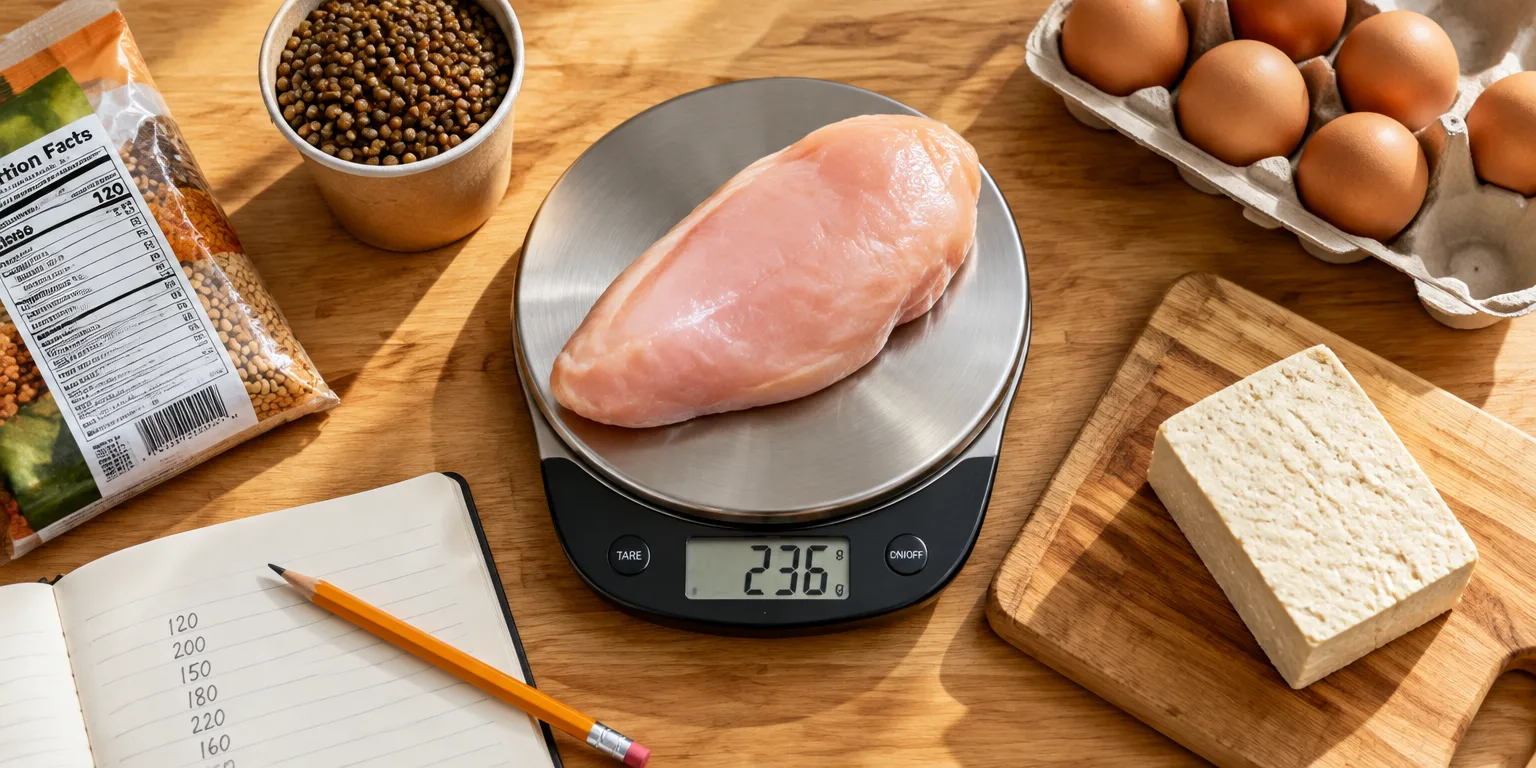
A chicken breast that weighs 150 grams does not contain 150 grams of protein. The same is true for a block of tofu, a cup of beans, or a scoop of yogurt.
Add the protein grams across the day to see your pattern. One invented example totals 90 grams two ways: 10 at breakfast, 20 at lunch, 60 at dinner, and none at snack, versus 25, 30, 25, and 10.
Both patterns add to 90. The arithmetic shows how meals and a snack can reach the same total, not that one pattern builds more muscle or that 90 is your target.
Keep the version that suits your hunger, what you can buy, and your daily habits. A familiar pattern you can sustain is easier to inspect and adjust than a strict schedule you abandon.
Questions people ask
Where do I find protein grams for a food with no label?
For packaged foods, use the Nutrition Facts panel and note the serving size. For fresh produce, meat, and bulk foods, use a national food database such as USDA FoodData Central or a dietitian vetted database in your country.
Should I weigh meat and beans raw or cooked?
Protein content is usually listed for the food as described, and cooking changes water weight more than protein. Check whether the entry means raw or cooked, pick the closest match, and use the same method each time so days are comparable.
Do small snacks and drinks count toward the total?
Include them if they contain protein, even in small amounts. Milk in coffee, a handful of nuts, or yogurt between meals still count toward the daily sum and help explain why two days with similar meals can have different totals.