The Angriest Version of a Story Is the One That Survives Online
Ideas often mutate as they are shared, and the angriest edits get passed along the most.
 CGP Grey · This Video Will Make You Angry
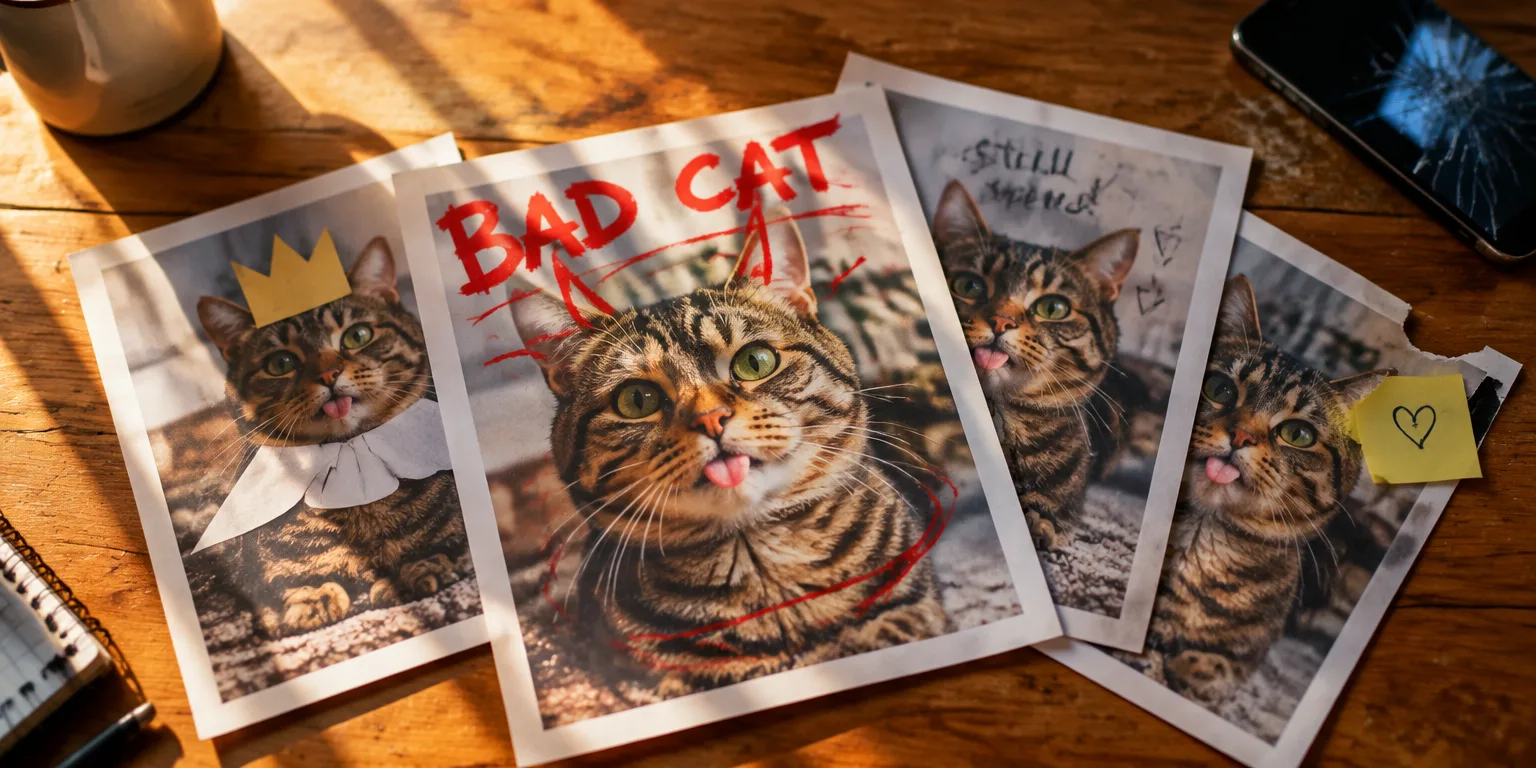
A mildly funny cat photo posted online usually dies quickly, like countless cat and baby photos that are never shared.
Once in a while one gets picked up, and people do not just pass it along. They tinker with it, altering the image in Photoshop or tweaking the caption.
Most edits fall flat, but a few make it funnier and earn more shares that invite another round of edits, letting a lowly photo briefly dominate attention around the world.
One way to think about it is that ideas act like germs, reproducing by jumping from brain to brain. Just as long distance flights let physical germs reach new hosts, the internet lets ideas be shared and altered at unmatched speed, and that loop tends to make them stronger.
For jokes, that strengthening is delightful. Angry claims go through the same cycle of sharing and distortion, except each retouch leaves them more aggravating.
Aggravation provokes sharing, so an angry but distorted claim is more likely to travel than a more accurate but more boring rival. What survives is often not the truest version, but the version most likely to prompt the next share.
Like plagues, such ideas can still burn through a population too quickly and fade. While they last, the cycle of sharing and retouching tends to leave them amplified.
Questions people ask
Does anger really spread faster than other emotions online?
Researchers have generally found that it does. Studies of social media sharing show that posts evoking high arousal emotions, especially anger and awe, are shared more than sad or purely informative posts. Anger is particularly powerful because it motivates people to act and to recruit others.
Are the changes people make to posts actually random?
Not entirely, but the result can look random in aggregate. People usually edit to make something funnier, clearer, or more outrageous for their own audience. The point is that the internet then selects among those edits, keeping the versions that get shared most.
Can fact-checking stop the more enraging version from winning?
It helps at the margins, but it faces a structural disadvantage. A correction is usually more careful and less emotional than the false claim, so it spreads less readily. Corrections work best when they offer a clear alternative explanation and reach people before the false version hardens.