To Get Unstuck, Add Up the Cost of Doing Nothing
A three-column exercise maps what one, three, and 10 more years of the same choice would really cost.
 The Tim Ferriss Show · #889: Q&A with Tim — How to Get Unstuck, Resilience in Hard Times, Tools for Brain Health, Finding Inner Peace, Optimism as a Learnable Skill, and More
Tim Ferriss, the author and entrepreneur known for testing self-improvement methods on himself, has watched people stay stuck because the present is not painful enough to force a move.
He says he has seen that pattern repeatedly with addiction. He points to family members and close friends who died from addiction, and friends who are currently addicted.
His fix is a short writing exercise he calls the cost of inaction, part of a larger practice he calls fear setting.
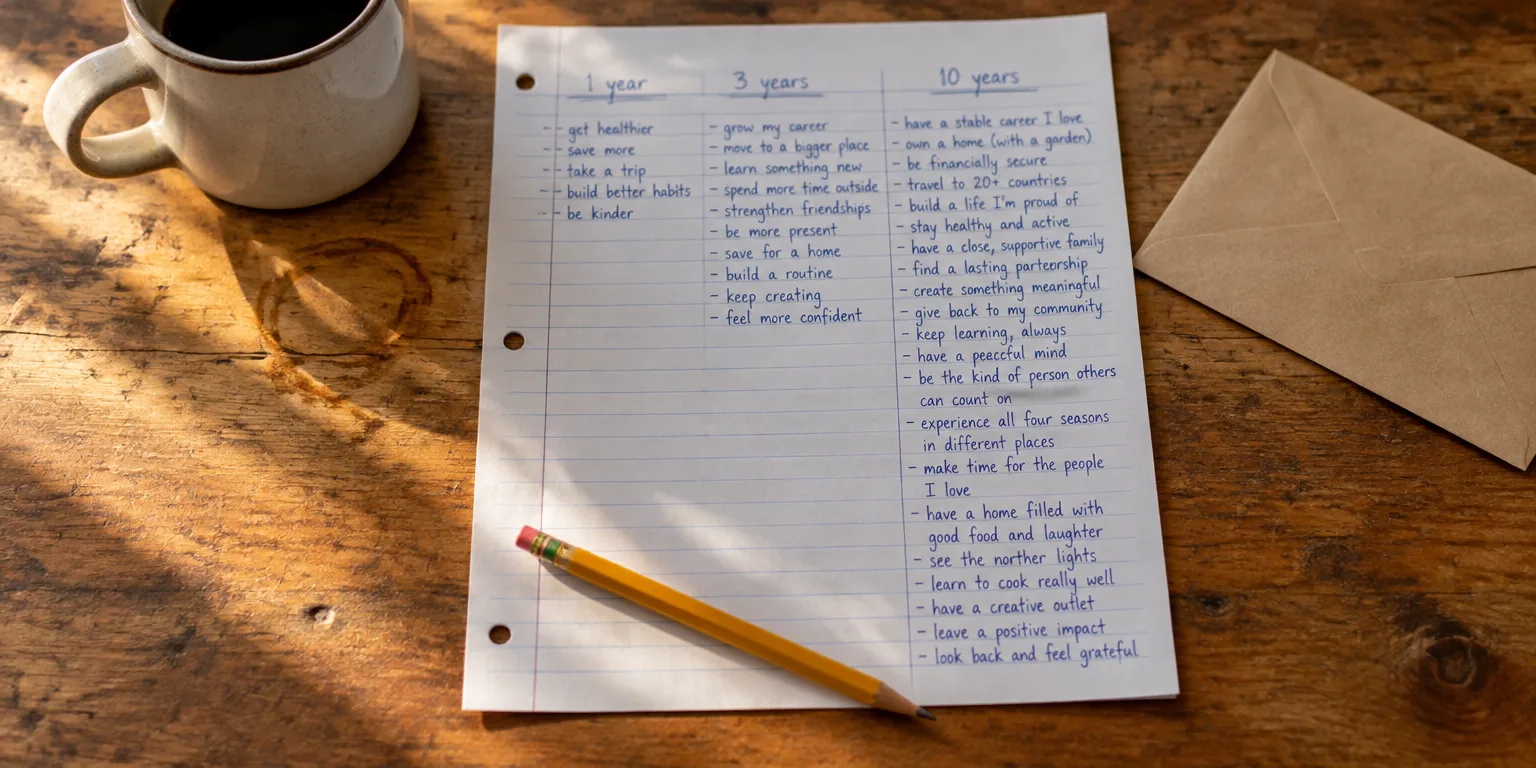
Take a piece of paper, he says, and make three columns: one year, three years, and 10 years. He prefers doing it by hand.
At the top, write what you would like to change. In each column, write the physical, financial, and relational costs if nothing changes.
Ferriss says the resulting picture “is not going to be pretty.” He calls the exercise a reality accelerator because it magnifies a distant consequence until it feels compelling enough to act on.
It also reframes risk. People treat something new as risky, he says, while overlooking the cost of standing still.
He argues the change is likely to bring less pain and risk, and is probably reversible, compared with staying put.
To try it, pick one change you have been avoiding and fill in the three columns for what happens if you leave it unchanged.
Questions people ask
How much should I write in each column?
List the physical, financial, and relational costs for each time horizon. Use specific details from your own life, such as health, money, and relationships, rather than general worry.
Should I also write down what could go wrong if I do change?
Yes. That is the other half of the wider fear-setting practice: write the feared outcomes of acting, then note prevention and repair. Ferriss argues the change carries likely temporary pain and probably reversible risk compared with the status quo.
How often should I repeat the exercise?
Ferriss does not give a set schedule in these segments. You can pull the sheet out again when motivation slips and compare the one-year costs with the three-year and 10-year costs.