When Power Is Fixed, Efficiency Decides the AI Winner
Thompson argues a cap on power would favor Nvidia's efficient systems, while China compensates for weaker chips with plentiful electricity.
 Stratechery · AI on the Ballot | Stratechery by Ben Thompson
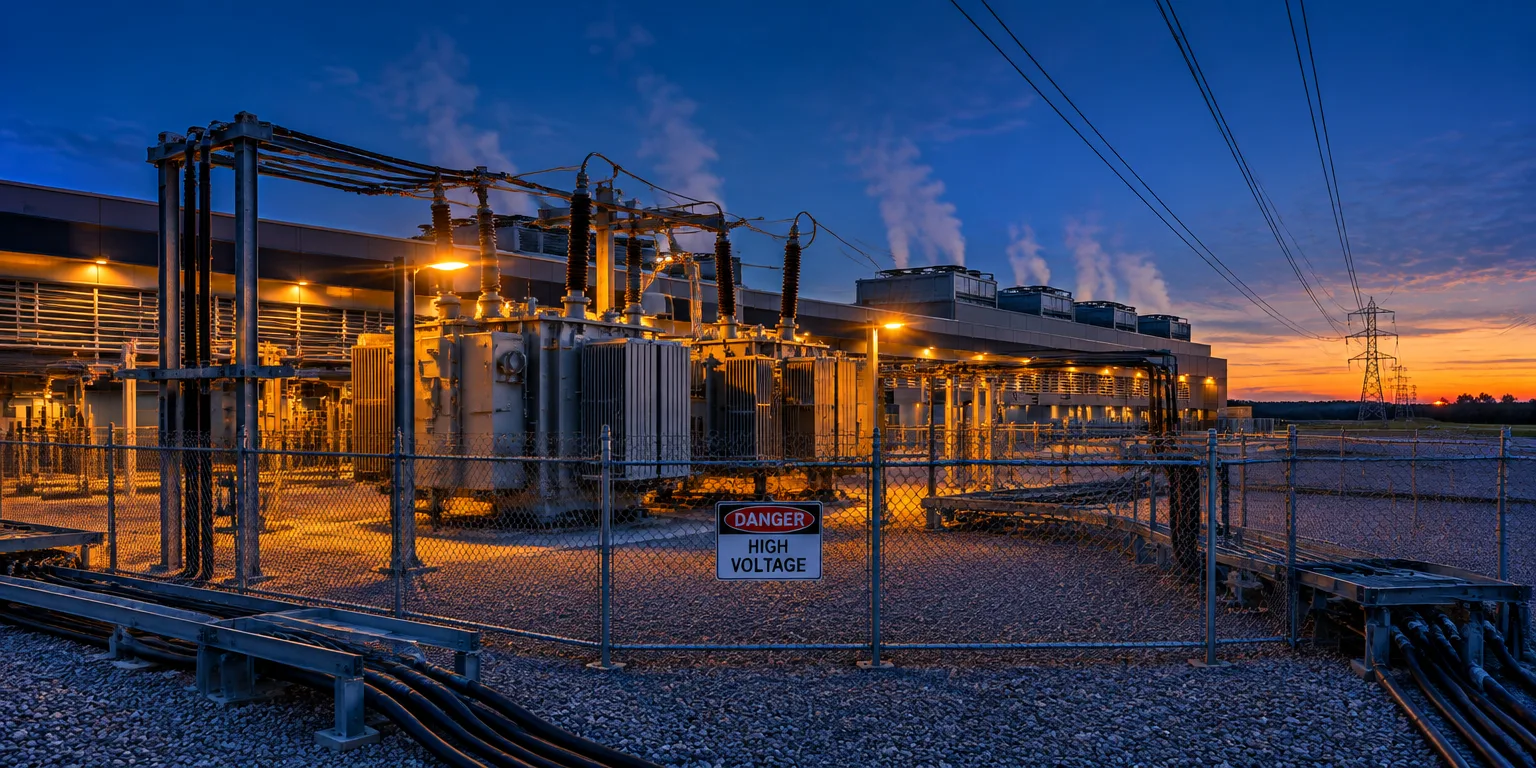
Imagine a data center limited to 100 megawatts, with no chance to use more. The winner is not whoever owns the most chips, but whoever squeezes the most AI work from that fixed supply of electricity.
That is the argument of Ben Thompson, a technology analyst who writes about strategy and computing. If community opposition blocks new data centers, power becomes the hard ceiling and success is measured in tokens per megawatt, the answers and reasoning an AI system produces.
Nvidia chief executive Jensen Huang laid out the idea at a 2025 event. Huang uses the phrase iso power to describe a world where electricity is the fixed limit, and Huang claimed Nvidia's Blackwell system could generate far more work than older systems inside the same 100 megawatt building.
The efficiency question matters for cloud providers building their own custom chips, known as ASICs, to reduce reliance on Nvidia. Thompson points to Amazon offering computing time on its latest Tranium chip at a steep discount to Nvidia's older H100 chip.
The risk for a cloud provider is wasting scarce electricity on less efficient chips, then falling behind Nvidia's rapid pace of new releases.
Thompson imagines Huang speaking directly to Amazon, arguing in effect that its discounts would lock developers into a weaker chip just as power hungry reasoning models arrive. Huang never said those words; the exchange is Thompson's imagined version of Huang's challenge to cloud providers tempted to build their own chips.
In a constrained world, there are two ways to produce more tokens. One is to construct an additional facility, and the other is to replace old chips in an existing building with newer and more efficient Nvidia chips.
The opposite case, in Thompson's view, is China. The country can build ample power generation, but American export controls deny it the most advanced chips, so it pursues maximum computing power and accepts poor efficiency.
His example is Huawei's Cloud Matrix 384, a supercomputer linking 384 chips. Compared with Nvidia's NVL 72 system, it takes far more space, uses far more power, likely costs far more to make and is more fragile, yet China has little choice.
The takeaway is simple. When electricity is capped, lean systems win, and when electricity is plentiful, even a bulky and thirsty machine can compete by sheer force.
Questions people ask
What is a custom AI chip, and why would a cloud provider build one?
An ASIC is a chip designed for one specific job, in this case running AI, rather than a general purpose processor. Amazon, Google, and Microsoft build them in hopes of lowering their dependence on Nvidia and reducing operating costs at their enormous scale.
How does a newer chip generate more work from the same amount of power?
Newer chips typically combine a more advanced manufacturing process with design changes that move data shorter distances and keep more calculations in fast, local memory. They also link dozens of chips together so they act like one larger and less wasteful machine.
Why does China lack the most advanced chips?
The U.S. has restricted exports of the most advanced AI chips and the equipment needed to manufacture them. Chinese firms can still produce capable systems, but they generally must use more numerous, less advanced chips and more electricity to reach similar performance.