Win Everywhere by Running Candidates Who Fit Each State
Adam Jentleson argues the party can compete in states it has written off by letting local candidates break with the national brand.
 The Ezra Klein Show · Thinking Like a Supermajority
When asked how Democrats could move from the foothills of a supermajority to 60 or 62 Senate seats, Adam Jentleson, who started and now leads the Searchlight Institute and is a former Senate leadership aide, gave a deliberately expansive answer.
He argued, "There's not a single state in which we can't compete if we run candidates who reflect the states and districts that they're trying to win."
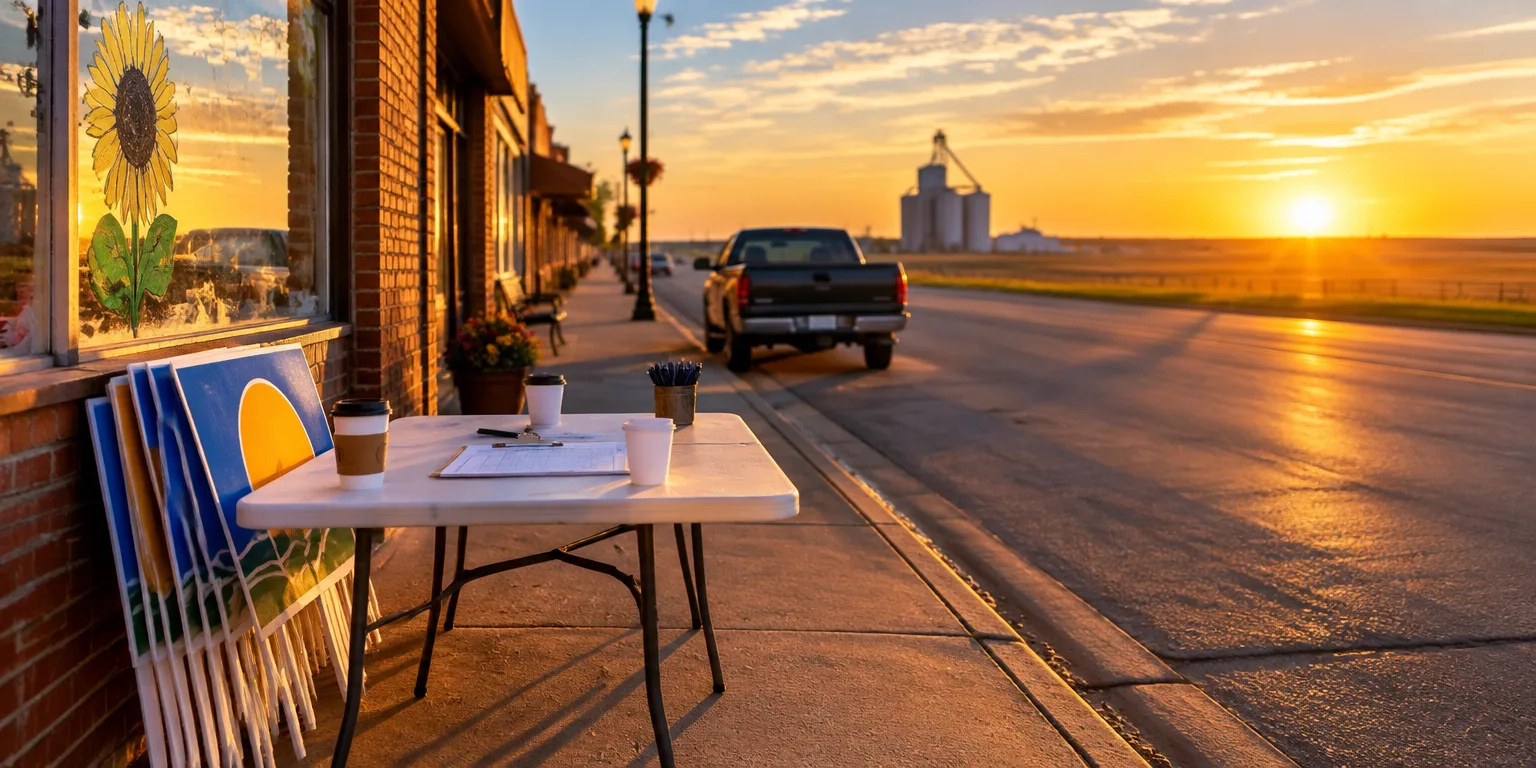
He pointed to Kansas as proof that supposedly unwinnable places can open up with the right kind of candidate, after Democrats went decades without winning a U.S. Senate seat there.
Jentleson said Democrats should revive a 50-state approach. He acknowledged that money is finite, but said states such as North Dakota and South Dakota have populations around the size of a House district and relatively inexpensive campaigns. The challenge, in his telling, is finding someone voters recognize as their own.
That means allowing combinations that break with recent party rigidity, he argued. In Texas, James Talarico embraced an oil and gas industry that, as Jentleson put it, "produces hundreds of thousands of working class jobs here in Texas," while also running on economic populism and faith. In Kansas, Adam Hamilton, a United Methodist pastor, was open about being pro-life and spoke about bipartisanship, while supporting expanded health care, higher taxes on the wealthy, and a stronger safety net.
The same logic applied in Iowa and North Carolina, Jentleson said. Rob Sand ran for governor in Iowa by keeping his attention within Iowa. Roy Cooper won North Carolina by 20 points, Jentleson noted, and he said Cooper embodies the Tar Heel persona. The idea is differentiation: "I'm a Roy Cooper Democrat. I'm a Rob Sand Democrat."
Questions people ask
Why would it be cheaper to compete in states like North Dakota and South Dakota?
Smaller populations mean fewer voters to reach, and their television and digital advertising markets are generally less expensive than those in large states. A campaign can therefore contact a large share of voters without the huge budgets needed in places like California or Texas.
What does economic populism mean in this approach?
In Jentleson's examples, Talarico ran aggressively on economic populism while embracing Texas fossil fuel jobs. Hamilton backed broader health coverage, higher taxes on high earners, and a stronger safety net while being open about being pro-life and talking about faith.
What is the downside of letting candidates differ so much by state?
That concern comes from outside Jentleson's argument; he does not present local variation as a risk. He argues the opportunity is that breaking with party orthodoxy lets a candidate surprise voters and present as a distinct local Democrat.