You Never Actually Touch Anything You Feel
Your finger and a table push apart at the atomic level, and your brain turns that resistance into feeling.
 Midnight Archive · Five everyday things that work very differently than you think.
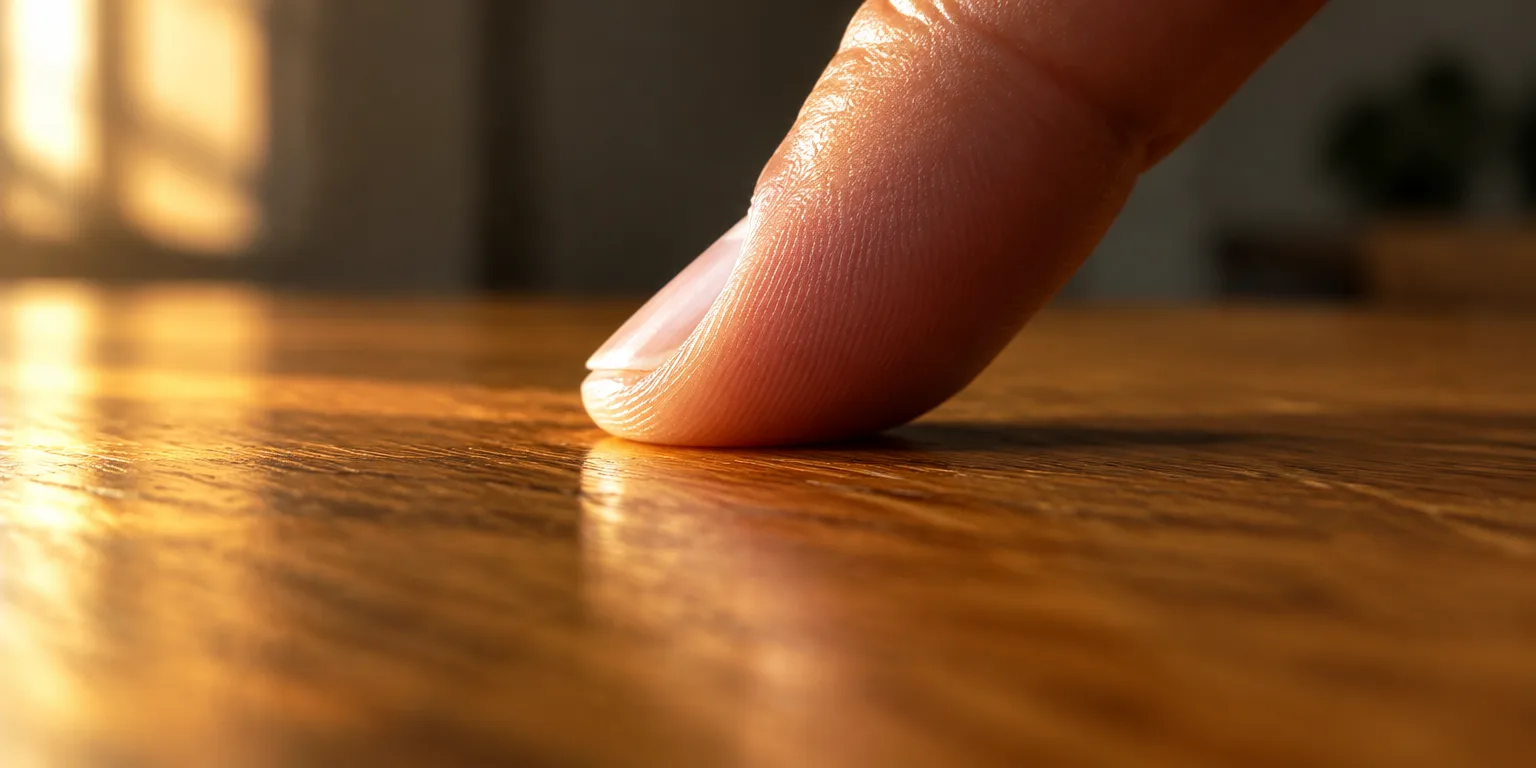
Press your fingertip against a table. It feels like solid contact, but at the scale of atoms, contact never quite happens.
Your skin and the table are both built from atoms. As your finger moves closer, the atoms in your skin and the atoms in the table repel each other, creating resistance.
The nearer those atoms get, the stronger the resistance becomes. The two surfaces therefore stay separated by an extremely small gap, even while you feel them meet.
That resistance is what your body actually measures. Tiny sensors in the skin respond to pressure, stretch, and vibration when the skin is deformed, and nerves carry those electrical signals toward the brain.
Your brain interprets those signals as touch. What you experience as contact is that interpretation of the pushback between atoms.
That reading is enough for daily life. It lets you feel pressure, tell when you are gripping firmly, and know when to pull back from something that could hurt you.
Questions people ask
If atoms never touch, why can't I push my finger through a table?
You cannot because the repulsion grows extremely strong over a very short distance. The closer the atoms get, the harder they push back, and your muscles are not strong enough to overcome that force.
What exactly is doing the pushing?
Two related effects. The outer electrons repel each other electrically, and at very short range a quantum rule called the Pauli exclusion principle keeps electrons from crowding into the same state, which adds to the hardness you feel.
Is touch the only feeling my brain constructs this way?
No. Vision and hearing work in a similar way. The eyes and ears send in signals, and the brain turns them into images and sounds, just as it turns signals from the skin into touch.