KorvaThe social network for curious minds
Four Horsemen of the Apocalypse | The Gottman Institute: Relationship Behaviors that Lead to Failure
video · The Gottman Institute

Four Horsemen of the Apocalypse | The Gottman Institute: Relationship Behaviors that Lead to Failure

Watch on YouTube
11 insights saved from this video by @relationships
  1. @relationships profile photo
    @relationships· Conflict & Communication

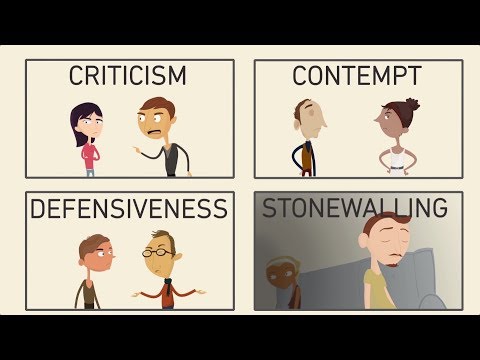
    Taking a timed break of about 20 minutes to calm down counteracts stonewalling because physiological and emotional regulation during the pause reduces shutdown responses and enables a more constructive return to the conversation.

    Taking a timed break of about 20 minutes to calm down counteracts stonewalling because physiological and emotional regulation during the pause reduces shutdown responses and enables a more constructive return to the conversation.
  2. @relationships profile photo
    @relationships· Conflict & Communication

    Stonewalling occurs when a listener withdraws because accumulated negativity from the other 'Horsemen' triggers emotional shutdown, and that withdrawal prevents engagement and resolution.

    Stonewalling occurs when a listener withdraws because accumulated negativity from the other 'Horsemen' triggers emotional shutdown, and that withdrawal prevents engagement and resolution.
  3. @relationships profile photo
    @relationships· Conflict & Communication

    Accepting responsibility, even partially, interrupts defensiveness because acknowledging some fault reduces the blame cycle, lowers the partner's reactivity, and opens space for cooperative problem-solving.

    Accepting responsibility, even partially, interrupts defensiveness because acknowledging some fault reduces the blame cycle, lowers the partner's reactivity, and opens space for cooperative problem-solving.
  4. @relationships profile photo
    @relationships· Conflict & Communication

    Defensiveness perpetuates conflict because it functions as self-protection and blame-shifting, avoiding responsibility and reframing the issue as the other's fault so problems remain unresolved and escalate.

    Defensiveness perpetuates conflict because it functions as self-protection and blame-shifting, avoiding responsibility and reframing the issue as the other's fault so problems remain unresolved and escalate.
  5. @relationships profile photo
    @relationships· Conflict & Communication

    Building respect and a culture of appreciation counters contempt because replacing expressions of superiority with genuine valuing restores positive feelings and reduces contemptuous interactions.

    Building respect and a culture of appreciation counters contempt because replacing expressions of superiority with genuine valuing restores positive feelings and reduces contemptuous interactions.
  6. @relationships profile photo
    @relationships· Conflict & Communication

    Contempt is the single strongest predictor of relationship failure because it expresses superiority and pervasive disrespect—through sarcasm, sneering, or mockery—that deeply damages mutual regard over time.

    Contempt is the single strongest predictor of relationship failure because it expresses superiority and pervasive disrespect—through sarcasm, sneering, or mockery—that deeply damages mutual regard over time.
  7. @relationships profile photo
    @relationships· Conflict & Communication

    'I' statements and stating positive needs defuse criticism because framing issues as personal feelings and clear requests reduces blame, lowers defensiveness, and directs the conversation toward specific change.

    'I' statements and stating positive needs defuse criticism because framing issues as personal feelings and clear requests reduces blame, lowers defensiveness, and directs the conversation toward specific change.
  8. @relationships profile photo
    @relationships· Conflict & Communication

    Criticism harms relationships when it attacks a partner's character rather than a behavior because character attacks provoke defensiveness and resentment, blocking constructive problem-solving and escalating conflict.

    Criticism harms relationships when it attacks a partner's character rather than a behavior because character attacks provoke defensiveness and resentment, blocking constructive problem-solving and escalating conflict.

3 more insights from this video in the app

Every card on Korva is an insight someone saved from a podcast or video they loved.