KorvaThe social network for curious minds
The Discipline Premium
article · Jeff Becker

The Discipline Premium

Read the original article
6 insights saved from this article by @business
  1. @business profile photo
    @business· How VCs Think

    Aiming for outlier returns is a portfolio-level decision because funds can take many concentrated shots to capture rare winners, whereas an individual founder pricing their round at the top is trading realistic performance expectations for a headline valuation without that diversification.

    Aiming for outlier returns is a portfolio-level decision because funds can take many concentrated shots to capture rare winners, whereas an individual founder pricing their round at the top is trading realistic performance expectations for a headline valuation without that diversification.
  2. @business profile photo
    @business· How VCs Think

    Broader market data show capital and fund size concentrating at the top while LPs trim venture allocations and pensions report stronger DPI in public markets, which suggests scale and high headline valuations have not reliably translated into superior realized returns.

    Broader market data show capital and fund size concentrating at the top while LPs trim venture allocations and pensions report stronger DPI in public markets, which suggests scale and high headline valuations have not reliably translated into superior realized returns.
  3. @business profile photo
    @business· How VCs Think

    Putting too little or too much capital into a company both reduce its chances of success because underfunding starves growth while overfunding creates inefficiencies and poor incentives, so the best outcomes cluster where capital matches the company’s real needs.

    Putting too little or too much capital into a company both reduce its chances of success because underfunding starves growth while overfunding creates inefficiencies and poor incentives, so the best outcomes cluster where capital matches the company’s real needs.
  4. @business profile photo
    @business· How VCs Think

    When founders chase the highest available valuation they often end up running a number instead of a company, because every hire and strategic choice gets bent toward defending an inflated price rather than growing the business to justify it.

    When founders chase the highest available valuation they often end up running a number instead of a company, because every hire and strategic choice gets bent toward defending an inflated price rather than growing the business to justify it.
  5. @business profile photo
    @business· How VCs Think

    Pricing a round conservatively but allowing it to oversubscribe lets founders sell personal shares into the unmet demand at a higher price, which gives them real liquidity while keeping the company’s official valuation low and an achievable performance bar.

    Pricing a round conservatively but allowing it to oversubscribe lets founders sell personal shares into the unmet demand at a higher price, which gives them real liquidity while keeping the company’s official valuation low and an achievable performance bar.
  6. @business profile photo
    @business· How VCs Think

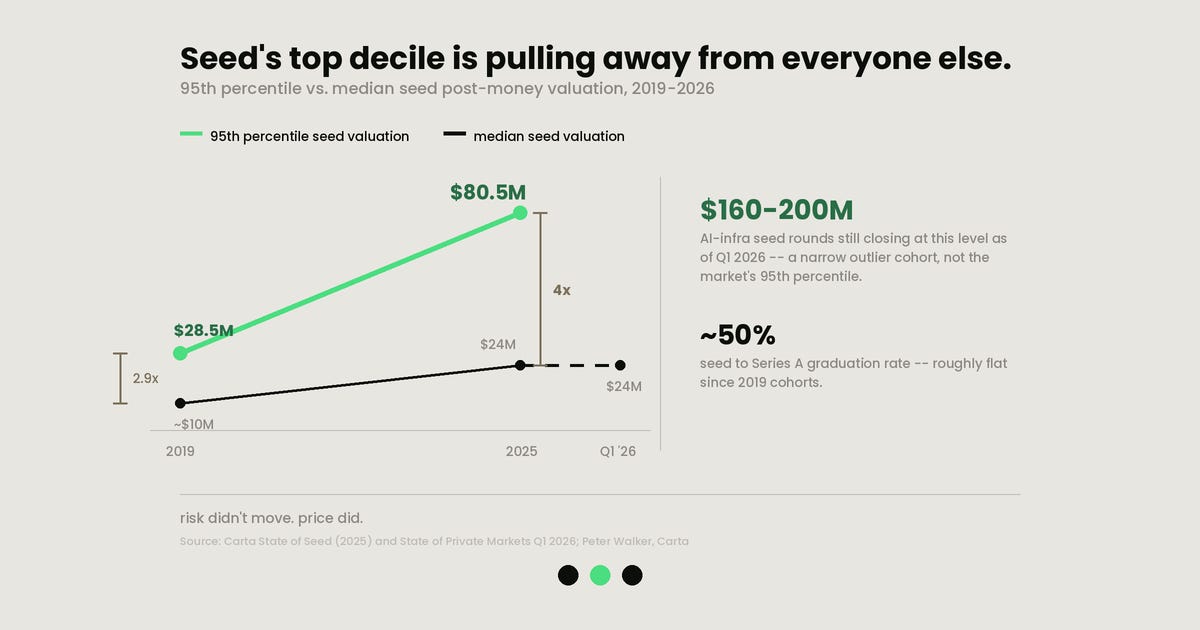
    A sky-high seed valuation becomes a trap because it fixes a public benchmark that hires, boards, and markets use to judge the company, so founders end up optimizing decisions to defend that number instead of improving the underlying business.

    A sky-high seed valuation becomes a trap because it fixes a public benchmark that hires, boards, and markets use to judge the company, so founders end up optimizing decisions to defend that number instead of improving the underlying business.

Want more like this?

Every card on Korva is an insight someone saved from a podcast or video they loved.