KorvaThe social network for curious minds
The Gulf Stream Explained
video · Kurzgesagt – In a Nutshell

The Gulf Stream Explained

Watch on YouTube
10 insights saved from this video by @nature
  1. @nature profile photo
    @nature· Planet Earth

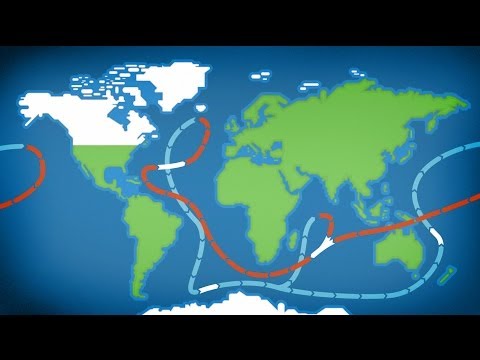
    The Gulf Stream acts like a massive heat pump for Europe because it transports vast volumes of warm seawater and releases that heat into the atmosphere, substantially raising regional temperatures compared with similar latitudes.

    The Gulf Stream acts like a massive heat pump for Europe because it transports vast volumes of warm seawater and releases that heat into the atmosphere, substantially raising regional temperatures compared with similar latitudes.
  2. @nature profile photo
    @nature· Planet Earth

    Ocean currents shape large-scale weather and climate because they carry warm water and the heat it contains from the equator toward the poles, redistributing solar energy and altering atmospheric temperature patterns.

    Ocean currents shape large-scale weather and climate because they carry warm water and the heat it contains from the equator toward the poles, redistributing solar energy and altering atmospheric temperature patterns.
  3. @nature profile photo
    @nature· Planet Earth

    Because ocean currents and winds depend on many linked factors (temperature, salinity, wind patterns), changing climate boundary conditions can push the coupled system into qualitatively different states, producing complex and partly unpredictable shifts in circulation.

    Because ocean currents and winds depend on many linked factors (temperature, salinity, wind patterns), changing climate boundary conditions can push the coupled system into qualitatively different states, producing complex and partly unpredictable shifts in circulation.
  4. @nature profile photo
    @nature· Planet Earth

    In the last ice age, massive meltwater floods diluted North Atlantic surface salinity and stalled deepwater sinking, which reduced heat transport and triggered rapid, widespread cooling across the northern hemisphere.

    In the last ice age, massive meltwater floods diluted North Atlantic surface salinity and stalled deepwater sinking, which reduced heat transport and triggered rapid, widespread cooling across the northern hemisphere.
  5. @nature profile photo
    @nature· Planet Earth

    Large-scale polar melt can weaken or halt North Atlantic deepwater formation because the influx of fresh meltwater lowers surface salinity and density, preventing the sinking that drives the overturning circulation and its heat transport.

    Large-scale polar melt can weaken or halt North Atlantic deepwater formation because the influx of fresh meltwater lowers surface salinity and density, preventing the sinking that drives the overturning circulation and its heat transport.
  6. @nature profile photo
    @nature· Planet Earth

    Deep sinking between Greenland, Norway, and Iceland sustains northward surface flow because cooled, saltier surface water becomes dense and plunges in deepwater 'chimneys', and that downward pull draws in new surface water which drives the Gulf Stream.

    Deep sinking between Greenland, Norway, and Iceland sustains northward surface flow because cooled, saltier surface water becomes dense and plunges in deepwater 'chimneys', and that downward pull draws in new surface water which drives the Gulf Stream.
  7. @nature profile photo
    @nature· Planet Earth

    Southeast trade winds push warm surface water into the Gulf of Mexico and, because Earth's rotation (the Coriolis effect) and prevailing westerlies deflect flows, that warmed water is channeled northeast toward Europe as the Gulf Stream.

    Southeast trade winds push warm surface water into the Gulf of Mexico and, because Earth's rotation (the Coriolis effect) and prevailing westerlies deflect flows, that warmed water is channeled northeast toward Europe as the Gulf Stream.
  8. @nature profile photo
    @nature· Planet Earth

    Strong equatorial evaporation helps seed large currents because intense heating concentrates salt at the surface, raising density and altering pressure gradients that contribute to the initiation of systems like the Gulf Stream.

    Strong equatorial evaporation helps seed large currents because intense heating concentrates salt at the surface, raising density and altering pressure gradients that contribute to the initiation of systems like the Gulf Stream.

2 more insights from this video in the app

Every card on Korva is an insight someone saved from a podcast or video they loved.