KorvaThe social network for curious minds
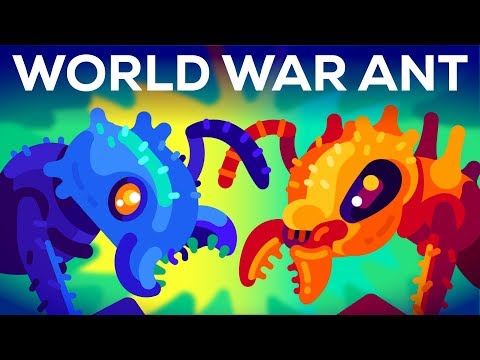
The World War of the Ants – The Army Ant
video · Kurzgesagt – In a Nutshell

The World War of the Ants – The Army Ant

Watch on YouTube
8 insights saved from this video by @nature
  1. @nature profile photo
    @nature· Animals

    Army ant swarms generally avoid fighting each other because a clash between two lethal social armies would likely cause mutual annihilation, so natural selection favors passing, retreating, or other avoidance behaviors to prevent catastrophic losses.

    Army ant swarms generally avoid fighting each other because a clash between two lethal social armies would likely cause mutual annihilation, so natural selection favors passing, retreating, or other avoidance behaviors to prevent catastrophic losses.
  2. @nature profile photo
    @nature· Animals

    Ant warfare occurs at many scales because a species' social organization—from small nomadic raiding groups to sprawling supercolonies—determines how far conflicts can spread and how long they persist.

    Ant warfare occurs at many scales because a species' social organization—from small nomadic raiding groups to sprawling supercolonies—determines how far conflicts can spread and how long they persist.
  3. @nature profile photo
    @nature· Animals

    If defenders can't seal nest entrances quickly during an attack, invaders can flood hidden chambers and consume tens of thousands of brood, which devastates the colony's capacity to recover.

    If defenders can't seal nest entrances quickly during an attack, invaders can flood hidden chambers and consume tens of thousands of brood, which devastates the colony's capacity to recover.
  4. @nature profile photo
    @nature· Animals

    Nomamyrmex esenbeckii can breach mature leafcutter nests because it specializes in consuming ant larvae and fields a particularly robust soldier caste that conducts coordinated long-column assaults capable of penetrating heavy defenses.

    Nomamyrmex esenbeckii can breach mature leafcutter nests because it specializes in consuming ant larvae and fields a particularly robust soldier caste that conducts coordinated long-column assaults capable of penetrating heavy defenses.
  5. @nature profile photo
    @nature· Animals

    Leafcutter colonies resist invasions by fielding a specialized, massive soldier caste that locks onto and severs attackers at a wide frontline, but overwhelming attacker numbers can still swarm, surround, and ultimately break those defenses.

    Leafcutter colonies resist invasions by fielding a specialized, massive soldier caste that locks onto and severs attackers at a wide frontline, but overwhelming attacker numbers can still swarm, surround, and ultimately break those defenses.
  6. @nature profile photo
    @nature· Animals

    Some ant species survive army-ant raids by either evacuating brood to rebuild later or evolving worker morphologies that physically block nest entrances, because flight or entrance-barricading denies attackers access to vulnerable chambers.

    Some ant species survive army-ant raids by either evacuating brood to rebuild later or evolving worker morphologies that physically block nest entrances, because flight or entrance-barricading denies attackers access to vulnerable chambers.
  7. @nature profile photo
    @nature· Animals

    Army ants are exceptionally dangerous because they abandon fixed nests to form coordinated nomadic swarms and long hunting columns whose overwhelming numbers swamp prey defenses before victims can react.

    Army ants are exceptionally dangerous because they abandon fixed nests to form coordinated nomadic swarms and long hunting columns whose overwhelming numbers swamp prey defenses before victims can react.
  8. @nature profile photo
    @nature· Animals

    Ants became ecologically dominant because extreme cooperation—division of labor, cooperative construction, farming, and symbioses—lets many weak individuals together exploit niches no single ant could.

    Ants became ecologically dominant because extreme cooperation—division of labor, cooperative construction, farming, and symbioses—lets many weak individuals together exploit niches no single ant could.

Want more like this?

Every card on Korva is an insight someone saved from a podcast or video they loved.