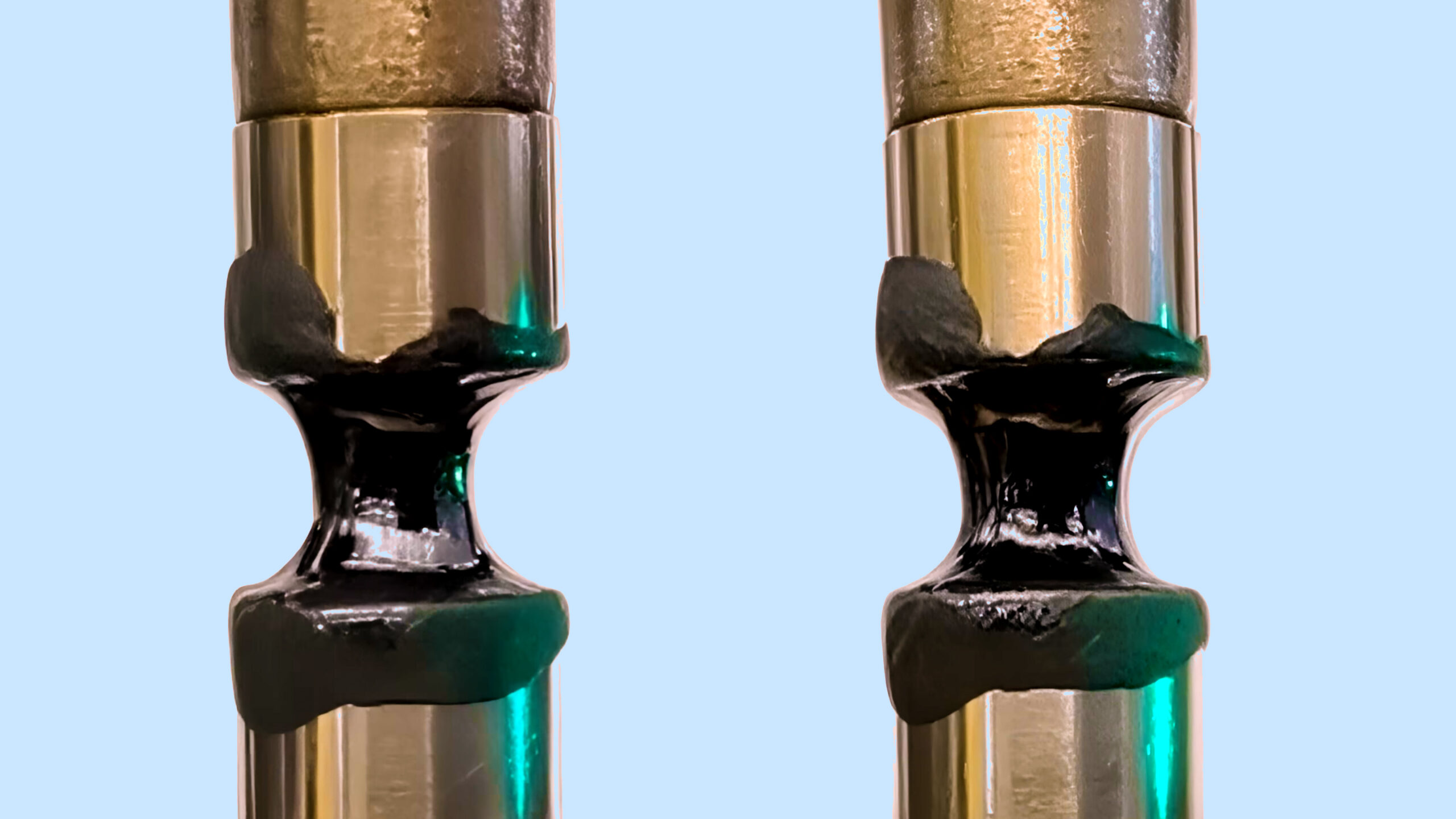
We Know Simple Fluids Can Flow. Turns Out, Some Can Fracture.
Read the original article- If a pulling apparatus cannot reach high enough strain rates, the product viscosity times strain rate stays below the fracture threshold, so lower-viscosity liquids may never exhibit fracture under that experimental limit.@science· Physics
If a pulling apparatus cannot reach high enough strain rates, the product viscosity times strain rate stays below the fracture threshold, so lower-viscosity liquids may never exhibit fracture under that experimental limit.
- Without elasticity to absorb and slow energy release, a crack can accelerate until inertia and cohesion are the only limits, which lets fractures reach the maximum speed allowed by physics.@science· Physics
Without elasticity to absorb and slow energy release, a crack can accelerate until inertia and cohesion are the only limits, which lets fractures reach the maximum speed allowed by physics.
- Fracture initiates when the product of viscosity and strain rate crosses a threshold because that product measures how quickly stress is applied relative to the fluid’s ability to dissipate or redistribute it, so cavities or cracks nucleate once it is high enough.@science· Physics
Fracture initiates when the product of viscosity and strain rate crosses a threshold because that product measures how quickly stress is applied relative to the fluid’s ability to dissipate or redistribute it, so cavities or cracks nucleate once it is high enough.
- The shape of a fracture depends on the fluid’s microstructure because polymer chains and entanglements redirect and dissipate energy—producing trumpet-like crack fronts—whereas simple fluids fail with sharper, glass-like fronts.@science· Physics
The shape of a fracture depends on the fluid’s microstructure because polymer chains and entanglements redirect and dissipate energy—producing trumpet-like crack fronts—whereas simple fluids fail with sharper, glass-like fronts.
- Cracks race through simple fluids far faster than through viscoelastic ones because complex fluids dissipate fracture energy by stretching and breaking polymer chains, while simple fluids lack those brakes so cracks approach inertial speed limits — observed on the order of 500–1,500 m/s versus ~0.07 m/s in polymer melts.@science· Physics
Cracks race through simple fluids far faster than through viscoelastic ones because complex fluids dissipate fracture energy by stretching and breaking polymer chains, while simple fluids lack those brakes so cracks approach inertial speed limits — observed on the order of 500–1,500 m/s versus ~0.07 m/s in polymer melts.
- When pulling creates voids, rapid bubble nucleation can outpace viscous flow to fill them, which destroys cohesive bonds and triggers a crack that then grows catastrophically.@science· Physics
When pulling creates voids, rapid bubble nucleation can outpace viscous flow to fill them, which destroys cohesive bonds and triggers a crack that then grows catastrophically.
- Elasticity is not required for a liquid to fracture because other limits like cavitation or cohesive-strength failure can nucleate cracks when stress outpaces the liquid’s molecular cohesion.@science· Physics
Elasticity is not required for a liquid to fracture because other limits like cavitation or cohesive-strength failure can nucleate cracks when stress outpaces the liquid’s molecular cohesion.
- A nonelastic, simple fluid can break like a solid because extreme tensile stress nucleates a crack instead of letting molecules rearrange, and without elasticity the crack cannot be blunted so it runs away.@science· Physics
A nonelastic, simple fluid can break like a solid because extreme tensile stress nucleates a crack instead of letting molecules rearrange, and without elasticity the crack cannot be blunted so it runs away.
Want more like this?
Every card on Korva is an insight someone saved from a podcast or video they loved.