K
Korva
™
Board
Cooking Science
Food
·
51 insights
·
0 followers
@food
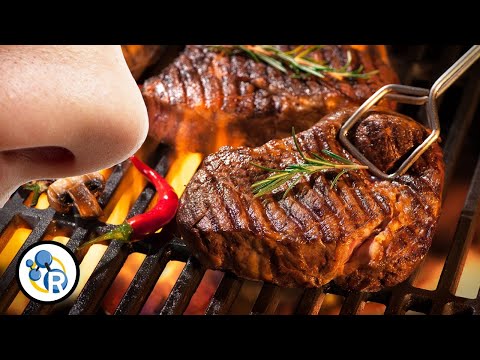
Push the heat too far and desirable browning becomes charred, bitter flavor.
Reactions
Why the Maillard Reaction Makes Everything Delicious
Go deeper ✨
@food
The Maillard reaction combines sugars and amino acids, creating many aroma and flavor compounds instead of one single product.
Reactions
Why the Maillard Reaction Makes Everything Delicious
Go deeper ✨
@food
For reliable savory browning, use foods with sugars and proteins, keep heat between 230 and 340°F, and avoid scorching.
Reactions
Why the Maillard Reaction Makes Everything Delicious
Go deeper ✨
@food
Browning works best between 230 and 340°F, where heat removes surface water instead of letting food steam.
Reactions
Why the Maillard Reaction Makes Everything Delicious
Go deeper ✨
@food
Too much baking soda leaves onions browned but mushy and meal-like.
Reactions
Why the Maillard Reaction Makes Everything Delicious
Go deeper ✨
@food
A small amount of baking soda raises pH, helping onions brown faster and taste more caramel-like.
Reactions
Why the Maillard Reaction Makes Everything Delicious
Go deeper ✨
@food
Onion browning is not caramelization: Maillard chemistry uses sugars and amino acids, while caramelization uses sugars alone.
Reactions
Why the Maillard Reaction Makes Everything Delicious
Go deeper ✨
@food
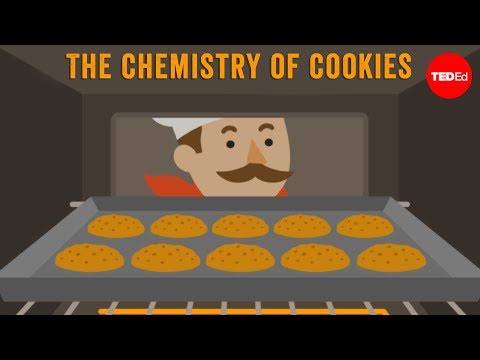
Bake around 310°F for a barely browned cookie. Higher heat produces deeper browning, with caramelization continuing through 390°F.
TED-Ed
The chemistry of cookies - Stephanie Warren
Go deeper ✨
@food
A 350°F oven is below caramelization’s starting point: sugar caramelization begins at 356°F and continues to 390°F.
TED-Ed
The chemistry of cookies - Stephanie Warren
Go deeper ✨
@food
At 212°F, boiling water escapes cookie dough as steam, leaving airy pockets that make the finished cookie light and flaky.
TED-Ed
The chemistry of cookies - Stephanie Warren
Go deeper ✨
@food
At 92°F, butter melts, releasing water that turns to steam and pushes cookie dough outward.
TED-Ed
The chemistry of cookies - Stephanie Warren
Go deeper ✨
@food
Baking soda reacts with acids in cookie dough, producing carbon dioxide that creates airy pockets.
TED-Ed
The chemistry of cookies - Stephanie Warren
Go deeper ✨
@food
At 144°F, egg proteins unfold and tangle into a nearly solid network, giving cookie dough its structure.
TED-Ed
The chemistry of cookies - Stephanie Warren
Go deeper ✨
@food
Caramelization breaks sugar molecules apart, creating the sweet, nutty, slightly bitter compounds that taste like caramel.
TED-Ed
The chemistry of cookies - Stephanie Warren
Go deeper ✨
@food
At 310°F, Maillard reactions rearrange proteins and sugars into browned compounds, flavors, and aromas.
TED-Ed
The chemistry of cookies - Stephanie Warren
Go deeper ✨
@food
Restaurant work delivers immediate feedback, making every service a live test of fast, improvisational decisions.
Freakonomics Radio Network
Why Great Cooking Can't Be Measured | Better in Person
Go deeper ✨
@food
Quitting never crossed the chef’s mind. She left only when it was time to move on.
Freakonomics Radio Network
Why Great Cooking Can't Be Measured | Better in Person
Go deeper ✨
@food
A 40-seat restaurant lets chefs make precise, beautiful dishes that become harder to perfect at 400 portions.
Freakonomics Radio Network
Why Great Cooking Can't Be Measured | Better in Person
Go deeper ✨
@food
Cooking becomes meaningful when food feels real and you learn to understand it instead of merely following instructions.
Freakonomics Radio Network
Why Great Cooking Can't Be Measured | Better in Person
Go deeper ✨
@food
A thermometer can help, but sensory awareness remains a legitimate way to understand how food is cooking.
Freakonomics Radio Network
Why Great Cooking Can't Be Measured | Better in Person
Go deeper ✨
@food
Good cooking does not need ornamental technique. Sometimes the goal is simply the best version of the food itself.
Freakonomics Radio Network
Why Great Cooking Can't Be Measured | Better in Person
Go deeper ✨
@food
Cooking cannot always be reduced to thermometers and fixed procedures. Ingredients demand direct connection and experience.
Freakonomics Radio Network
Why Great Cooking Can't Be Measured | Better in Person
Go deeper ✨
@food
After overcooking roughly 125 pork tenderloins for hours, the chef was put back on the station the following week.
Freakonomics Radio Network
Why Great Cooking Can't Be Measured | Better in Person
Go deeper ✨
@food
Mastery came from staring at pork tenderloins for days, cooking, watching, timing, and learning their visual signals.
Freakonomics Radio Network
Why Great Cooking Can't Be Measured | Better in Person
Go deeper ✨
@food
Silence the outside noise and let sounds, smells, textures, and visual changes teach you how food is cooking.
Freakonomics Radio Network
Why Great Cooking Can't Be Measured | Better in Person
Go deeper ✨
@food
Building tolerance to spicy food does not make the pain disappear. It makes you tougher at enduring it.
TED-Ed
The science of spiciness - Rose Eveleth
Go deeper ✨
@food
Spicy food can trigger fight-or-flight, making you sweat and sending your heartbeat faster.
TED-Ed
The science of spiciness - Rose Eveleth
Go deeper ✨
@food
Humanity’s original reason for using spices remains unknown, and so does our obsession with painfully hot food.
TED-Ed
The science of spiciness - Rose Eveleth
Go deeper ✨
@food
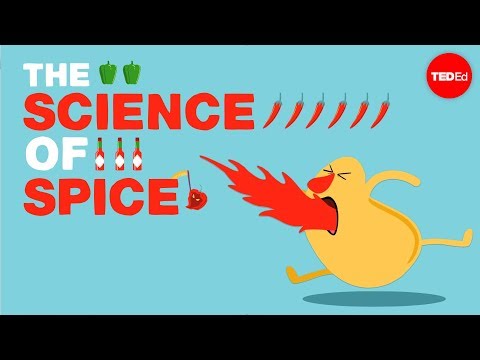
Capsaicin makes your mouth feel burning because your brain interprets heat receptors as dangerous heat.
TED-Ed
The science of spiciness - Rose Eveleth
Go deeper ✨
@food
Some people experience spicy food like a rollercoaster, turning an unpleasant burn into an adrenaline-fueled thrill.
TED-Ed
The science of spiciness - Rose Eveleth
Go deeper ✨
@food
The Trinidad Moruga Scorpion and Carolina Reaper reach about 1.5–2 million Scoville units, roughly half pepper spray’s heat.
TED-Ed
The science of spiciness - Rose Eveleth
Go deeper ✨
@food
Menthol feels cold by activating the body’s cold receptors, not by lowering your mouth’s temperature.
TED-Ed
The science of spiciness - Rose Eveleth
Go deeper ✨
@food
The Scoville scale measures how far capsaicin-containing food must be diluted before humans stop detecting its heat.
TED-Ed
The science of spiciness - Rose Eveleth
Go deeper ✨
@food
Capsaicin and piperine stay mostly in your mouth, while mustard, horseradish, and wasabi compounds reach your sinuses.
TED-Ed
The science of spiciness - Rose Eveleth
Go deeper ✨
@food
Spice lovers feel the burn just as painfully as everyone else. They simply seem to enjoy that pain more.
TED-Ed
The science of spiciness - Rose Eveleth
Go deeper ✨
@food
When someone says they want to open a restaurant, ask: are you sure, and where?
Freakonomics Radio Network
Why Chef Hillary Sterling Trusts Her Senses Over Science | Better in Person
Go deeper ✨
@food
A limited childhood food culture can drive someone toward becoming a chef, but that path is an anomaly, not a rule.
Freakonomics Radio Network
Why Chef Hillary Sterling Trusts Her Senses Over Science | Better in Person
Go deeper ✨
@food
Teaching people to cook with their senses starts by helping them pause, reset, and pay attention.
Freakonomics Radio Network
Why Chef Hillary Sterling Trusts Her Senses Over Science | Better in Person
Go deeper ✨
@food
Negotiating purchases means calling competing suppliers, then asking preferred vendors for specific prices and concessions.
Freakonomics Radio Network
Why Chef Hillary Sterling Trusts Her Senses Over Science | Better in Person
Go deeper ✨
@food
Career growth means choosing the environment where you can discover who you really are.
Freakonomics Radio Network
Why Chef Hillary Sterling Trusts Her Senses Over Science | Better in Person
Go deeper ✨
@food
Food’s meaning comes partly from personal memories and associations, not just the flavor on the plate.
Freakonomics Radio Network
Why Chef Hillary Sterling Trusts Her Senses Over Science | Better in Person
Go deeper ✨
@food
Leadership after public criticism means returning to the kitchen and motivating a team you feel you let down.
Freakonomics Radio Network
Why Chef Hillary Sterling Trusts Her Senses Over Science | Better in Person
Go deeper ✨
@food
Before hiring a culinary applicant, ask one question: do you want to be a chef or a cook?
Freakonomics Radio Network
Why Chef Hillary Sterling Trusts Her Senses Over Science | Better in Person
Go deeper ✨
@food
Technical skill cannot replace a story, a place, or personal inspiration in creative cooking.
Freakonomics Radio Network
Why Chef Hillary Sterling Trusts Her Senses Over Science | Better in Person
Go deeper ✨
@food
Good cooking requires connecting with food, not merely following procedures. A thermometer helps, but firsthand knowledge still matters.
Freakonomics Radio Network
Why Chef Hillary Sterling Trusts Her Senses Over Science | Better in Person
Go deeper ✨
@food
After a major cooking failure, repeated observation and practice can turn failure into competence.
Freakonomics Radio Network
Why Chef Hillary Sterling Trusts Her Senses Over Science | Better in Person
Go deeper ✨
@food
The best childhood-inspired food recreates the feeling you remember, then makes the food itself better.
Freakonomics Radio Network
Why Chef Hillary Sterling Trusts Her Senses Over Science | Better in Person
Go deeper ✨
@food
Trying too hard can drain food of its soul. Honest cooking starts with what you truly understand.
Freakonomics Radio Network
Why Chef Hillary Sterling Trusts Her Senses Over Science | Better in Person
Go deeper ✨
@food
Cooking is caregiving. Preparing meals, arranging plates, and feeding people are acts of taking care of them.
Freakonomics Radio Network
Why Chef Hillary Sterling Trusts Her Senses Over Science | Better in Person
Go deeper ✨
@food
“Be one with the pork” became the turning point when cooking began to make sense through the senses.
Freakonomics Radio Network
Why Chef Hillary Sterling Trusts Her Senses Over Science | Better in Person
Go deeper ✨
@food
Putting lemon juice in a squeeze bottle severs a cook’s connection with the lemon.
Freakonomics Radio Network
Why Chef Hillary Sterling Trusts Her Senses Over Science | Better in Person
Go deeper ✨
Keep what matters
Save insights to your own Boards and return to them anytime.
Create your Korva account