Korva is a scroll of the internet’s best ideas.
A Chinese pirate ruled Palembang
The pirate chief
Chen Zuyi, from Guangdong, seized the wealthy port during the Regreg war. He plundered native and foreign merchants passing through the Strait of Malacca and used forged bronze seals to make counterfeit licenses and smuggle goods into and out of China. He also played a double game, sending his son to the Ming court with tribute while he plundered the seas.
Zheng He's attack
On its way home through the strait, Zheng He's fleet sailed along the mangrove coast to Palembang and demanded Chen's surrender. Chen feigned surrender while secretly plotting to attack the imperial army, but the Chinese found out and prepared their defenses.
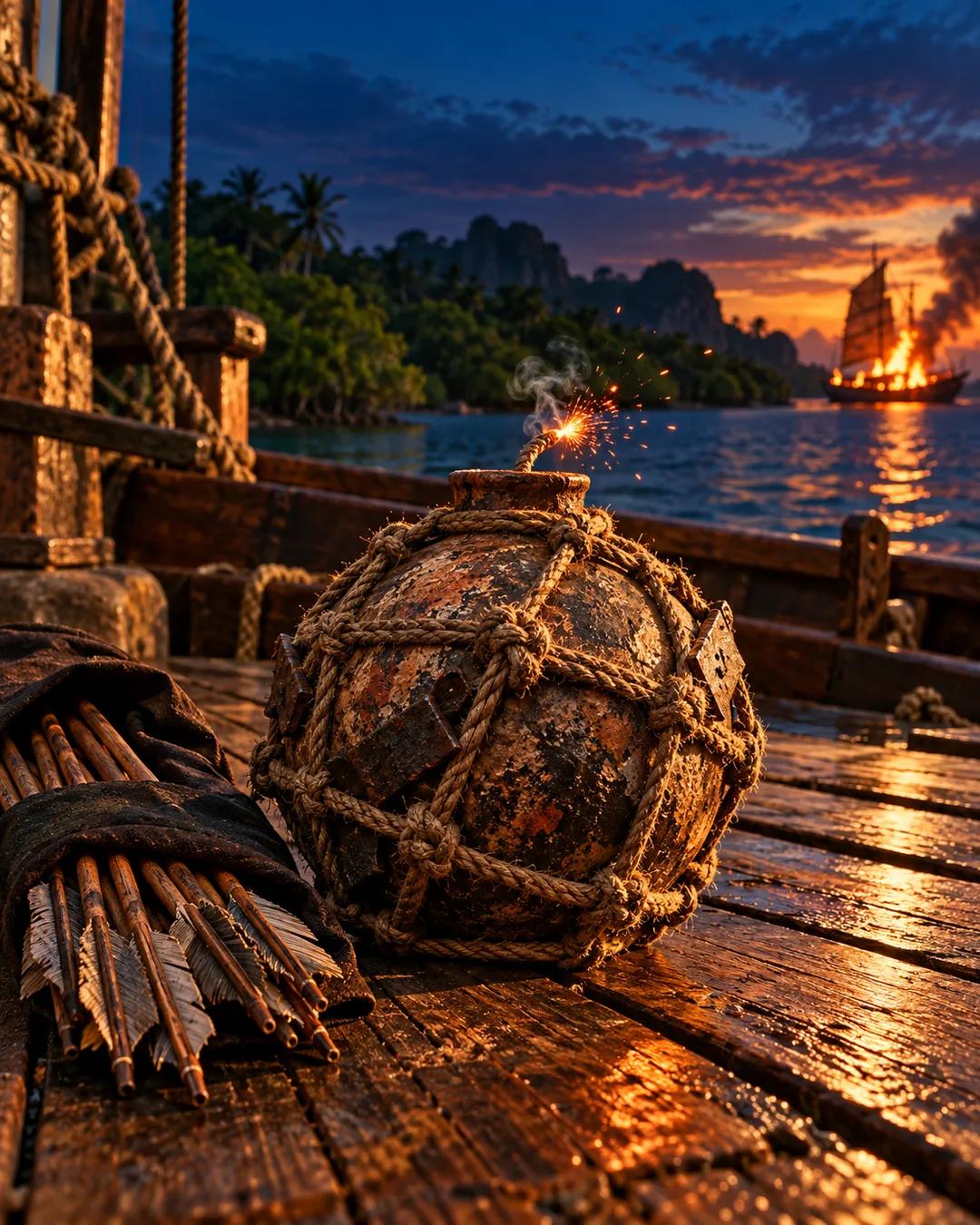
The Ming ships rammed the pirate vessels, hurled gunpowder bombs from catapults, and fired fireworks filled with scraps of paper to spread fire and ignite enemy sails, along with volleys of flaming arrows. More than 5,000 of Chen's gang were killed, 10 ships were burned, and seven were captured. Two counterfeit bronze seals were seized, and Chen and two others were taken alive and beheaded at the capital.
A new governor
China then named a governor for the port, a Muslim named Shi Jinqing who had once been an official of Majapahit. He was given the title of pacification superintendent along with a seal, a title patent, headwear, a belt, and fine silks.
Why were fireworks used as weapons?
Gunpowder was invented in China, and its first uses included fireworks and incendiary weapons. Ming ships carried fire arrows, rockets, and bombs hurled from catapults. Fireworks filled with paper scraps spread burning fragments over a wide area, and sails made of cloth or matting caught fire easily. The Huolongjing, a Chinese military text from around the 14th century, describes many gunpowder weapons of this kind.
Why did Palembang attract pirates and kings?
Palembang sits on the Musi River, a short sail from the Strait of Malacca. For centuries it was the capital of Srivijaya, the maritime empire that controlled much of the strait's trade. Chinese records called the kingdom Sanfoqi. Whoever held the port could tax or plunder every ship using the strait.
How did forged seals help smugglers?
Ming China allowed foreign missions to trade only if they carried official trade certificates, known as tallies, issued to tribute states. A forged seal let a smuggler pass as an official mission. Counterfeit licenses opened Chinese ports that were otherwise closed to private traders. The Ming court treated seals as symbols of imperial authority.
More from Fall of Civilizations