Korva is a scroll of the internet’s best ideas.
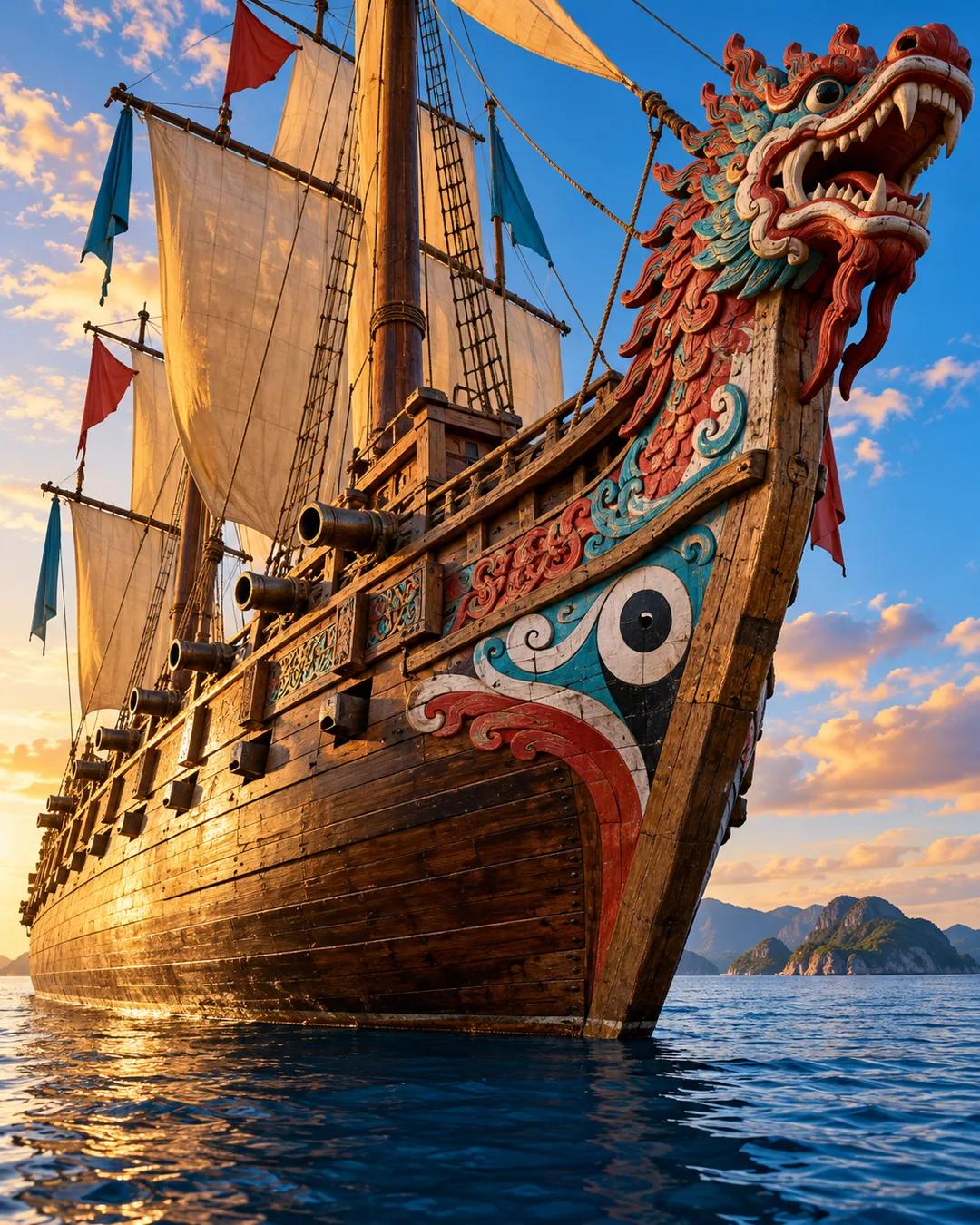
A fleet of 317 ships
The admiral
Admiral Zheng He had spent his life as a military commander serving the Yongle Emperor. Born into a devout Muslim family in southwest China, he had been captured in the wars of the preceding decades, castrated, and raised as a military slave. A contemporary writer described him as 7 feet tall, with a waist about 5 feet around and a voice as loud as a huge bell.
The treasure ships
The fleet sailed on the 11th of July 1405. At least 60 of the vessels were treasure ships that by some sources measured more than 120 meters long and 50 across, each fitted with 24 cast bronze cannons. Their prows were carved with animal heads, dragons, phoenixes, and eagles, painted in bright colors, and eyes were painted on the fronts so the ships seemed to see their own way through mist and storms. Around them sailed horse transports, warships, and floating water tankers, signaling with flags, bells, drums, gongs, and ten lanterns at night, and carrying pigeons for longer distances.
Crew and cargo
Aboard were sailors and soldiers, diplomats, astronomers, linguists, interpreters, doctors, and carpenters to repair the ships at sea. The holds were full of silk, cotton, tea, wine, oil, iron, and candles for trade. The fleet came back with spices, gemstones, and in 1414 a live giraffe, a gift from African delegates from Malindi who had brought it to Bengal. The emperor kept a menagerie in his palace, and he asked his court artists to paint the giraffe.
Why did China prize giraffes?
The Ming court identified the giraffe with the qilin, a mythical creature said to appear when a wise ruler governed well. Its arrival was taken as a sign of the emperor's virtue. Court artists painted the animal, and the painting survives in records from the period. The giraffe's journey reached the court through the tribute system.
Why did the treasure voyages stop?
The Yongle Emperor died in 1424, and his successors faced costly campaigns on the northern border. Court officials who favored a lean treasury and a focus on land defense argued against more ocean expeditions. The seventh and final voyage returned in 1433. After that, the Ming rebuilt the Great Wall and turned inward.
How did Chinese ships navigate across oceans?
Chinese sailors used the magnetic compass at sea from at least the 12th century. They combined it with star sightings, known sailing directions, and measurements of how high stars stood above the horizon. Charts such as the Mao Kun map recorded compass bearings and star heights for routes sailed by the treasure fleets. The map was printed in a Ming military work of 1628.
More from Fall of Civilizations