Korva is a scroll of the internet’s best ideas.
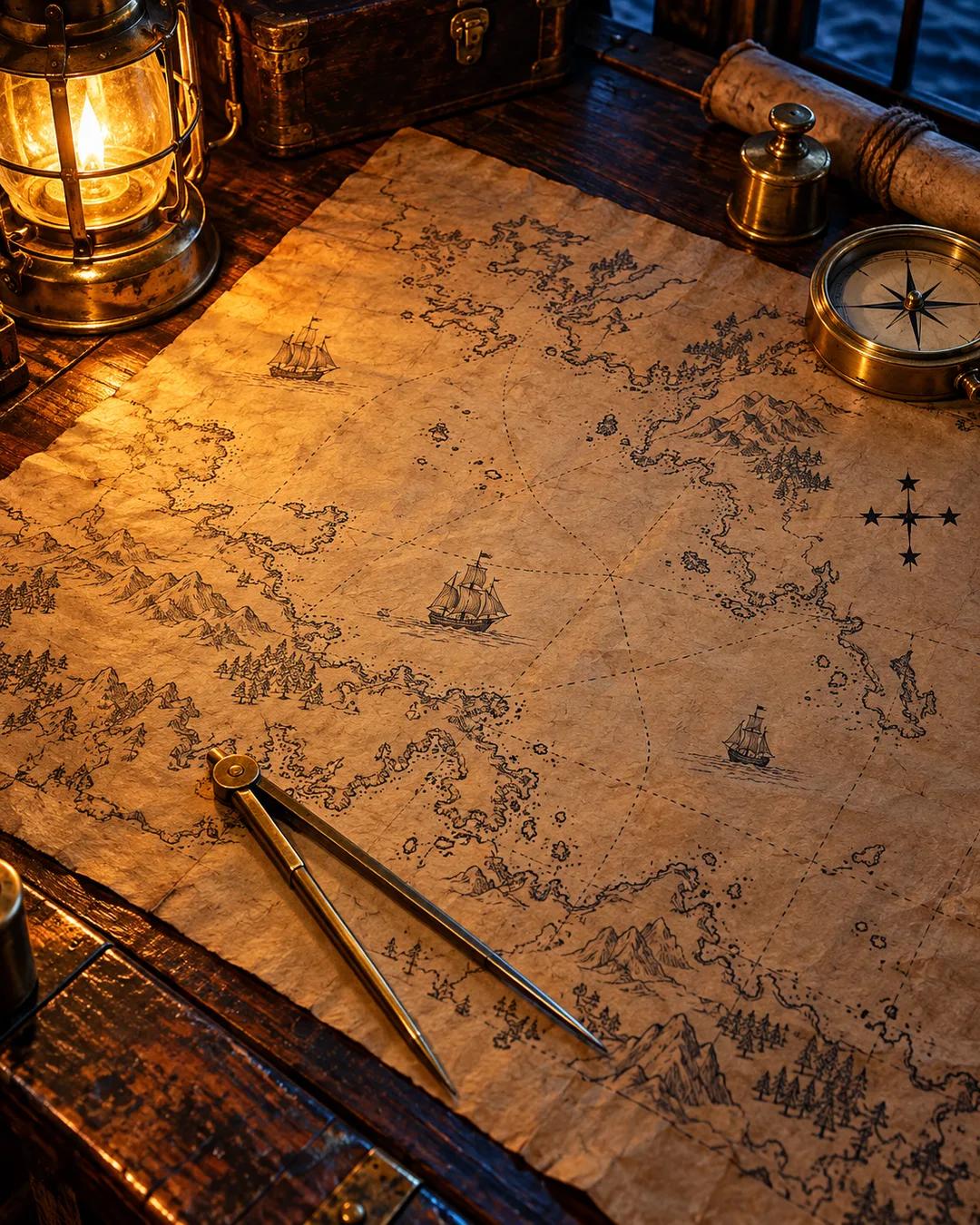
A Javanese map showed Brazil
The captured chart
The chart showed the Cape of Good Hope, Portugal, Brazil, the Red Sea, the Sea of Persia, the Clove Islands, the navigation of the Chinese and Japanese, and how the kingdoms bordered each other. The commander wrote to King Manuel I of Portugal that it was the best thing he had ever seen. Columbus had reached the Americas only twenty years before.
Navigating by stars
Javanese pilots of that era steered by the stars, and also used magnetic compasses and maps drawn on paper made from the bark of the mulberry tree. An Italian traveler who sailed to Java around 1505 watched a Javanese captain keep his course after the North Star had dropped out of sight. The captain pointed out four or five stars as his guide, including the Southern Cross.
The captain also told his passengers that Javanese ships had sailed south by those stars until they came to an icy, frozen land, and that beyond Java the day lasts no more than four hours.
How did sailors steer by the stars?
Navigators memorized the points on the horizon where particular stars rise and set, which gave them a ring of directions known as a star compass. As one star climbed too high to be useful, they switched to the next star rising from the same point. Southeast Asian and Pacific navigators kept these sequences in memory, often passing them down in chants. Some Pacific navigators held dozens of stars in their sequences.
How did news of Brazil travel so fast?
Pedro Álvares Cabral's fleet reached the coast of Brazil in April 1500 while sailing toward India. Portuguese ships first reached Malacca in 1509 and captured it in 1511. Fleets crossing between Lisbon and the East carried charts and reports along the same routes. A dozen years was enough for information from the Atlantic to reach ports in the archipelago.
How was paper made from mulberry bark?
Javanese makers called it daluwang. They stripped the inner bark of the paper mulberry tree, soaked it, and beat it flat with a mallet until the fibers felt together. The sheet was then dried and smoothed. The same tree supplies the bark cloth known as tapa across the Pacific islands.
More from Fall of Civilizations