Korva is a scroll of the internet’s best ideas.
A kingdom walked away from its volcano
Leaving the volcano
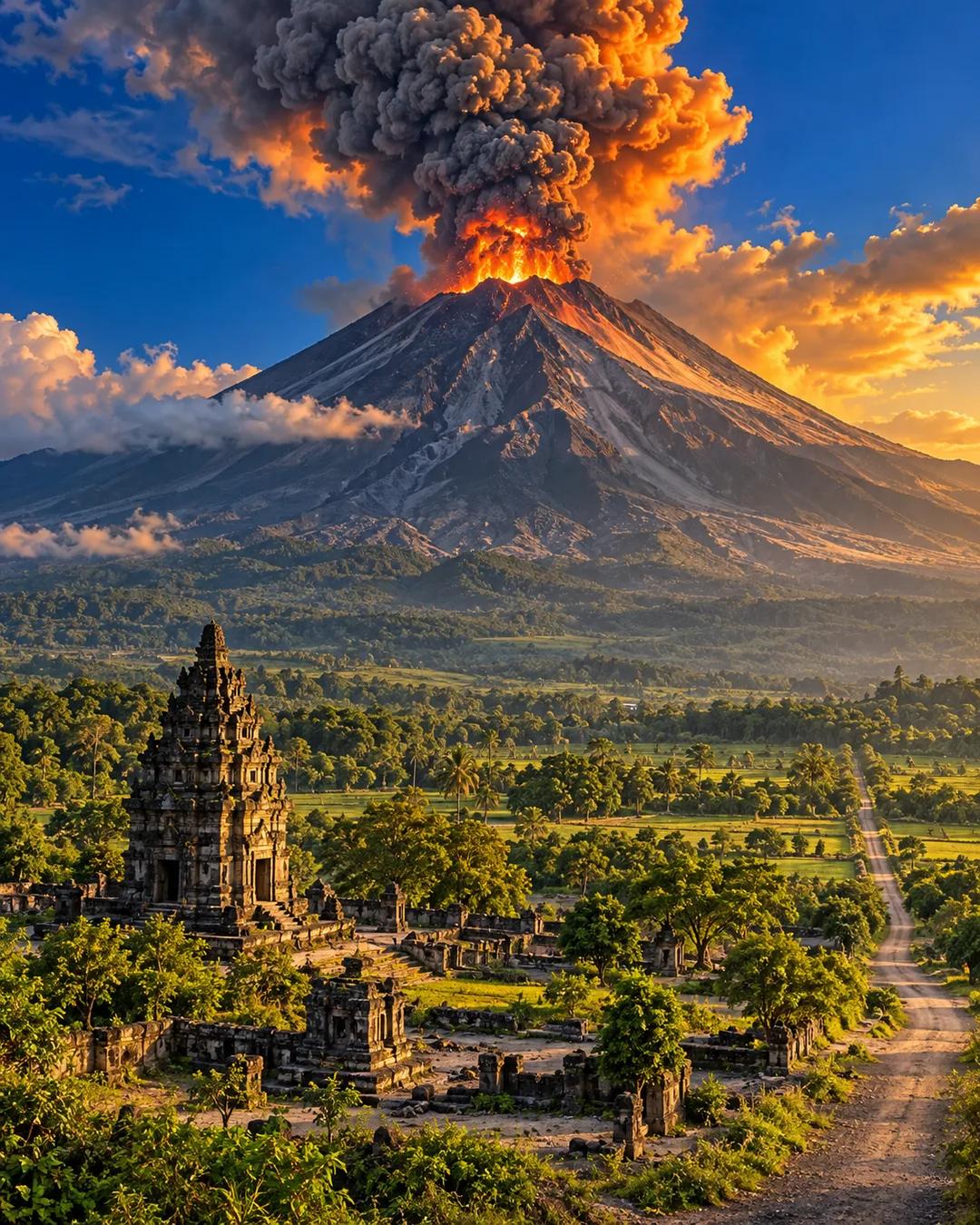
Mataram had built Prambanan and Borobudur on those slopes, and the land fed its kings. Merapi, nearly 3,000 meters high, has small eruptions every 2 to 3 years, larger ones every 10 to 15, and a truly catastrophic explosion every few hundred. After a civil war that saw three kings in two years, a king named Pu Sindok took the throne in 929, and every inscription he issued was written in East Java.
Evidence of disaster
Nobody else moved into the empty provinces, which points to a cataclysm. At Borobudur, the early 10th century layer of human occupation is sealed under up to half a meter of volcanic ash. An inscription known as the Pucangan stone describes a catastrophe that overwhelmed Java in the Saka year 928, when the whole island seemed transformed into one raging sea, and many of the foremost men perished, the divine king among them.
The kingdom's end
The kingdom reached stability in the east, but its confidence in itself and in the approval of the gods had been badly reduced. Within a century, an invasion by a neighboring king wiped out what was left of it. Its everyday life survived only in the reliefs carved on the walls of its temples.
Why do people farm near active volcanoes?
Volcanic ash and rock weather into minerals that enrich the soil, and Java's rain and warmth let farmers grow rice year-round. Slopes like Merapi's catch rain from the clouds and feed rivers below. This is why such lands support some of the densest farming populations on earth. Java's volcanic soils have fed large kingdoms since at least the first millennium CE.
How do geologists date buried ash layers?
Researchers radiocarbon-date charcoal and plant remains found just below and above an ash layer. The layer must fall between the two dates. They also match the chemical fingerprint of the ash to samples from known eruptions. Together these methods can place a deposit within a few decades.
How did Merapi eruptions destroy settlements?
The deadliest events at Merapi are pyroclastic flows, avalanches of hot gas, ash, and rock that race down the slopes at high speed. They can reach several hundred degrees Celsius, burning everything in their path. Heavy rains then turn loose ash into mudflows called lahars, which bury fields and rivers. The 2010 eruption sent pyroclastic flows more than 10 kilometers down the mountain's flank.
More from Fall of Civilizations