Korva is a scroll of the internet’s best ideas.
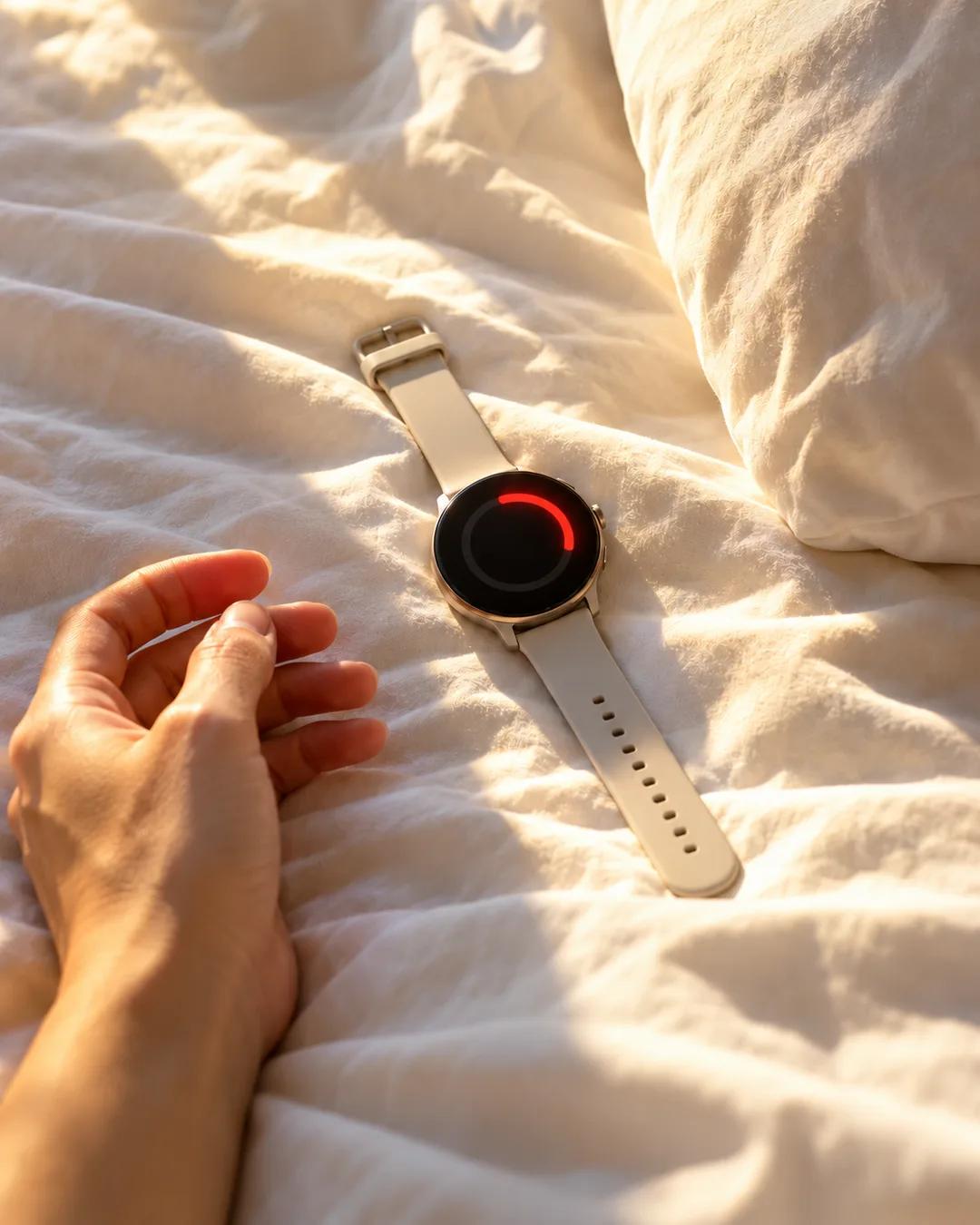
A rigged watch ruins your day

The tracker effect
A tracker can sour a good morning. Someone who felt fine on waking glances at a watch, sees a score the algorithm reads as negative, and the day turns gloomy. A reading like 10 percent REM feels low and suggests something to fix, yet REM sleep is not something a person can target and improve.
Why trying backfires
Sleep does not respond to being performed. Thinking about it more brings it to mind more often, and the body reacts: heart rate climbs, temperature climbs, and the chemistry in the brain shifts, the opposite of what falling asleep needs. Breathing works the same way, because thinking about it too much makes it feel off. People then change their habits, often spending more time in bed, which tends to break sleep into fragments and add stress.
What trackers can do
Trackers are also not very accurate in the way they claim, and the numbers come out noisy and hard to read without training. In a sleep clinic, a simple movement tracker does have a real job: following when and for how long someone goes down for the night across a long stretch, to find a pattern in severe timing problems.
Why does expecting a bad night make people feel worse?
Expectation can produce real effects on its own, a pattern researchers call the nocebo effect. In a 2014 study, psychologists Draganich and Erdal at Colorado College gave volunteers fake feedback about how well they had slept. Those told they had slept poorly did worse on attention tasks than those told they had slept well, even though the feedback was invented.
Why can't anyone steer their REM sleep?
REM sleep is generated by circuits in the brainstem that run in cycles of roughly 90 minutes through the night. The cycles lengthen toward morning, so most REM sleep arrives in the final hours. That is why a night cut short loses more REM than any other stage. In adults, REM typically makes up about a fifth of total sleep.
How do movement trackers decide someone is asleep?
A movement tracker, called an actigraph in sleep medicine, contains an accelerometer that logs motion in short time windows. Software labels long stretches without movement as sleep and active stretches as wake. Studies that compare actigraphy with lab recordings of brain waves find it works fairly well for telling sleep from wake in healthy sleepers. It tends to count quiet wakefulness as sleep, because lying still looks the same as sleeping to an accelerometer.
Why do people become anxious about perfect sleep data?
In 2017, researchers at Rush University Medical Center in Chicago described patients who sought treatment because their tracker data looked imperfect. They named the pattern orthosomnia, from the Greek for straight or correct and the Latin for sleep. Their report noted that the patients' own sleep was often normal on clinical testing.
More from Something You Should Know