Korva is a scroll of the internet’s best ideas.
A town named for bitter fruit

The decoy army
The rebel was Jayakatwang, ruler of Kediri and a vassal of King Kertanagara. Most of the king's forces were away fighting in Sumatra, and a secret letter urged Jayakatwang to strike: there was only one tiger, and it had no teeth. His first army rampaged through the northern farmland under white and red banners, and Kertanagara sent his son-in-law Raden Wijaya to meet it. Wijaya won, and the enemy fled.
That army was the lure. A much larger one was moving through the ravines and valleys of the southern highlands with orders to carry no flags and make no noise, and it reached the capital unnoticed. The king was drunk, in the middle of a ritual that involved wine, when the attackers poured over the walls. He was killed, and the city was looted and emptied.
Wijaya's retreat
Wijaya, still celebrating his victory, retreated into the northeastern rainforest. He was too weak to march on Kediri, and Jayakatwang could not leave his own capital without risking his shaky grip on the throne. Jayakatwang bought him off with a plot of land where he could build a city: an overgrown jungle in the Tarik forest.
A town named bitter
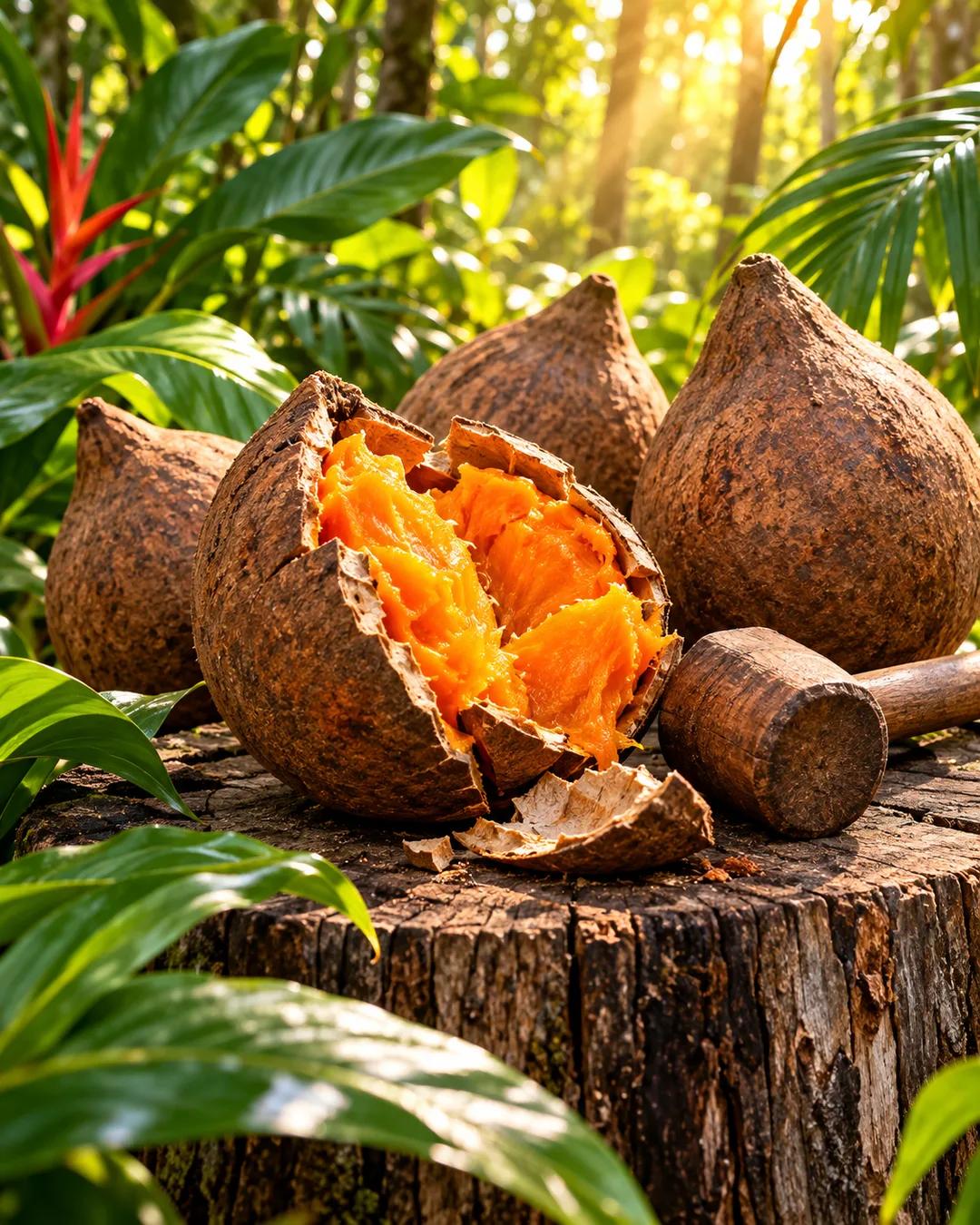
Wijaya's men found one tree growing there in great numbers, the maja, whose pear-shaped fruit has a woody rind that needs a hammer to crack and an orange pulp that smells of roses and tastes a little like marmalade. A hungry man cutting the forest bit into one, found it bitter, and threw away everything he had picked. Pahit means bitter in Javanese, and the place became Maja Pahit.
Why did Kertanagara send armies to Sumatra?
In 1275 Kertanagara launched the Pamalayu expedition to bring the Malay kingdom of Malayu in Sumatra under Javanese influence. Controlling it would give Singasari a share of the trade through the Strait of Malacca. In 1286 the king sent a statue of the Buddhist deity Amoghapasa to Dharmasraya, the Malayu capital. The inscription on its base records the gift.
How did Wijaya secure his claim to the throne?
Wijaya took the throne in 1293 under the royal name Kertarajasa Jayawardhana. He married all four daughters of Kertanagara, which tied him to the old Singasari royal line. The marriages gave his sons through them a claim on both sides of the family. His son Jayanegara came to the throne through a different wife, a princess from Sumatra.
Why did Java's kingdoms keep moving their capitals?
Javanese kings often built a new capital when a dynasty changed or when disaster struck. A kingdom's power was held to rest in the person of its ruler, so a ruler's court could relocate without losing its authority. Singasari, Kediri, and Majapahit each had their own center in East Java. Majapahit's capital stayed near Trowulan for about two centuries.
More from Fall of Civilizations