Korva is a scroll of the internet’s best ideas.
Apprentice before adding your spin

Competence before style
No one wants to work with a person trying to bring their own unique spin to something they barely understand. The early work is to get the core mechanics, like dribble, shoot, guard, and pass in basketball, and to go from unskilled to skilled and hopefully on to mastery.
Hard is not yuck
That is hard for people who feel a little different and need to see their unique gift in the work. Some things come naturally and others are much harder, and the hard ones have to be overcome. Hard does not mean yuck; it only means the skill set isn't developed yet. Taste develops by sorting what moves a person toward or away from things into yum, yuck, and meh.
Adding your own gifts
Once the skills are there, and especially after mastery, some of a person's unique experience can be included, and that is where a field gets transformed. Accepting that the apprenticeship is not the final destination is the tough pill to swallow.
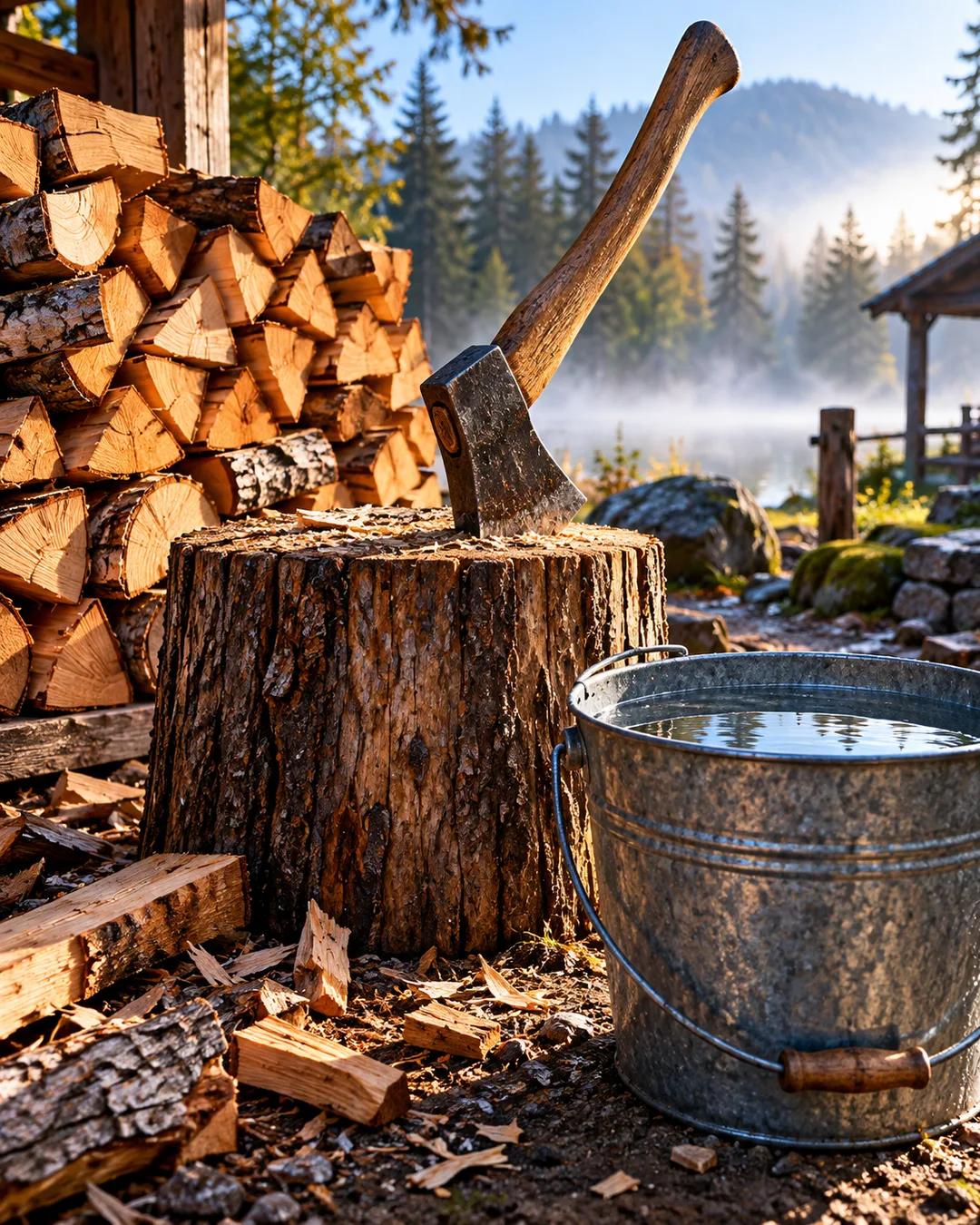
Where does chop wood, carry water come from?
The saying comes from the Zen tradition. A frequently cited source is Layman Pang, a Chinese Buddhist who lived around the eighth century and wrote a poem calling drawing water and carrying firewood a supernatural power. The line was taken up by later Zen teachers as a way to describe ordinary work as the practice itself.
How long does it take to build expertise?
Anders Ericsson, Ralf Krampe, and Clemens Tesch-Römer studied violinists at a Berlin music academy for a 1993 paper in Psychological Review. The best students had accumulated about 10,000 hours of practice by age 20. Students judged good had about 8,000 hours, and those headed for music teaching careers had about 4,000.
How did past masters train before finding a style?
Benjamin Franklin wrote in his autobiography that he taught himself to write by taking notes on essays from The Spectator and then rebuilding them from memory in his own words. Apprentices in Renaissance painting workshops ground pigments and copied the master's drawings for years before painting independently. Both traditions put long imitation ahead of originality.
More from Andrew Huberman