Korva is a scroll of the internet’s best ideas.
Fermented foods cut inflammation markers
The Stanford study
Justin Sonnenberg and Christopher Gardner at Stanford gave one group a call to eat more low-sugar fermented foods each day and another group a call to raise fiber intake markedly. The fiber group ramped up slowly over a few weeks to let the system acclimate, and fermented-food intake built from one serving to about four a day, which is a few spoonfuls of Bulgarian yogurt here and a little low-sugar kombucha there.
Fiber group results
Many inflammatory markers dropped significantly in the fermented-food group. The fiber group split: some people who raised fiber substantially had lower inflammatory markers, and others had higher ones, which suggests that certain high-fiber foods might inflame some people and not others.
Which foods count
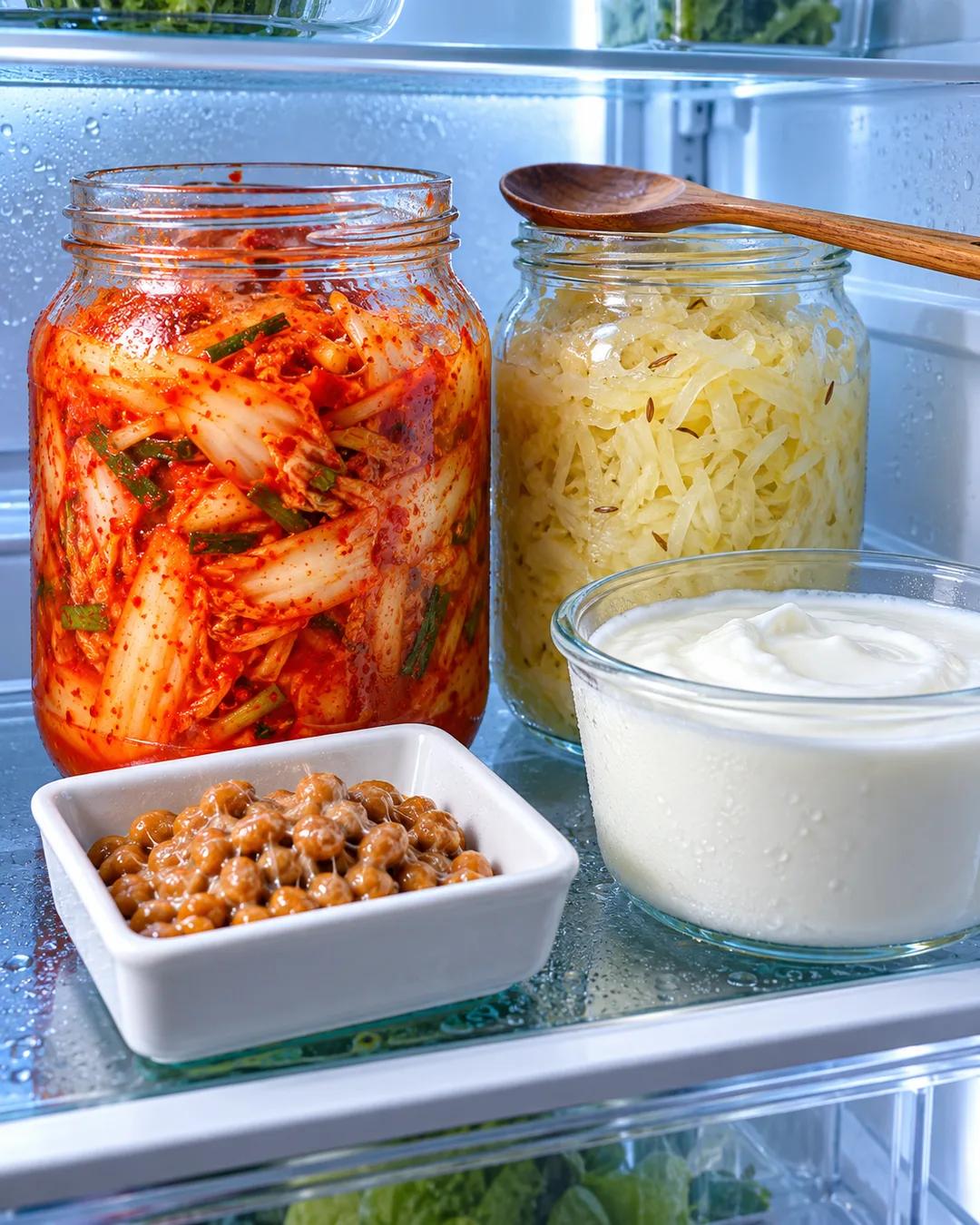
The fermented foods that count are the low-sugar kind that has to be kept in the refrigerator, such as Bulgarian yogurt, sauerkraut, natto, and kimchi. Beer and sweetened pickles don't qualify. Food that can sit on a shelf in near ready-to-eat form counts as highly processed, which points the other way.
What else changed in the Stanford fermented-food study?
The study was published in Cell in 2021, with Hannah Wastyk as first author. People eating more fermented foods showed greater diversity of gut microbes, and the more servings they ate, the larger the increase. Their blood levels of 19 inflammatory proteins fell, among them interleukin-6, which has been linked to chronic inflammatory conditions.
How do gut bacteria make fiber useful?
Humans lack the enzymes to digest most dietary fiber, so it passes into the colon intact. Gut bacteria ferment it and release short-chain fatty acids, mainly acetate, propionate, and butyrate. Butyrate is a major fuel for the cells that line the colon. These molecules also signal to immune cells in the gut wall.
How does fermentation change food?
Microbes such as lactic acid bacteria convert sugars in food into acids, gases, or alcohol. In sauerkraut and kimchi, the lactic acid they make lowers the pH enough to hold back spoilage organisms. The acid also gives those foods their tang. Natto is fermented by a different organism, the bacterium Bacillus subtilis.
More from Andrew Huberman