Korva is a scroll of the internet’s best ideas.
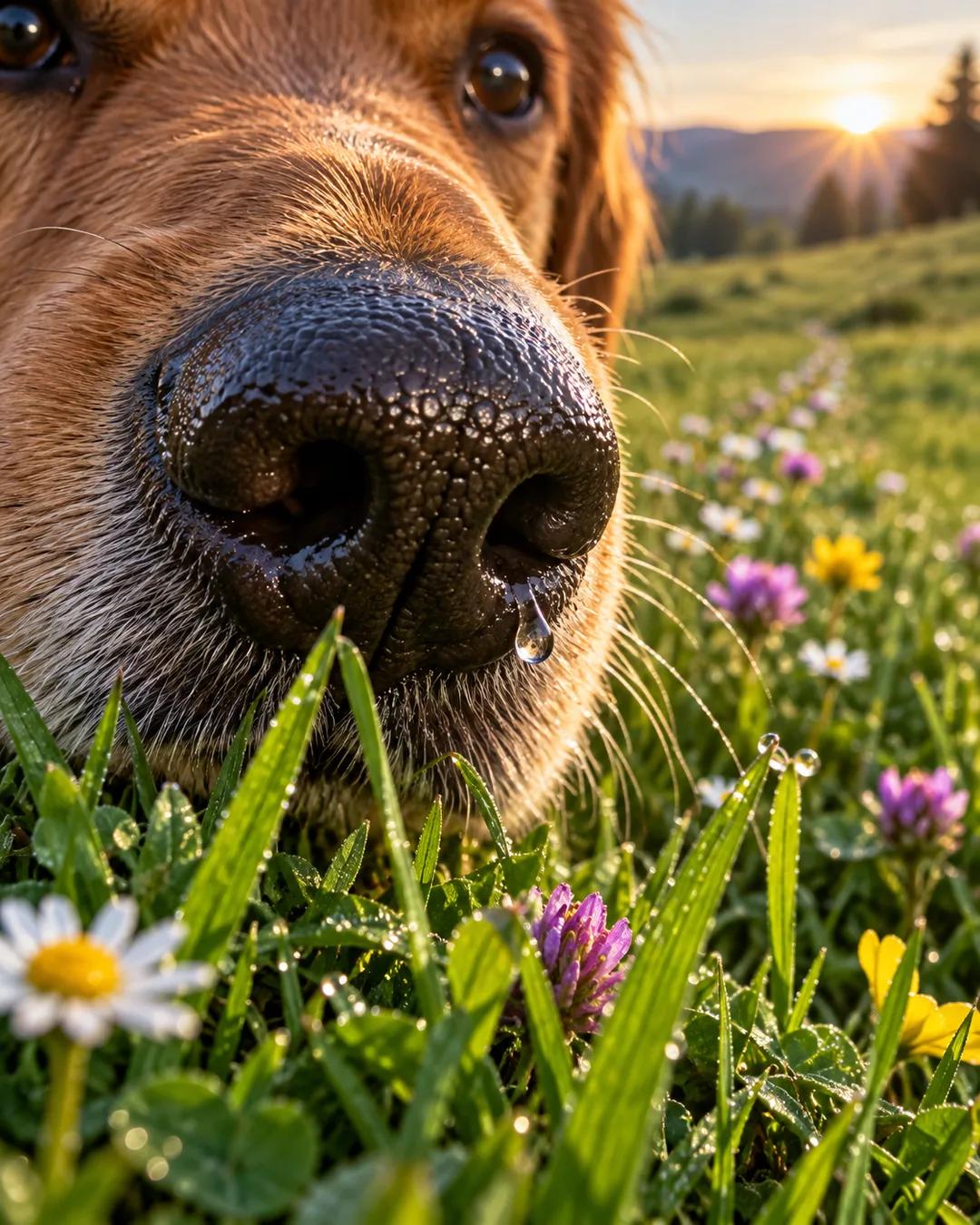
Dogs sniff in stereo

Stereo smelling
The notches along the sides of a dog's nostril create a physical environment where each inhale keeps the odor in. The dog spends a long time with every smell, even one it met seconds or minutes earlier, and compares the odor entering one nostril with the other, which works like stereo and presumably tracks the direction an odor plume comes from.
Scent focus
A dog fixated on a scent seems deaf to everything said and blind to everything around it, as if it has cut out the other senses. Scent hounds are the standout, though other animals do this too.
Humans versus dogs
A literature on the subject puts the human sense of smell on par with a dog's. People have somewhat fewer olfactory neurons, and the remaining difference in what each can smell at a given level has much more to do with sniffs per unit of time than with the olfactory system itself.
How does a dog's nose keep odors in?
Engineers Brent Craven, Eric Paterson, and Gary Settles at Penn State filmed airflow in dog noses and published the work in the Journal of the Royal Society Interface in 2010. On inhaling, a fold of tissue sends part of the air to the smelling region and part to the lungs. On exhaling, the air exits through slits at the sides of the nostrils, which swirls fresh air in and keeps the exhale from blowing the odor away. The pattern lets dogs sniff repeatedly without pausing to clear their noses.
How well can people follow a scent trail?
Researchers led by Jess Porter in Noam Sobel's lab at UC Berkeley reported in a 2007 paper in Nature Neuroscience that blindfolded, ear-muffled volunteers could follow a trail of chocolate essence across a field. They tracked it by sweeping back and forth across the line. Their accuracy dropped when one nostril was blocked, which pointed to a comparison between the two sides.
How fast do animals sniff?
Wolfgang Welker documented in 1964 that rats exploring a new environment sniff in bursts of roughly four to twelve times per second. Dogs, rodents, and many other mammals move between slow breathing and fast sniffing. Researchers use the sniffing rate to track how animals investigate odors.
More from Andrew Huberman