Korva is a scroll of the internet’s best ideas.
Civilization needs difficult but possible land
A Harsh Land
Summer temperatures in southern Iraq can pass 52 degrees Celsius, rain is rare, and the floods that bring life back to the land are unpredictable. The Nile flows from the Great Lakes of Africa, which steady it. The Tigris and Euphrates depend on rainfall over the mountains of Turkey, Armenia, and Kurdistan, which varies widely from year to year, and years of drought are often followed by devastating floods. The land is clay and silt, with no minerals to mine and no stone.
Canals and Bureaucracy
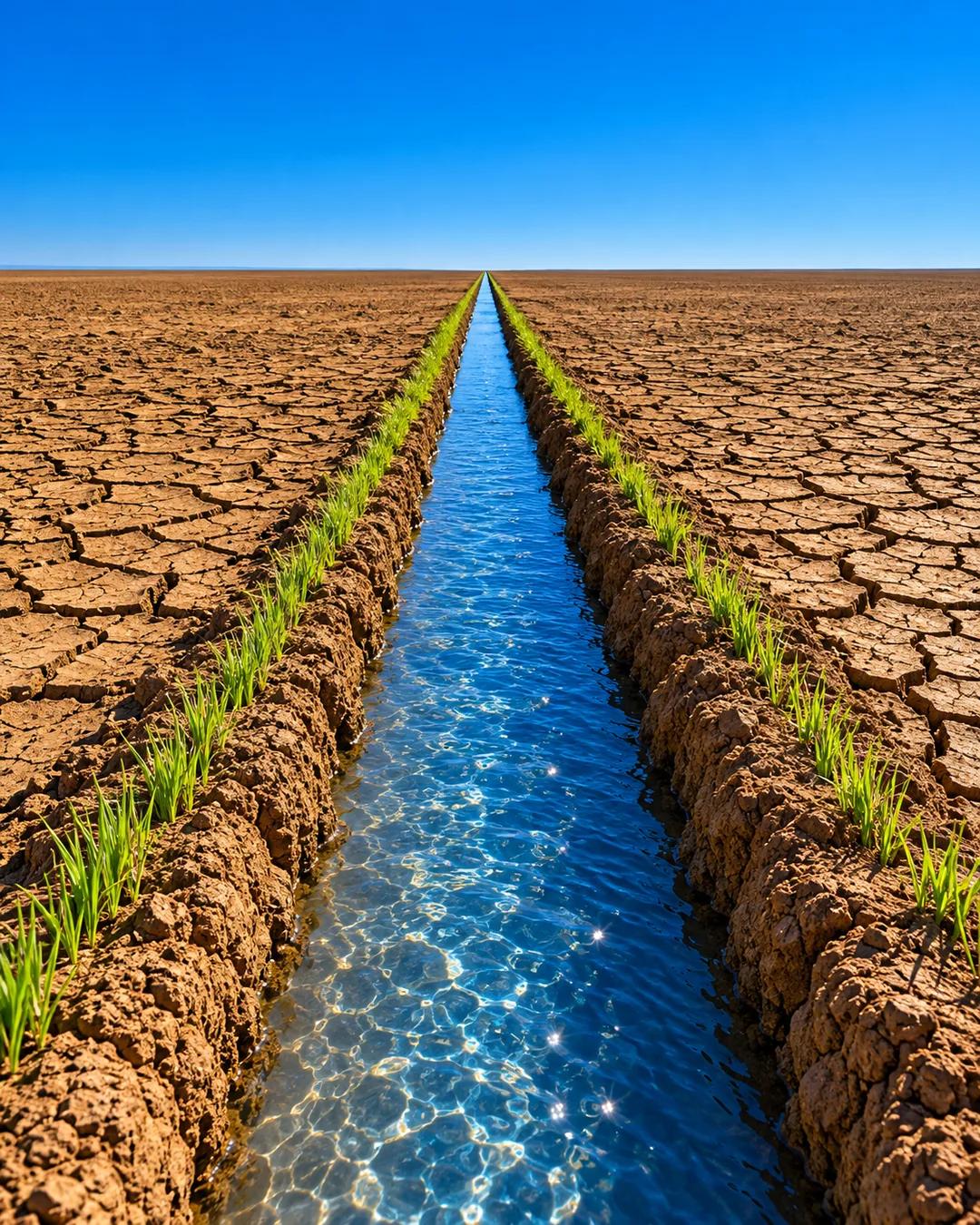
Yet the silt carried down from the mountains made the soil exceptionally fertile, and farmers learned that a dug canal could carry water far inland. Canals required careful planning, engineering, and mathematical calculation. Work teams needed organizing and paying in food and beer, and foremen and supervisors had to be appointed. Many historians argue this produced a kind of early bureaucracy and the first states.
Toynbee's Challenge
In the 1930s, the historian Arnold Toynbee proposed that the challenge of the environment created the conditions for civilization. In very comfortable conditions, people have little need for more social organization or technology. In very harsh ones, society cannot develop at all. In a place like southern Iraq, where the challenges are many but not overwhelming, a cradle of civilization could happen. Sumerian myth reflects it: the god Marduk kills the dragon Tiamat and builds the world from her remains.
What was Toynbee's challenge-and-response idea?
Arnold Toynbee argued that civilizations arise as responses to challenges, and that the challenge must be strong enough to provoke a response but not so strong that it breaks the people facing it. He pointed to the Sumerians and Egyptians turning swamps into farmland as examples. He laid out the idea in A Study of History, a work of twelve volumes published between 1934 and 1961.
How did builders manage without stone?
Builders made bricks from the clay underfoot, drying them in the sun or baking them in kilns. Baked bricks needed fuel, which was scarce, so they were reserved for important buildings. Stone for statues and door sockets had to be imported from the highlands to the north and east.
More from Fall of Civilizations