Korva is a scroll of the internet’s best ideas.

Why redesign cities
About 70% of the human population lives in cities, and most carbon emissions come out of them. That makes cities a place to redesign, and awe is a useful lens for the job. An architecture firm working in hundreds of cities is part of a cities of awe initiative.
What goes in
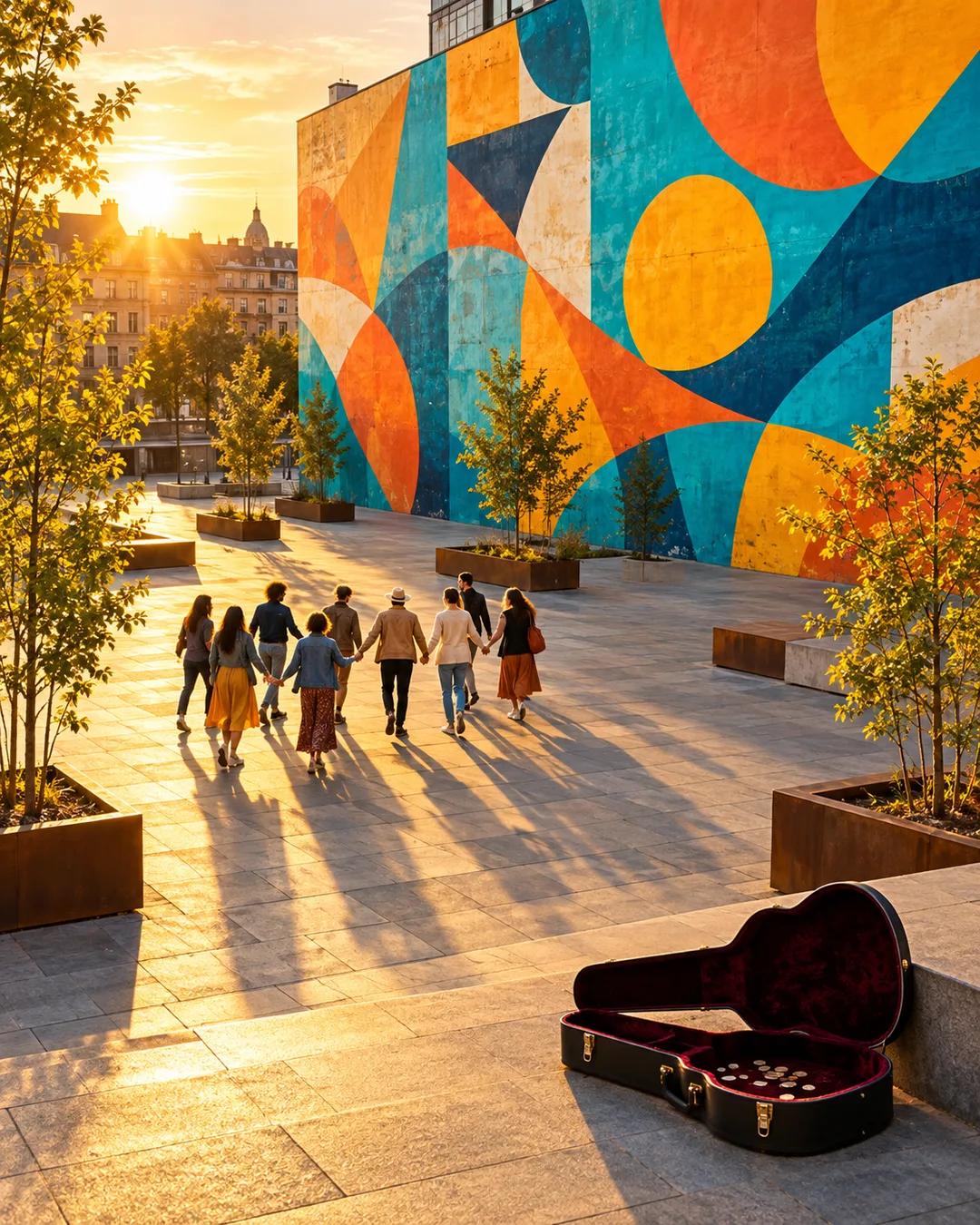
The ingredients are modest: a little nature, public art, and face-to-face contact. Something collective helps, such as a yoga class in the town square or a walk in the Mexican zocalo where everybody walks together at a certain hour of the day and suddenly feels peaceful. Big ideas and a chance for meditation and reflection round it out.
People also feel awe at moral beauty, at someone's courage, strength, kindness, or justice, so places where people can see that in each other belong on the list.
The same ingredients fit a gym. A climbing gym can put up an art exhibit each month by a local artist and play music while people climb.
How does a walk in green space change the mind?
In a 2015 study in the Proceedings of the National Academy of Sciences, Gregory Bratman and colleagues sent one group on a 90-minute walk through a grassy, tree-filled area and another along a busy road. Afterward the nature group reported less rumination, the habit of replaying negative thoughts. Brain scans showed lower activity in the subgenual prefrontal cortex, a region tied to rumination. The road-walking group showed no such change.
Why is the Mexican zocalo called that?
Zocalo means plinth. In 1843 Mexican authorities planned a monument to independence for the main square in Mexico City and built only its base. The square kept the name, and plazas across Mexico adopted it. The Zocalo in Mexico City sits on the ceremonial center of the Aztec capital Tenochtitlan.
How did Olmsted design parks for calm?
Frederick Law Olmsted and Calvert Vaux won the 1858 competition to design Central Park with a plan titled Greensward. Olmsted argued that scenery acts on city dwellers' minds without their conscious effort. He designed winding paths and open meadows to give a sense of distance within a crowded city. The park now covers about 840 acres.
More from Andrew Huberman