Korva is a scroll of the internet’s best ideas.
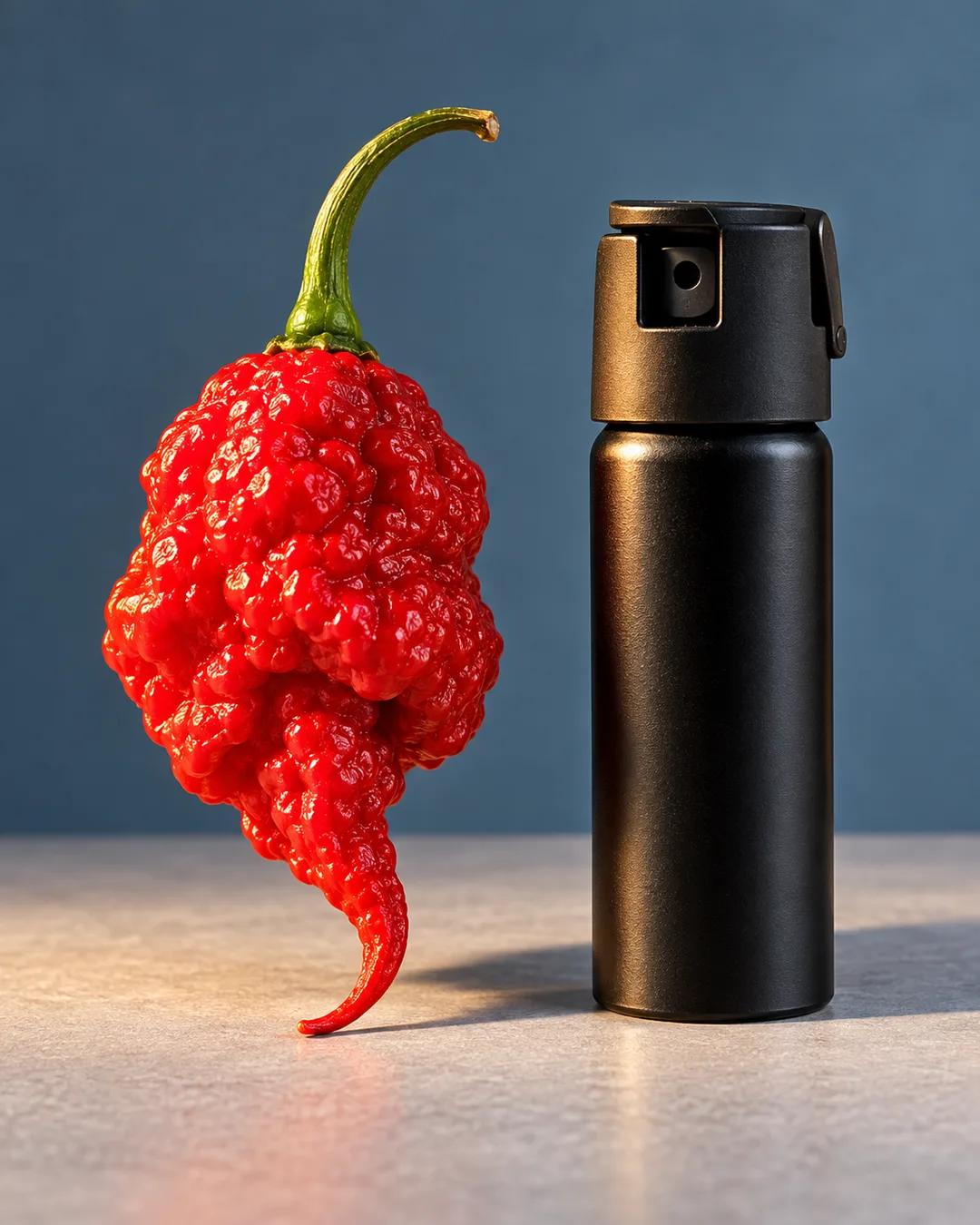
Hottest peppers: half of pepper spray
The Scoville scale is the standard measure of a food's spiciness. It measures how far a food's capsaicin content can be diluted before the heat is no longer detectable to humans.
A sweet bell pepper gets 0 Scoville heat units. Tabasco sauce clocks in between 1,200 and 2,400 units, which puts it far below the top of the scale.
The race to create the hottest pepper is a constant battle, but two peppers generally come out on top: the Trinidad Moruga Scorpion and the Carolina Reaper. Both land between 1.5 and 2 million Scoville heat units.
How was the Scoville scale invented?
Wilbur Scoville, an American pharmacist, devised the test in 1912 while working at the Parke-Davis pharmaceutical company. He dissolved pepper extract in alcohol, then diluted it in sugar water until a panel of tasters could no longer detect any heat. The number of dilutions became the pepper's rating. Modern labs use high-performance liquid chromatography to measure the capsaicin compounds directly and convert the result into Scoville units.
Why is pepper spray hotter than any pepper?
Pepper spray is made from oleoresin capsicum, an oil extracted from hot peppers. The extraction concentrates capsaicin instead of leaving it diluted in fruit flesh and water. Commercial sprays are often rated at several million Scoville heat units. Pure capsaicin sits at about 16 million.
Why do peppers make capsaicin at all?
Capsaicin protects the plant from being eaten by mammals, whose TRPV1 channels respond strongly to it. Birds have a version of the channel that barely reacts to capsaicin. Researchers Sven-Eric Jordt and David Julius reported this difference in the journal Cell in 2002. Birds swallow the seeds and pass them intact, which spreads the plant across the landscape.
More from TED-Ed