Korva is a scroll of the internet’s best ideas.
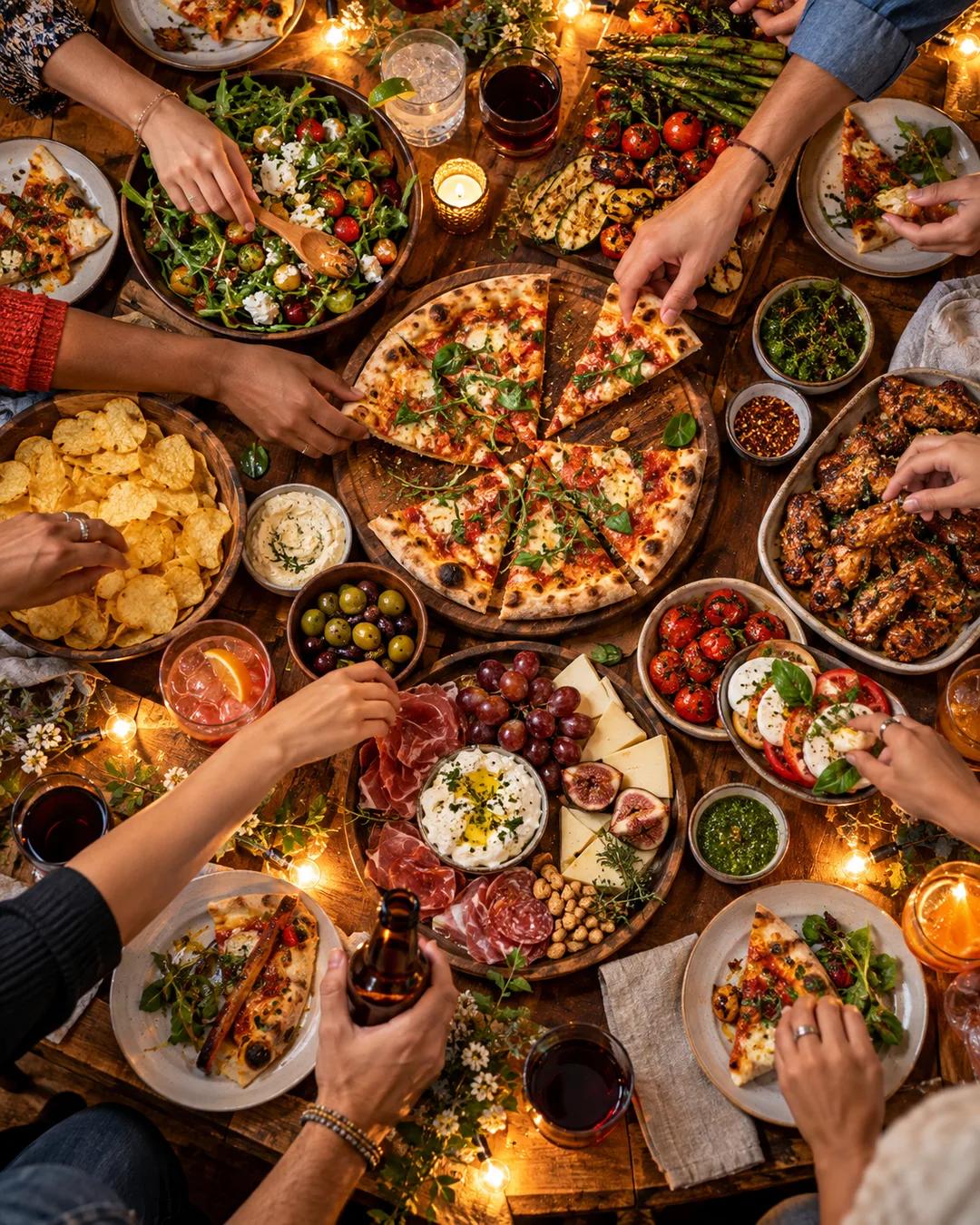
Hunger isn't why most people eat
Cues that push eating
Social events almost always include food, and dinner plates from the 1800s were far smaller than today's. Situational cues work too: sitting down to watch TV prompts popcorn, and a person with a beer in hand tends to nudge others to join. One tentative idea is that humans are herd animals, and doing something alone in ancestral times would have set off an alarm, since no one else was around for protection. Even the color of a plate may matter, with food on a plate of similar color possibly leading people to eat more.
Biology fights dieting
A 2011 review paper by a researcher named MacLean, titled Biology's Response to Dieting: The Impetus for Weight Regain, walked through the adaptations that happen during fat loss diets and how they drive the body back toward its previous weight. In paraphrase, its conclusion was that the body's systems are comprehensive, redundant, and well focused on restoring depleted energy reserves, so any weight loss strategy that fails to address a broad spectrum of them is likely to fail.
Why appetite fixes fall short
A fix aimed at appetite alone, such as going low carb so as not to be hungry, leaves most of those reasons for eating untouched.
How do portion sizes change how much people eat?
In a 2002 study in the American Journal of Clinical Nutrition, Barbara Rolls and colleagues at Penn State served adults macaroni and cheese in four portion sizes. When the portion doubled from 500 grams to 1,000 grams, they ate about 30 percent more. The extra food came without any change in how hungry they said they felt. The result has been replicated with many foods.
How does a short night of sleep change appetite?
In a 2004 study in the Annals of Internal Medicine, Karine Spiegel and colleagues at the University of Chicago limited healthy young men to four hours of sleep for two nights. Leptin, which signals fullness, fell by about 18 percent, and ghrelin, which stimulates hunger, rose by about 28 percent. Reported appetite for calorie-dense, high-carbohydrate food rose by 33 to 45 percent.
Why does eating with others increase intake?
Psychologist John de Castro ran food diary studies in the 1980s and 1990s showing that people ate larger meals with others than alone. The effect grew with group size, a pattern he called social facilitation. A meal that lasts longer also gives more time to keep eating. Shared eating is a feature of human behavior in many cultures.
More from Andrew Huberman