Korva is a scroll of the internet’s best ideas.
Learning styles don't improve learning
How the test works
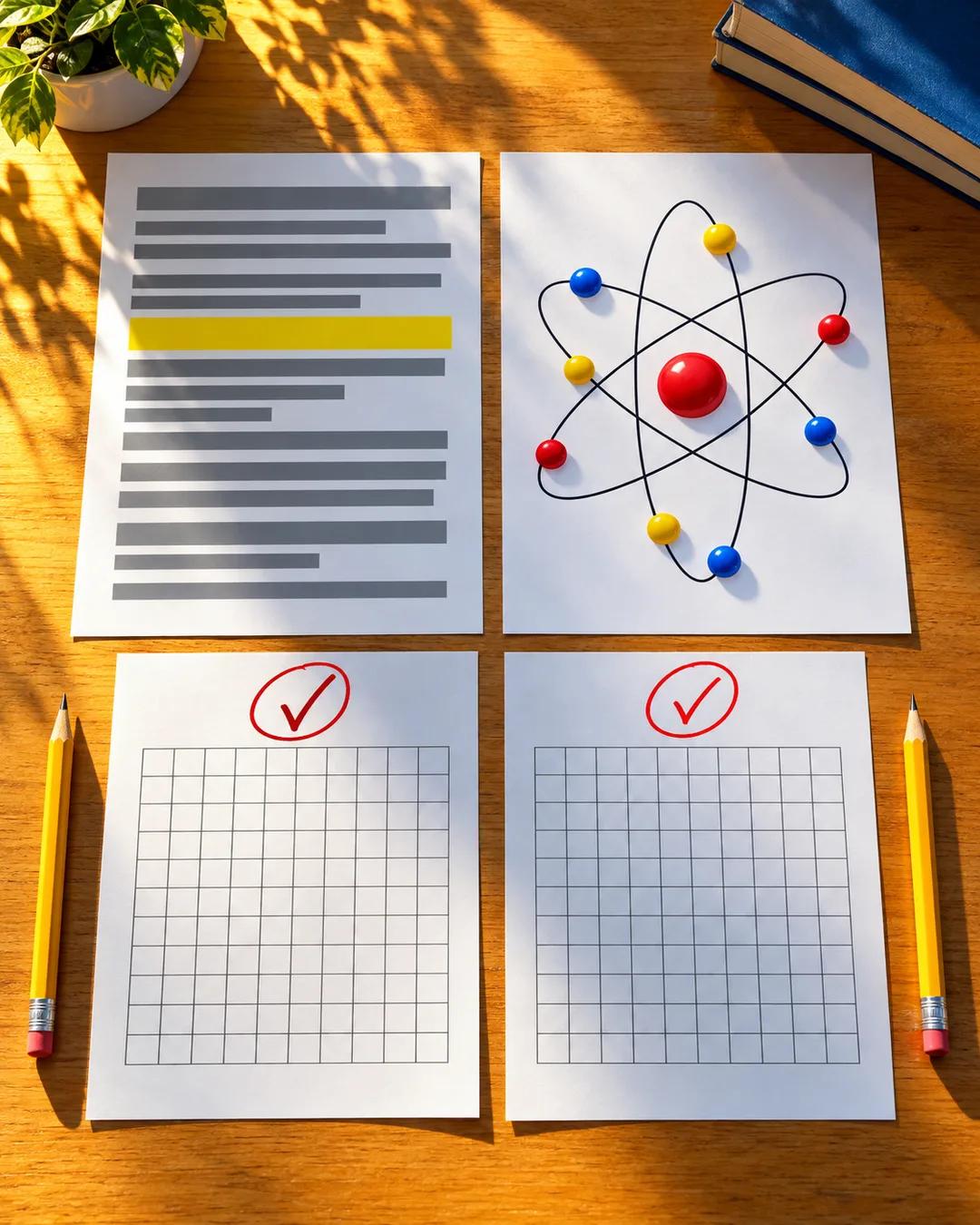
Testing a learning style takes a randomized trial. Researchers identify learners with at least two different styles, say visual and auditory, then randomly assign each to a visual or an auditory presentation. For half of them the presentation matches their style, for the other half it doesn't, and everyone takes the same test. If learning styles were real, the matched half would score higher.
The electronics study
One computer-based study sorted students into visualizers and verbalizers. Questions asked whether they would rather read a paragraph or see a diagram describing an atom, and challenging explanations came with two buttons, visual help for a short animation or verbal help for a written explanation. Students then took a text-based or a picture-based lesson on electronics, with definitions popping up over key words in the text version and an annotated diagram in the picture version.
What it found
Students whose lesson matched their style did no better on the test than students whose lesson was mismatched. The same experiment with 61 non-college-educated adults gave exactly the same result. Review articles on learning styles consistently conclude there is no credible evidence that they exist.
What would real learning style effects look like?
A real effect would show up as a crossover. Visualizers would score higher with pictures and verbalizers would score higher with words, so a graph of the results would show two lines that cross. Psychologist Harold Pashler and colleagues laid out this design in a 2008 review in Psychological Science in the Public Interest. They found very few studies that used it, and several of those that did produced results that contradicted the style claim.
Why do these studies assign students at random?
Random assignment spreads other differences, such as prior knowledge, motivation, and test-taking skill, evenly across the matched and mismatched groups by chance. Without it, students who pick a format they like could differ in ways that affect their scores. With it, a gap between the groups can be traced to the match itself. The larger the sample, the closer chance brings the groups to being equal.
More from Veritasium