Korva is a scroll of the internet’s best ideas.

Learning styles started with a school inspector
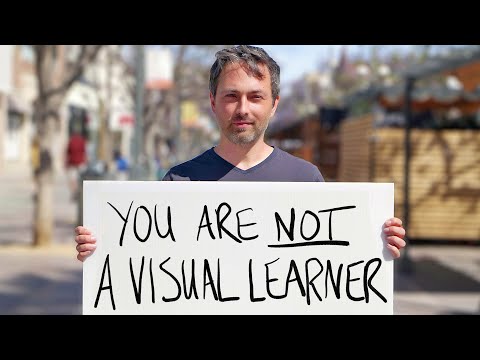
Fleming found it puzzling that some excellent teachers did not reach certain learners while some poor teachers did. He knew there were many possible reasons, but one topic seemed to hold some magic, some explanatory power: preferred modes of learning. From that, VARK was born.
The model sorts people into four groups. Visual learners learn best from images, demonstrations, and pictures, auditory learners from listening to an explanation, reading-writing learners from reading and writing, and kinesthetic learners by doing. No study had revealed that students naturally cluster into four distinct groups. It was an idea that might explain why some teachers can reach students while others can't.
The VARK website promises that once you know about it, its power to explain things will be a revelation.
How many learning style models exist?
Many. A 2004 review led by Frank Coffield for the Learning and Skills Research Centre in the UK identified 71 different models of learning styles. They include David Kolb's 1984 inventory, which sorts people into four styles based on how they take in and process experience, and the model of Peter Honey and Alan Mumford. VARK is one of the simplest of the group, since it sorts people only by the sense they prefer for taking in information.
Where did the VARK questionnaire first appear?
Fleming and Colleen Mills published the questionnaire in 1992 in a paper titled "Not Another Inventory, Rather a Catalyst for Reflection." It builds on an older three-part grouping of visual, auditory, and kinesthetic learners. The questionnaire asks respondents to choose among everyday scenarios, such as how they would give directions to a place. Their answers are tallied into scores for the four categories.
More from Veritasium