Korva is a scroll of the internet’s best ideas.
Oil's real job is carrying heat

A pan is flat and rigid, and food is not, so only tiny bits of the food actually touch the metal. Oil reaches up from the bottom of the pan and grabs the parts floating just above the surface. Because oil conducts heat so well, energy flows into far more of the food than the pan could reach alone. Lift a piece of oiled broccoli and its whole face is hot, with an even brown color, not just the spots that touched the metal.
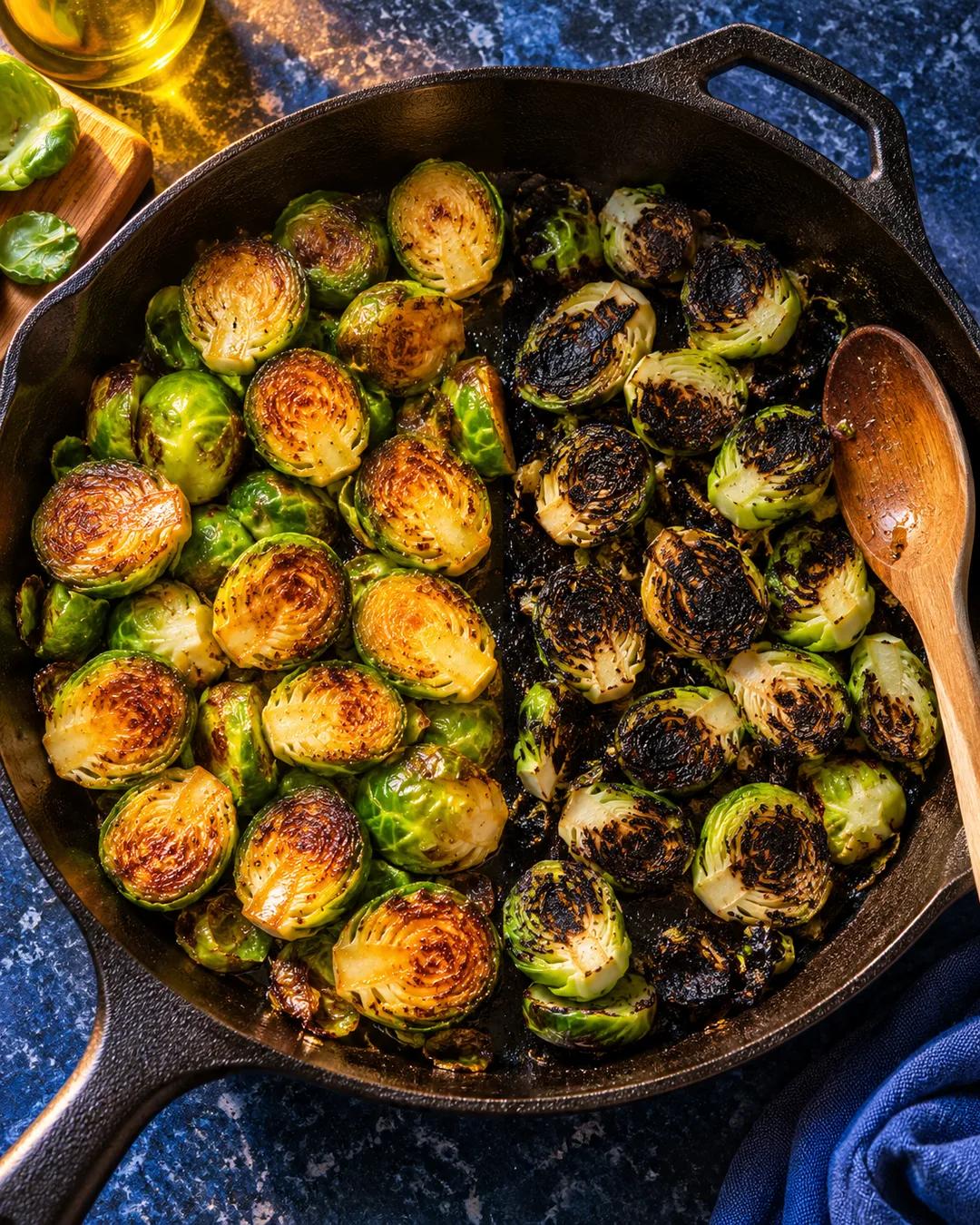
Brussels sprouts show how big the gap is. Halved sprouts in olive oil turned golden across the cut side and were tender and tasty in 6 minutes. The same sprouts with no oil, kept moving so they never stuck, picked up a few small black patches with sharp edges while staying hard inside. After 11 minutes, nearly twice as long, a fork still had to push hard to get in, and any more time would have burned them.
Without oil, the food's overall temperature is simply lower, so the outside tends to burn before the inside is tender. The flavor was also noticeably worse.
Why is air such a poor heat carrier?
Air is mostly empty space, so its molecules collide with each other and with food only occasionally. That makes dry air one of the weaker conductors of heat that a cook deals with. Liquid oil packs its molecules far more closely, and its thermal conductivity is several times higher than that of air. This is why the thin gaps between a pan and an uneven piece of food act like insulation until something fills them.
Why do the unoiled sprouts burn in patches?
Heat flows quickly into the few spots where food touches the metal and hardly at all into the gaps around them. The contact spots keep gaining heat while the rest of the surface lags behind. Sugars and proteins at the hot contact points pass through browning and into charring before the pale areas have started to brown. The result is the mix of black patches and raw-looking areas that dry pan cooking tends to produce.
How does oil move heat into the food?
Hot oil flows around the surface of the food and touches nearly all of it, which is a direct form of heat transfer called conduction. Oil also circulates in the pan, because hotter oil is lighter and rises while cooler oil sinks, so heat keeps being carried to the food. Deep frying uses the same principle with the food fully submerged, which is why its surface cooks so evenly.
More from Adam Ragusea