Korva is a scroll of the internet’s best ideas.
Puppet plays too powerful to perform
Staging the play
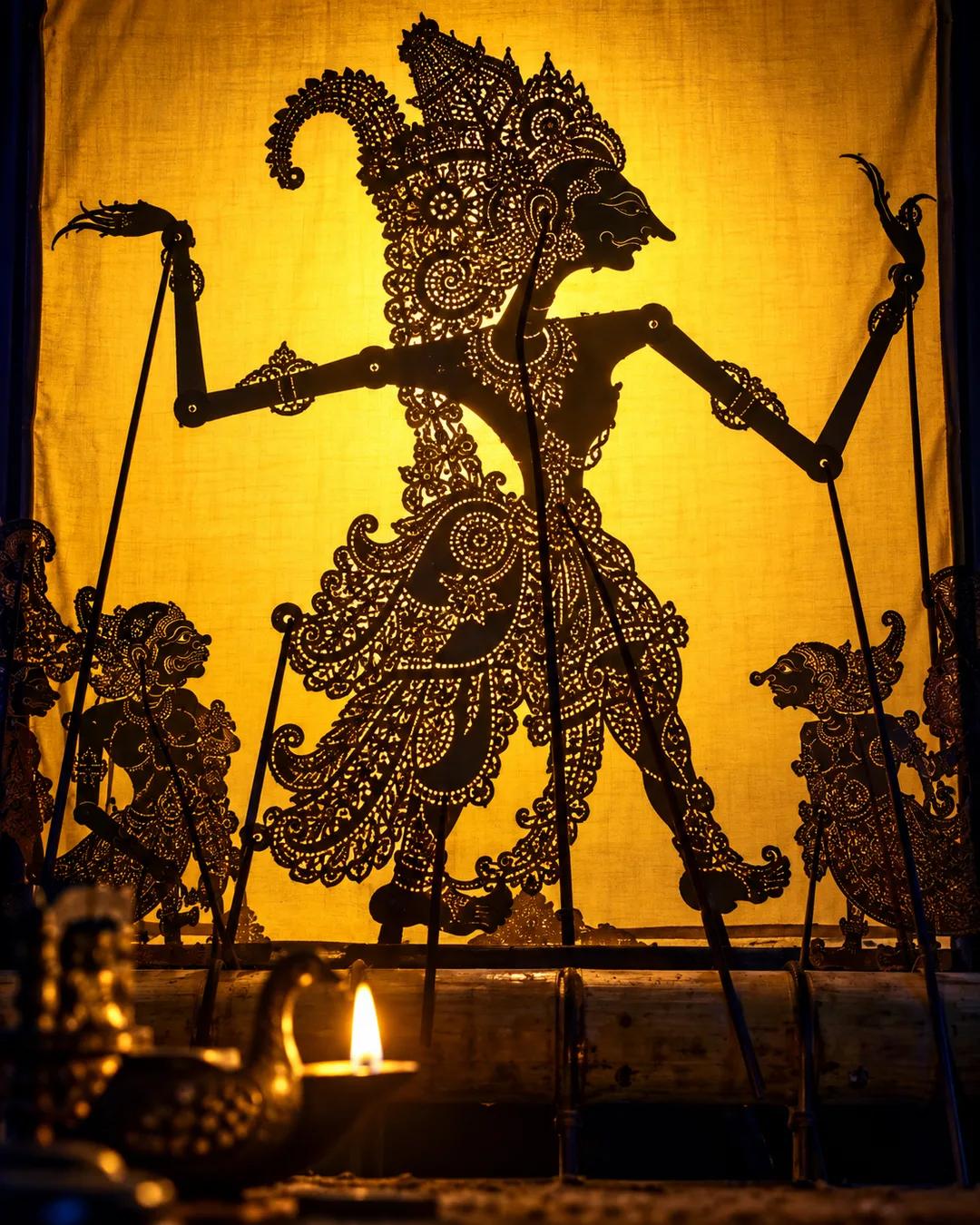
The plays, called wayang, began at nightfall and ran until dawn behind a white cotton screen, lit by a coconut-oil lamp shaped like the sacred bird Garuda. The puppets were cut from goat hide or buffalo skin, punched with intricate patterns of holes, given jointed limbs, and mounted on bamboo canes stuck into a banana trunk, so their shadows fell on the screen. In a village the puppeteer might drum on the box that held the puppets. At court, a full gamelan orchestra played along.
Midnight and the gods
The hours between sunset and midnight introduced the characters and set up the conflict. At the stroke of midnight, the drama burst into a frenzied clash between good and evil. The puppeteer, the dalang, was thought to be possessed by the gods as he worked, and every element was holy: the banana trunk was the earth, the screen the sky, the lamp fire, and the play of light and dark was good and evil.
Plays for every occasion
Stories were matched to occasions. The goddess of rice was told at harvest, and the great myths in times of trouble. One play was reserved for a plague of mice or rats and tried to convince them to leave the village and live in the kingdom of vermin instead. The Bratayuda, the Javanese version of the Mahabharata, was held too potent to perform at one sitting, because a great war was sure to follow. Tradition tells of a chief who tried it, and his country was laid to waste soon after the performance ended.
How did wayang survive the arrival of Islam?
Islam spread across Java from the 15th century onward, and wayang adapted to it instead of disappearing. Tradition credits Sunan Kalijaga, one of the nine saints who spread Islam in Java, with using wayang to carry Islamic teachings. Puppeteers began adding Islamic stories and characters alongside the old Hindu epics. UNESCO recognized wayang kulit as a Masterpiece of the Oral and Intangible Heritage of Humanity in 2003.
How does one puppeteer run an all-night show?
A single dalang voices every character, narrates the action, sings the mood songs, and moves all the puppets. He also directs the gamelan players, using a wooden mallet to knock on the puppet chest and give signals. Performances commonly run through the night, about eight to nine hours. He sits cross-legged for the entire time, with a screen in front of him and an oil lamp overhead.
How did Indian epics become Javanese poems?
Hindu and Buddhist culture reached Java from India during the first millennium CE, carrying the Ramayana and Mahabharata with it. Javanese court poets adapted these stories into Old Javanese verse form called kakawin. The Kakawin Bharatayuddha, retelling the Mahabharata's great war, was composed in 1157 at the court of Kediri. Its tales became the main source material for wayang.
More from Fall of Civilizations