Korva is a scroll of the internet’s best ideas.
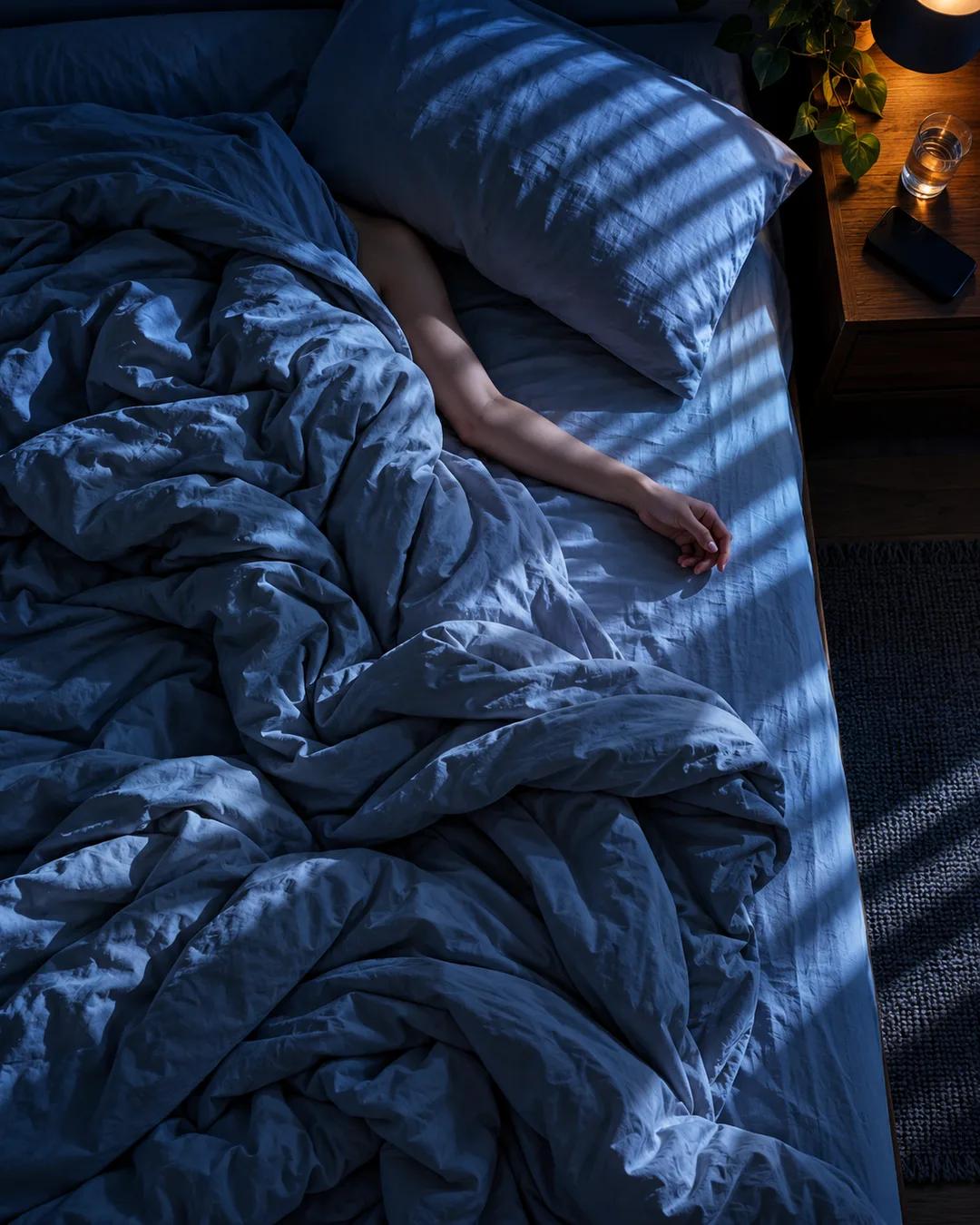
Sleep is built to be flexible

Waking at night is normal
A single consolidated block of sleep is what people are taught to expect, and it is not what sleep looks like. Waking in the night, remembering it or not, going back to sleep or sometimes staying up because of what is going on in life, hormones, or age, all fall within normal. Sleep at 25 does not look like sleep at 55.
Why sleep flexes
Even a true eight-hour sleeper, and not everybody is one, cannot sleep eight hours every night. The flexibility has a job. Jet lag, clock changes, and illness each call for a different style of sleeping, and the body triages which one it needs.
Why optimizing fails
That is why trying to recover the sleep of a 25-year-old causes trouble, as does biohacking and over-optimizing. The body also keeps sleep coming on its own. Sleep deprivation has been used as torture because staying awake is so hard that after a while the body shuts a person down, and someone has to hold the eyelids open and keep up very loud noise.
How does sleep change from age 25 to 55?
In 2004, Maurice Ohayon and colleagues published a meta-analysis in the journal Sleep that pooled sleep studies across ages. They found that deep slow-wave sleep shrinks as people get older, while time spent awake at night grows. Sleep becomes lighter and more easily broken. The changes begin in early adulthood and continue gradually over the following decades.
How does the brain triage sleep after losing some?
After a night of lost sleep, the brain does not repay the debt hour for hour. Slow-wave sleep rebounds first, and it is deeper and more concentrated than usual on the recovery night. REM sleep rebounds next, often over the following night. Researchers call this pattern recovery sleep, and it shows that the brain prioritizes which stage to protect.
Did people always sleep in one block?
The historian A. Roger Ekirch of Virginia Tech collected hundreds of references in diaries, court records, and medical texts from pre-industrial Europe to a first sleep and a second sleep, with a waking period between them. He published the findings in his 2005 book At Day's Close. Some researchers have argued the evidence shows variety rather than a universal pattern.
What are microsleeps?
A microsleep is an episode of sleep lasting from a fraction of a second up to about 15 seconds, during which the eyes may stay partly open. They occur when sleep pressure becomes strong enough to push the brain into sleep during wakefulness. Brain recordings show the usual waking rhythms replaced by sleep rhythms during these episodes. In 1964, the teenager Randy Gardner stayed awake for 264 hours, and researchers observed his lapses grow more frequent as the days passed.
More from Something You Should Know